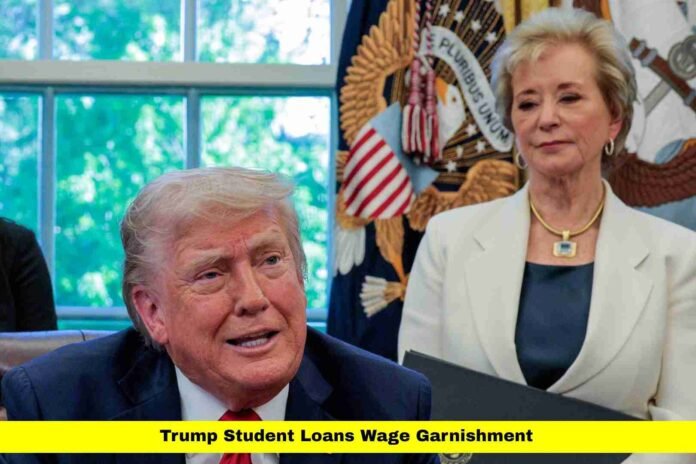

In late 2025, Trump student loans wage garnishment became a major news item as the U.S. Department of Education under President Donald Trump announced plans to resume withholding wages from borrowers who have defaulted on federal student loans. This marks a significant shift in federal student debt policy and the first return of broad garnishment actions since the pandemic-era pause ended. Millions of Americans with unpaid federal loan balances are now preparing for a new chapter of federal enforcement that will affect household budgets starting early next year.
The move to restart wage garnishment comes after years of deferred collections, paused garnishments, and delayed enforcement actions that began during the COVID-19 public health emergency. With repayments fully resumed and collection programs back in motion, defaulted borrowers are facing wage garnishment for the first time in nearly six years. Notices are set to go out, and enforcement will expand over time, affecting a growing number of borrowers in default or nearing default.
What Wage Garnishment Means for Defaulted Borrowers
Wage garnishment allows the federal government to order an employer to withhold a portion of a borrower’s pay and send it directly toward unpaid student loan balances once a loan enters default. Under upcoming collection plans, the Department of Education will start issuing garnishment notices beginning in January 2026. Borrowers with loans that have not seen a payment for at least 270 days are considered in default, making them eligible for garnishment actions. Defaults occur when borrowers fall far behind on required monthly payments and fail to arrange alternative repayment plans.
After receiving official notice of garnishment intentions, borrowers will have a legal window—typically 30 days—to respond, dispute the action, or make arrangements to avoid wage withholding. If no action is taken, employers may be instructed to begin wage garnishments. These withholdings can continue until the debt is settled, arranged into a repayment plan, or otherwise resolved. Garnishment doesn’t require prior court orders for federal debt, making it a powerful tool for the Department of Education to recoup unpaid student loan money directly from income.
Why This Change Is Happening Now
For years, federal student loan collections were largely suspended. Emergency relief tied to the pandemic protected borrowers from garnishments, credit score impacts, tax refund offsets, and other involuntary collections. As national financial policies shifted and relief programs phased out, the Education Department began resuming collections in mid-2025. This included restarting the Treasury Offset Program, which allows the government to withhold tax refunds and certain federal payments to cover defaulted balances, and culminating in the restart of wage garnishment plans.
The Trump administration’s renewed focus on collections is part of a broader effort to enforce federal loan repayment and return borrowers to active payment status. Department officials have stressed that providing borrowers with opportunities to resolve their debts first is part of the process, and garnishment would only begin after required notices and chances to address outstanding balances. The intention, as described by officials, is to reinforce federal policy for loan repayment compliance, even as critics argue these enforcement steps create hardship for borrowers already struggling with other financial challenges.
Under this policy, the number of garnishment notices is expected to increase over time, starting with an estimated 1,000 notices sent during the first week of January 2026 and expanding in scale month after month. As of late 2025, more than 5 million borrowers are already in default, and millions more are delinquent on payments, making a significant segment of the student loan population potentially affected by wage garnishment actions.
The Legal Framework Behind Federal Wage Garnishment
Unlike private debt, federal student loan wage garnishment does not require a court judgment. Federal laws governing student loan collections give the Department of Education the authority to withhold wages from defaulted borrowers as an administrative action. This type of garnishment is called administrative wage garnishment and allows the department to bypass traditional judicial procedures.
Before garnishment can begin, borrowers must receive formal notifications of intent. These notices typically include details about the default status, the pending wage garnishment action, and instructions on how to respond or appeal. After the mandatory notice period expires without action from the borrower, garnishment can start. Employers receive orders to withhold wages directly from paychecks and send the withheld amounts to the federal loan servicer.
Federal garnishment rules ensure that only a portion of disposable income may be taken. Legal limits are in place to prevent excessive hardship. Employers must also comply with garnishment orders once they are received, and federal protections prevent employers from retaliating against employees due to garnishment.
How Much of a Paycheck Can Be Garnished
Under federal administrative wage garnishment rules, the Department of Education may withhold a percentage of disposable income—income remaining after legally required deductions—for defaulted borrowers. The amount that can be garnished generally caps around 15% of a borrower’s after-tax income. This withholding continues until the debt is repaid or otherwise resolved.
Borrowers must be given advance notice before any deductions begin. The notice period gives them an opportunity to take action, such as entering repayment arrangements, challenging the garnishment, or contacting the Default Resolution Group to discuss alternatives. Without taking proactive steps, wage garnishment orders may lead to automatic reductions in take-home pay, which can be a significant burden for many households.
While 15% is the general statutory limit for federal wage garnishment, the actual amount withheld depends on individual income and tax circumstances. Disposable income calculations take into account federal and state tax withholdings, Social Security, Medicare, and other standard deductions.
Who Is at Risk Under the New Policy
Borrowers in default on federal student loans are the primary group at risk of wage garnishment. Default status is defined when a borrower fails to make required monthly payments for a sustained period—typically 270 days or more. Those who fell into default during or after the pandemic payment pauses without restoration of their repayment status are now facing the consequences of long-term non-payment.
Estimates from federal data suggest millions of borrowers are in default or nearing default, placing a large group at risk for collection actions. As the wage garnishment program scales up, the number of individuals receiving notices will grow steadily over time. The initial wave of notices will reach a limited number of borrowers, but enforcement will not remain limited, and wage garnishment orders are expected to expand throughout 2026.
Borrowers who are current on their loans, enrolled in income-based repayment plans, or working with servicers to manage payment plans generally will not face garnishment. However, those who allow loans to remain in default risk enforcement action, including wage garnishment, tax refund offsets, and other collection mechanisms.
Borrower Options Before Wage Garnishment Begins
Facing wage garnishment does not mean there are no options. Borrowers have several opportunities to address default before the garnishment actually starts. One of the first steps is responding promptly to notices from the Department of Education. Once a borrower receives a notice of intent to garnish, they typically have a window—often 30 days—to take action.
Within that response period, borrowers can contact their loan servicer or the Default Resolution Group to discuss repayment arrangements. Setting up a voluntary payment plan, negotiating a rehabilitation program, or entering a modified repayment plan may halt a garnishment action before it begins. Rehabilitation plans generally require a series of agreed-upon monthly payments that bring the loan out of default. Once a loan leaves default status through rehabilitation, garnishment stops and the borrower regains access to federal repayment options that were unavailable during default.
Another option is consolidating defaulted loans into a new Direct Consolidation Loan, which can also remove the default status and stop garnishment once processed. Consolidation may involve committing to a new repayment plan, often tied to income. Acting early remains critical for borrowers who wish to avoid wage withholding.
Challenges Borrowers Face Amid Garnishment Enforcement
While options exist, many borrowers express concern that wage garnishment adds financial strain rather than helping them regain stability. Critics argue that garnishing wages during economic hardship, stagnant wage growth, and rising living costs may worsen the financial well-being of struggling households. For some, the garnished portion of income represents a nontrivial reduction in essential funds needed for rent, utilities, transportation, groceries, and other basic expenses.
Borrower advocates also emphasize the importance of accessible repayment programs, hardship deferments, or income-driven plans that were available under previous administrations. With some income-based repayment options no longer operable under current federal policy changes, borrowers may find fewer pathways to avoid default and wage garnishment.
Efforts to challenge garnishment often require legal hearings, proof of hardship, or strategic negotiation with loan servicers. While the law provides mechanisms to appeal garnishment actions, the process still demands time, documentation, and engagement from borrowers who may already be financially and emotionally stressed.
Timeline: From Default to Garnishment
The path from default to wage garnishment involves several steps and specific deadlines. First, federal student loan borrowers enter default after missing payments for roughly nine months. Once in default, the loan servicer or the Department of Education begins the process of taking collections action.
Borrowers in default receive official notifications of their status and potential impending enforcement measures. Federal law requires advance notice before garnishment can begin, stating that borrowers must have an opportunity to respond or rectify their status before wage withholding starts. Notices scheduled to begin the week of January 7, 2026, represent the first official implementation of wage garnishment in years. After these initial notices, the number of notifications will increase each month, steadily building the scope of enforcement.
If a borrower does not respond within the notice period or fails to arrange an alternative to default, the Department issues garnishment orders to employers. Employers then begin withholding a percentage of income and forwarding it to federal servicers. This enforcement continues until the loan is brought out of default through rehabilitation, consolidation, repayment, or settlement.
What Borrowers Should Do Now
For borrowers worried about wage garnishment, immediate action can make a meaningful difference. First, reviewing loan status and confirming whether a loan is in default is essential. Borrowers can contact their loan servicer to verify status and get clarity on default dates and lump sum amounts owed.
Responding quickly to any notice from the Department of Education is also important. Notices typically outline options for avoiding garnishment and deadlines for response. Borrowers can use this information to contact servicers, discuss repayment plans, or explore rehabilitation or consolidation options.
Loan rehabilitation may require progressive payments that gradually bring the default balance under control. Consolidation requires agreement to a new repayment arrangement that clears default once finalized. Both strategies can end garnishment, though the exact process and timeframes vary based on individual circumstances.
Borrowers should also understand that garnishment is not automatic without notice and an opportunity to act. Federal guidelines require a lawful process, including time for borrower response.
Why This Matters for U.S. Borrowers in 2025 Onward
The implementation of wage garnishment by the Trump administration marks a new phase in federal student loan enforcement. For millions of Americans with defaulted federal loans, this means increased accountability for past unpaid debts and a real impact on take-home pay. Enforcement actions like garnishment serve as reminders that student loan repayment is a legally binding obligation with potential consequences for long-term non-payment.
However, enforcement also comes with clear procedural steps and borrower rights. The law provides structured opportunities to respond to garnishment notices and work toward solutions. Borrowers who engage early and understand their options often avoid the most severe financial consequences.
The policy highlights the importance of repayment planning, early intervention when facing financial strain, and the value of knowing one’s rights when dealing with federal debt collections. Students, families, and borrowers across different life stages must now stay informed as enforcement changes reshape the student loan landscape.
If you have questions or personal experiences related to this change or wage garnishment, feel free to share your perspective in the comments and stay updated on how these policies unfold.