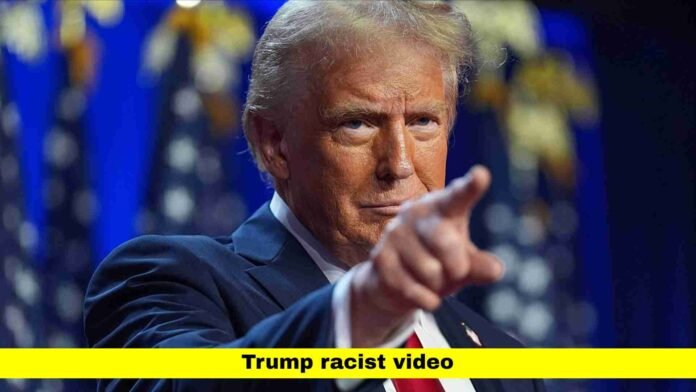

The trump racist video ignited nationwide debate, highlighting how digital political content can quickly reopen deep discussions around race, leadership, and accountability. The controversy reflects broader divisions in American public discourse and the powerful impact of online messaging.
A trump racist video shared online has sparked widespread backlash across the United States, drawing sharp reactions from political leaders, advocacy groups, and the general public. The video, which circulated rapidly on social media, included imagery that many Americans described as racially offensive, prompting renewed debate about the responsibility of public figures in digital spaces and the impact of political messaging on racial discourse.
The controversy quickly moved beyond social media, becoming a focal point in national conversations about race, leadership, and the limits of acceptable political expression in an increasingly polarized environment.
Overview of the Controversial Video
The video appeared online as part of a longer political clip that referenced past political events and public figures. Near the end of the footage, a brief animated segment displayed imagery involving former national leaders portrayed in a way that many viewers interpreted as racially insensitive. Although the segment lasted only moments, its visual symbolism carried deep historical associations that resonated strongly with audiences.
Almost immediately after the video was shared, it began circulating widely, drawing attention from both supporters and critics. The rapid spread highlighted how quickly short digital content can dominate public discourse, especially when it involves recognizable figures and emotionally charged themes.
Immediate Public Reaction Across the Country
Public reaction to the video was swift and intense. Many Americans expressed outrage, stating that the imagery echoed long-standing racial stereotypes that have caused harm throughout U.S. history. Social media platforms filled with commentary from users who described the content as inappropriate for someone with a national political profile.
At the same time, others defended the post, arguing that it was intended as satire or political commentary rather than a racial statement. This divide reflected broader cultural and political fault lines, with reactions often aligning closely with existing partisan perspectives.
Political Responses and Statements
Political figures from across the spectrum responded publicly to the video. Several leaders condemned the imagery, emphasizing that racial symbolism carries historical weight and should be treated with care, particularly by individuals who have held high office.
Others downplayed the controversy, framing the response as overblown and arguing that political expression should not be restricted, even when it provokes strong reactions. These contrasting viewpoints underscored ongoing disagreements about accountability, intent, and impact in political communication.
Why the Imagery Resonated So Strongly
The strong reaction to the video cannot be separated from the historical context surrounding racial imagery in the United States. Visual comparisons that associate Black individuals with animals have long been used to dehumanize and marginalize, making such depictions deeply offensive to many viewers regardless of intent.
Because of this history, even brief or indirect imagery can trigger significant emotional responses. For many Americans, the issue was not the length of the clip but the symbolism it carried and the platform from which it was shared.
Expansion of the Conversation Beyond Politics
As discussion continued, the controversy expanded beyond political circles. Educators, community leaders, and cultural commentators weighed in, using the moment to highlight broader issues around media literacy, cultural awareness, and responsible communication.
Many emphasized that digital platforms amplify messages rapidly, making it essential for public figures to consider how content may be interpreted by diverse audiences. The incident became a case study in how online visuals can shape national conversations in ways that written statements sometimes cannot.
Social Media Platforms and Content Responsibility
The episode also renewed debate about the role of social media platforms in moderating controversial content. Users questioned how platforms decide what remains visible and what is removed, particularly when posts involve influential figures.
Some argued that stricter moderation is necessary when content includes racially sensitive imagery, while others maintained that open expression is fundamental to political discourse. The discussion highlighted the ongoing challenge platforms face in balancing free expression with harm prevention.
Civil Rights Perspectives and Cultural Impact
Civil rights advocates voiced concern over the normalization of racially charged imagery in political messaging. They stressed that such content can reinforce harmful stereotypes and contribute to social division, even when framed as humor or satire.
From this perspective, the video represented a broader cultural issue rather than an isolated incident. Advocates called for greater awareness of how historical injustices continue to influence present-day reactions and sensitivities.
Supporters and Critics Reflect Deep Polarization
Responses from supporters and critics revealed deep polarization within the American public. Supporters of the former president often interpreted the backlash as politically motivated, while critics viewed the video as crossing a clear ethical line.
This divide illustrated how identical content can be interpreted in dramatically different ways depending on political identity, reinforcing how fragmented public discourse has become.
Ethical Questions Around Leadership and Influence
Beyond legality, the situation raised ethical questions about leadership and influence. Public figures wield significant reach, and their online activity can shape attitudes far beyond their immediate audience.
The controversy prompted renewed discussion about whether those with large platforms carry additional responsibility to avoid content that could deepen social divisions or revive harmful stereotypes.
Potential Impact on the Political Landscape
The timing of the incident ensured it would not fade quickly from public memory. Analysts noted that controversies involving race and symbolism often have lasting effects on political narratives, influencing voter perceptions and campaign strategies.
While opinions remain sharply divided, the episode has become part of the broader political environment, shaping conversations about tone, messaging, and accountability in future campaigns.
A Moment That Reflects Broader National Tensions
More than anything, the reaction to the video reflected underlying tensions within American society. Issues of race, free expression, and political identity intersected in a single moment, revealing how fragile and emotionally charged public discourse can be.
As debates continue, the incident serves as a reminder of the power of digital media and the enduring impact of historical symbolism in modern politics.
How do you think moments like this shape political conversation in the United States today? Share your perspective and stay informed as the discussion continues.