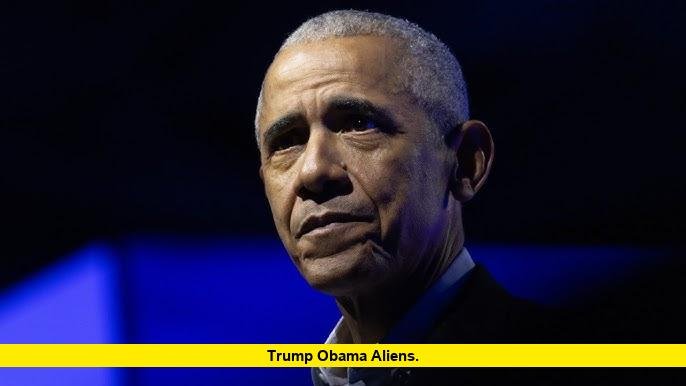

The political conversation around trump obama aliens surged again this week after fresh comments from both former President Barack Obama and President Donald Trump ignited debate over unidentified aerial phenomena and government secrecy.
A new exchange between the two leaders has pushed the topic of alien life back into national headlines. Trump publicly criticized Obama, accusing him of revealing sensitive information after Obama spoke about extraterrestrial life during a recent podcast interview.
Readers following political headlines know this issue blends politics, science, and public curiosity — and it continues to drive attention across Washington.
If you want clear updates on major U.S. political moments shaping public debate, keep reading and follow ongoing developments as they unfold.
Why the Trump-Obama Aliens Debate Resurfaced
The latest controversy began after Obama appeared on a podcast where he was asked directly whether aliens exist. During the conversation, he made a lighthearted remark suggesting aliens are “real,” before clarifying he had not personally seen evidence of alien contact during his presidency.
The comments quickly spread online and triggered reactions across political media.
Trump responded days later while speaking with reporters. He criticized Obama and suggested that discussing extraterrestrial matters could touch on sensitive government material. Trump said Obama “made a mistake” and argued former presidents should be cautious when speaking about subjects connected to national security.
At the same time, Trump also stated he does not know whether aliens exist.
The exchange reignited a long-running public fascination with how much the U.S. government knows about unidentified flying objects.
Obama’s Position on Alien Claims
Obama has addressed UFO curiosity several times since leaving office. In interviews over the years, he has consistently said there was no evidence of alien contact presented to him while he served as president.
During the recent podcast discussion, Obama again emphasized that he had not seen proof of extraterrestrial life interacting with Earth.
He also joked about questions presidents receive regarding classified topics — including the famous pop-culture question about Area 51 — reinforcing that many conspiracy theories remain unsupported.
The remarks reflected a tone Obama has used before: acknowledging public curiosity while stating there is no direct evidence of alien visitation.
Trump’s Reaction and Political Framing
Trump framed Obama’s comments as potentially inappropriate, suggesting the topic intersects with classified information.
However, Trump did not present details showing that any classified material had actually been disclosed. His remarks instead focused on the idea that former presidents should avoid discussing sensitive national security areas publicly.
Trump’s response fits a broader pattern in modern U.S. politics, where statements about government transparency, intelligence, and secrecy often become political flashpoints.
The exchange also demonstrates how quickly unconventional topics — especially UFOs — can become political narratives.
How UFO Transparency Became a Washington Issue
The renewed political clash did not happen in isolation.
In recent years, unidentified aerial phenomena have become a serious policy topic inside Congress and the Pentagon. Lawmakers have held hearings, defense officials have released reports, and new terminology replaced the term “UFO” with “UAP.”
Government reviews have repeatedly stated that many sightings remain unexplained but have not produced evidence showing extraterrestrial origin.
That distinction is important. Unidentified does not mean alien — it means the object lacks a confirmed explanation.
This nuance often gets lost when political figures discuss the topic publicly.
Public Interest Continues to Grow
Surveys and media trends show Americans remain highly interested in whether governments possess hidden information about alien life.
Streaming documentaries, congressional hearings, and military pilot testimony have pushed the topic from fringe culture into mainstream conversation.
Political comments — especially from presidents — amplify that attention.
The recent trump obama aliens debate illustrates how even brief remarks can drive massive public interest.
Social media discussions spiked following Trump’s criticism, with users debating government secrecy, presidential knowledge, and the history of UFO investigations.
What Government Reviews Have Said So Far
Defense and intelligence agencies have conducted multiple reviews of unexplained aerial incidents.
Key findings across those reviews include:
- Many sightings have ordinary explanations such as drones or sensor errors
- Some cases remain unresolved due to limited data
- Investigations have not identified evidence of extraterrestrial technology
- National security concerns focus primarily on unknown foreign technology
Officials consistently frame UAP research as a security and aviation safety issue rather than proof of alien life.
That position has remained stable across administrations.
Why Political Leaders Talk About Aliens
There are several reasons presidents and senior officials address the topic:
- Public curiosity is extremely high
- Congressional oversight requires transparency
- Military pilots continue reporting unusual aerial encounters
- The subject intersects with defense technology competition
At times, humor also plays a role. Presidents often receive questions about aliens in interviews because the topic holds strong cultural appeal.
Obama’s recent remark appears to fall into that tradition, though Trump treated it more seriously.
Media, Messaging, and Political Strategy
The clash highlights how messaging differences shape political narratives.
Obama’s tone leaned conversational and humorous.
Trump’s tone emphasized security and responsibility.
That contrast created a headline-driven moment that extended beyond the original podcast comment.
Political strategists note that unusual topics can attract large audiences because they combine curiosity with partisan framing.
The alien discussion sits at the intersection of entertainment, science, and national security — making it especially viral.
The Broader Context: Space and National Security
The debate also comes as space policy receives renewed attention.
Recent federal initiatives emphasize:
- Space defense strategy
- Competition with global powers in space technology
- Monitoring unexplained aerial activity
- Expediting reporting systems for pilots
This environment increases sensitivity around how leaders talk about unknown aerial objects.
Even casual remarks can trigger questions about classified programs or intelligence gaps.
Public Reaction and Online Conversation
Online reactions to the Trump-Obama exchange followed predictable patterns.
Some Americans viewed the moment as political theater.
Others interpreted it as proof governments know more than they reveal.
Many simply treated it as another example of the enduring fascination with aliens.
The conversation spread across political commentary, science communities, and pop culture spaces simultaneously.
That cross-audience reach explains why alien discussions remain powerful headline drivers.
What This Means Going Forward
The renewed attention does not change the core government position: investigations continue, many sightings remain unexplained, and there is no evidence of extraterrestrial contact presented publicly by U.S. officials.
However, political exchanges keep the topic alive.
Future developments that could drive new headlines include:
- Additional congressional hearings
- New Pentagon reports on UAP incidents
- Whistleblower claims or testimony
- Statements from current or former presidents
The topic’s staying power ensures it will resurface whenever prominent leaders comment.
The Political Power of Curiosity
The latest episode shows how curiosity itself shapes political coverage.
Aliens represent a rare issue that crosses party lines, age groups, and ideological divides. Almost everyone has an opinion — even when evidence remains limited.
When national figures like Trump and Obama discuss the subject, it transforms curiosity into a major news cycle.
That dynamic explains why the story gained traction so quickly.
Conclusion
The latest clash involving Trump and Obama demonstrates how a short remark about extraterrestrial life can evolve into a national political conversation. Obama reiterated that he saw no evidence of alien contact while president, while Trump criticized him for discussing the topic publicly.
Government investigations continue to treat unidentified aerial phenomena as a security and research issue rather than proof of alien visitation. Still, political reactions ensure the topic remains firmly embedded in public debate.
As interest in transparency, space policy, and unexplained aerial encounters grows, similar moments are likely to appear again — keeping the intersection of politics and the unknown firmly in the spotlight.
What do you think about leaders discussing alien questions — harmless curiosity or a serious national security topic? Share your thoughts or follow updates as this conversation continues.