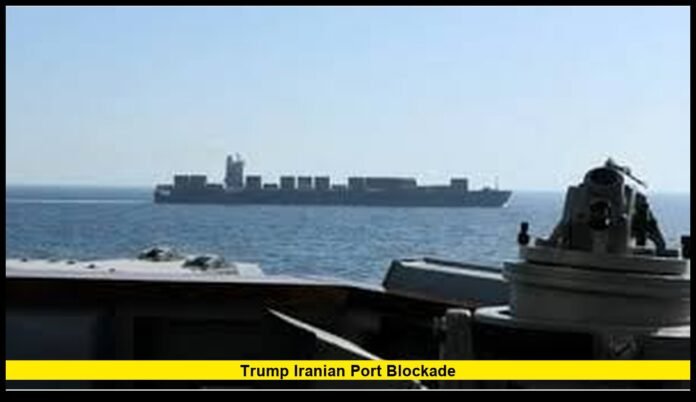

Trump Iranian port blockade developments continue to dominate international headlines as the United States and Iran remain locked in a dangerous maritime standoff that has disrupted shipping routes, pressured oil markets, and increased fears of wider conflict in the Middle East. As of May 2026, President Donald Trump’s administration continues enforcing strict naval restrictions tied to Iranian ports while diplomatic negotiations move forward behind closed doors.
The situation has become one of the biggest foreign policy challenges facing the White House this year. U.S. military operations in and around the Strait of Hormuz have reshaped commercial shipping activity across the Persian Gulf. At the same time, Iran has increased naval patrols and tightened its position on regional security demands.
Global energy markets continue reacting to every update connected to the crisis.
How the Maritime Conflict Escalated
The current confrontation began after weeks of rising tensions involving sanctions, regional military activity, and failed nuclear negotiations between Washington and Tehran.
In April 2026, the Trump administration announced a major enforcement campaign targeting Iranian maritime trade routes. The United States increased naval deployments near critical Gulf shipping lanes and warned commercial operators against conducting unauthorized business with sanctioned Iranian ports.
American officials described the operation as a pressure campaign designed to weaken Iran’s economic leverage and force new diplomatic concessions.
Iran immediately condemned the move.
Tehran argued the restrictions violated international shipping standards and accused the United States of escalating instability in one of the world’s most sensitive waterways.
Within days, commercial shipping traffic slowed across the region.
Several major freight operators delayed voyages while insurers raised costs for vessels entering Gulf waters.
Why the Strait of Hormuz Matters to the United States
The Strait of Hormuz remains one of the world’s most important shipping corridors. Nearly 20 percent of global oil exports normally pass through the narrow route connecting the Persian Gulf to international waters.
Any disruption in the area creates immediate economic pressure worldwide.
For Americans, instability in Hormuz can affect:
- Gasoline prices
- Airline fuel costs
- Shipping expenses
- Consumer prices
- Energy markets
- Stock market performance
The latest maritime crisis already pushed oil prices higher during several trading sessions this month.
Shipping companies also warned clients about longer delivery schedules tied to Gulf security concerns.
Some vessels rerouted around Africa to avoid potential conflict zones, increasing transportation costs and delivery times.
Trump Administration Defends the Blockade
President Trump has repeatedly defended the maritime restrictions as necessary for U.S. national security.
The White House argues Iran continues supporting destabilizing regional activities while refusing stricter nuclear oversight measures demanded by Washington.
Senior administration officials say the blockade is not intended to stop lawful international commerce unrelated to Iranian sanctions violations.
Instead, the operation focuses on:
| U.S. Goals | Details |
|---|---|
| Nuclear pressure | Prevent Iran from advancing nuclear capabilities |
| Maritime security | Protect commercial shipping routes |
| Regional deterrence | Limit Iranian military influence |
| Economic leverage | Increase pressure through sanctions enforcement |
Secretary of State Marco Rubio recently stated that the United States would oppose any attempt by Iran to control or tax international navigation through the Strait of Hormuz.
The administration also rejected Iranian proposals tied to regional shipping oversight systems.
American military leaders continue emphasizing freedom of navigation as a core objective.
Iran Responds With Strong Warnings
Iranian officials have maintained a hardline response throughout the crisis.
Tehran insists the country has the right to secure its territorial waters and protect its maritime interests during periods of military pressure.
Iran’s leadership also argues that years of U.S. sanctions and military activity created the current instability.
Iranian naval forces increased patrols around strategic Gulf islands and shipping lanes after the blockade began.
Military commanders warned foreign vessels against unauthorized movements near sensitive areas.
Iranian officials further claimed the country would not accept policies designed to isolate its economy from global trade.
Despite the aggressive rhetoric, Iran also signaled willingness to continue negotiations involving regional mediators.
Ceasefire Negotiations Continue Behind the Scenes
Diplomatic activity has accelerated during the past several days as Gulf nations work to prevent a broader military conflict.
Qatar, Oman, and Pakistan remain deeply involved in mediation efforts between Washington and Tehran.
Current talks reportedly focus on:
- Temporary maritime de-escalation
- Protection for commercial shipping
- Sanctions relief discussions
- Future nuclear negotiations
- Regional military coordination
President Trump recently described the negotiations as ongoing but uncertain.
White House advisers continue reviewing Iran’s latest ceasefire proposal while military operations remain active.
The administration appears determined to maintain pressure while exploring diplomatic pathways that could reduce tensions without weakening U.S. leverage.
Iran, meanwhile, continues demanding phased sanctions relief before agreeing to broader concessions.
Project Freedom and U.S. Naval Operations
The United States launched “Project Freedom” earlier this month as part of its effort to protect commercial shipping through Gulf waters.
The mission involved:
- U.S. Navy destroyers
- Surveillance aircraft
- Maritime patrol teams
- Advanced drone systems
- Regional military coordination
American forces escorted selected commercial vessels through safer transit routes near Oman and the Gulf of Oman.
Military officials described the operation as defensive rather than offensive.
However, Iran criticized the effort and accused Washington of militarizing international shipping corridors.
Several tense encounters involving drones and naval patrol vessels were reported during the early stages of the operation.
Despite those incidents, U.S. officials say the mission prevented more severe disruptions to commercial shipping traffic.
Impact on Global Shipping Companies
The maritime confrontation created serious financial and operational problems for international shipping firms.
Cargo companies now face:
- Higher insurance premiums
- Longer shipping routes
- Delayed port schedules
- Increased fuel costs
- Security concerns for crews
Some firms temporarily suspended operations involving Gulf transit routes.
Others reduced the number of vessels traveling near Iranian-controlled waters.
Industry analysts estimate the crisis has already added billions of dollars in combined transportation and energy costs worldwide.
Smaller freight operators have struggled especially hard because rising insurance costs cut deeply into profit margins.
Port congestion also increased across alternative shipping hubs as rerouted vessels flooded neighboring regions.
Read More – Strait of Hormuz News
Oil Prices and American Consumers
Energy markets remain highly sensitive to every development tied to the Trump Iranian port blockade.
Even temporary disruptions near Hormuz often trigger immediate reactions in global oil prices.
In the United States, rising fuel prices have become a growing political issue.
Consumers across several states reported noticeable gasoline increases following major developments in the Gulf region.
Energy experts warn prolonged instability could create broader economic pressure by increasing transportation costs across multiple industries.
Airlines, trucking firms, and shipping companies all rely heavily on stable fuel pricing.
Any sustained disruption near Hormuz could affect:
- Airline ticket prices
- Retail transportation costs
- Manufacturing expenses
- Consumer goods pricing
The White House continues monitoring domestic economic conditions closely while balancing military and diplomatic priorities.
Military Risks Remain High
Although negotiations continue, military tensions remain elevated across the Persian Gulf.
Recent security incidents reportedly included:
- Drone surveillance operations
- Radar lock warnings
- Naval interception activity
- Maritime patrol confrontations
American military commanders continue warning commercial operators about risks near contested waters.
Iranian officials have also warned that further escalation could trigger stronger regional responses.
The presence of heavily armed naval forces from multiple countries increases the risk of accidental confrontation.
Several European governments urged restraint while encouraging continued diplomacy.
France and the United Kingdom continue discussing maritime coordination measures designed to protect commercial vessels if the situation worsens.
Commercial Traffic Through Hormuz Slows
Shipping traffic through the Strait of Hormuz dropped sharply after the blockade intensified.
Several tanker operators delayed departures until military conditions stabilized.
Others requested naval escort support before entering Gulf routes.
The slowdown affected energy exports from multiple Gulf countries, not only Iran.
Port authorities across the region reported scheduling disruptions and increased inspection procedures.
Shipping firms also warned clients about possible delays affecting:
- Oil deliveries
- Industrial materials
- Food imports
- Consumer electronics
- Vehicle parts
The crisis demonstrated how dependent global supply chains remain on uninterrupted Gulf shipping access.
Regional Governments Push for Stability
Middle Eastern governments continue urging both sides to avoid a wider military conflict.
Saudi Arabia, Qatar, Kuwait, and the United Arab Emirates all depend heavily on stable maritime trade routes.
Regional leaders fear prolonged instability could damage economic growth and investment across the Gulf.
Many governments oppose any system that would permanently limit free navigation through Hormuz.
At the same time, Gulf nations remain cautious about becoming directly involved in military operations tied to the dispute.
Diplomatic channels remain active across the region as leaders search for a negotiated solution.
International Markets React to Every Update
Financial markets worldwide continue tracking every major development involving the maritime crisis.
Oil futures often rise sharply after reports of naval incidents or stalled negotiations.
Shipping company stocks also fluctuate depending on security conditions in the Gulf.
Investors remain concerned about:
- Energy market volatility
- Global inflation risks
- Trade disruptions
- Military escalation
- Economic slowdown pressure
The crisis has become one of the biggest international economic stories of 2026.
Analysts say uncertainty alone continues affecting markets even during periods without active military confrontation.
Political Pressure Builds Inside Washington
The blockade has also become a major domestic political issue in the United States.
Supporters of President Trump argue the administration’s hardline approach is necessary to contain Iranian influence and strengthen American security.
Critics warn prolonged maritime confrontation could increase energy costs and pull the United States deeper into another Middle Eastern conflict.
Congressional leaders from both parties continue receiving intelligence briefings tied to naval operations and diplomatic negotiations.
Several lawmakers called for stronger congressional oversight of future military decisions connected to the crisis.
The administration continues insisting that diplomacy remains possible while maintaining military readiness.
What Happens Next
The next several weeks could determine whether the confrontation moves toward resolution or deeper conflict.
Diplomatic negotiations remain active, but major disagreements continue.
Key unresolved issues include:
| Major Dispute | Current Status |
|---|---|
| Sanctions relief | Still under negotiation |
| Maritime access | No final agreement |
| Nuclear restrictions | Ongoing discussions |
| Military operations | Active but limited |
| Commercial protections | Temporary measures in place |
The White House appears focused on maintaining pressure without triggering uncontrolled escalation.
Iran continues balancing military resistance with diplomatic engagement.
Global markets, shipping firms, and regional governments all remain closely focused on upcoming decisions from Washington and Tehran.
Why Americans Are Watching Closely
For many Americans, the crisis may seem geographically distant, but its economic impact reaches directly into daily life.
Higher fuel prices, supply chain disruptions, and market instability all affect U.S. households and businesses.
The confrontation also raises larger questions about American foreign policy, military strategy, and energy security.
The outcome of negotiations could influence:
- U.S. gasoline costs
- Future Middle East policy
- Global energy stability
- International shipping regulations
- Financial market confidence
Every new development tied to the Trump Iranian port blockade continues drawing intense international attention because the stakes remain extraordinarily high for governments, businesses, and consumers around the world.
Readers following the Trump Iranian port blockade will continue watching closely as negotiations, naval operations, and global energy markets remain tightly connected in the weeks ahead.