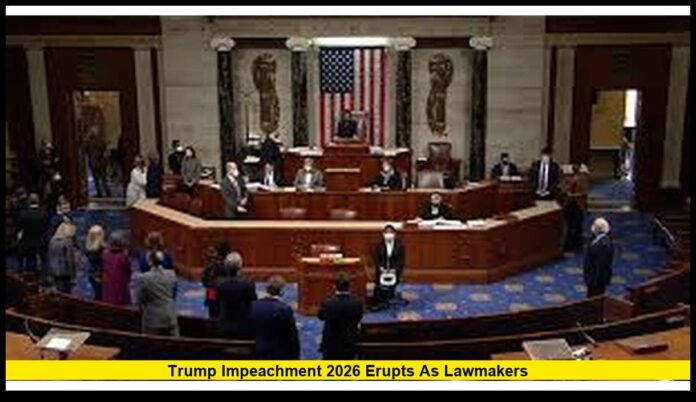

The political battle surrounding trump impeachment 2026 is rapidly escalating in Washington, as lawmakers push forward with new efforts to hold President Donald Trump accountable over decisions tied to U.S. military posture in the Middle East. What began as sharp criticism has evolved into formal action inside Congress, reigniting a constitutional showdown over executive power, national security, and the limits of presidential authority.
The latest developments have placed impeachment back at the center of national conversation, drawing strong reactions from both parties and raising questions about what comes next for the administration and the country.
A New Impeachment Push Takes Shape
In early April 2026, members of the House introduced new articles of impeachment targeting President Trump. The effort is being led by Democratic lawmakers who argue that the president’s actions related to potential military engagement with Iran crossed constitutional boundaries.
The articles focus heavily on the use of executive power without explicit congressional approval. Lawmakers behind the effort contend that recent decisions and public statements signaled a willingness to escalate military conflict without following established legal frameworks.
This renewed push marks one of the most serious challenges to the president’s authority in his current term. While impeachment has been part of Trump’s political history, the context of this latest effort is different, driven by international tensions and concerns about immediate global consequences.
Supporters of the move argue that Congress has a duty to intervene when presidential actions could lead to war. They emphasize that the Constitution grants lawmakers—not the executive branch—the authority to declare war, making oversight essential in moments of crisis.
Escalating Tensions With Iran Spark Urgency
At the heart of the controversy is a sharp rise in tensions between the United States and Iran. The situation intensified after the president issued strong warnings regarding possible military action, including statements that critics described as aggressive and destabilizing.
These remarks quickly drew attention from lawmakers across the political spectrum. Some members of Congress expressed alarm that such rhetoric could increase the risk of conflict in an already volatile region.
The administration later indicated that a temporary pause in military escalation had been reached, tied to strategic conditions in key waterways. While this move eased immediate fears, it did little to quiet critics who believe the underlying issue—presidential authority in military decision-making—remains unresolved.
For many lawmakers, the events served as a tipping point. They argue that even the possibility of unilateral military action demands a clear response from Congress.
Deep Divisions in the House of Representatives
Despite the strong push from some Democrats, the path forward for impeachment remains uncertain. The House of Representatives is currently under Republican control, creating a significant barrier to advancing any impeachment resolution.
Republican leaders have largely rejected the effort, framing it as politically motivated and unnecessary. Many argue that the president’s actions fall within the scope of executive authority, particularly in matters of national security.
At the same time, a small number of Republicans have voiced concern about the tone and implications of recent statements. However, there has been no clear sign of widespread GOP support for impeachment.
This divide highlights the broader polarization within Congress. While impeachment remains a constitutional mechanism, its success often depends on bipartisan agreement—something that appears unlikely in the current political climate.
Historical Context Shapes Today’s Debate
The current situation cannot be fully understood without considering the broader history of impeachment in modern American politics. President Trump previously faced impeachment proceedings during his first term, making him one of the few presidents in U.S. history to be impeached more than once.
Those earlier cases centered on different issues, but they established a precedent for intense political conflict surrounding the use of impeachment as a tool of accountability.
Now, with trump impeachment 2026 dominating headlines, lawmakers are once again grappling with the same fundamental questions: What constitutes an abuse of power? When should Congress intervene? And how should political considerations factor into constitutional decisions?
These questions are not easily answered, and they continue to fuel debate both inside and outside Washington.
The Constitutional Clash Over War Powers
One of the central issues driving the current impeachment effort is the interpretation of war powers under the Constitution. The document divides authority between Congress and the president, but the exact boundaries have long been a source of debate.
Congress holds the power to declare war, while the president serves as commander in chief of the armed forces. Over time, presidents from both parties have expanded their use of military authority, often without formal declarations of war.
Critics of the administration argue that recent actions represent an overreach of executive power. They contend that any move toward military conflict should involve clear authorization from Congress.
Supporters of the president, on the other hand, argue that the executive branch must have the flexibility to respond quickly to threats. They maintain that requiring congressional approval in every instance could hinder the nation’s ability to act decisively.
This tension lies at the core of the impeachment debate, making it not just a political issue but a constitutional one with long-term implications.
Public Opinion Reflects a Divided Nation
As the impeachment effort unfolds, public reaction has been sharply divided. Supporters see the move as a necessary check on presidential power, while opponents view it as another example of partisan conflict.
Across the country, rallies and demonstrations have highlighted the intensity of feeling on both sides. Advocacy groups are actively engaging voters, emphasizing the stakes involved in the debate.
Polling data suggests that opinions on impeachment largely align with political affiliation. This division underscores the challenges facing lawmakers who must navigate both constitutional responsibilities and political realities.
The issue has also become a focal point in media coverage, ensuring that it remains at the forefront of national conversation.
Midterm Elections Add Another Layer of Pressure
The timing of the impeachment push is significant, coming just months before the 2026 midterm elections. These elections are expected to play a crucial role in determining the balance of power in Congress.
For Democrats, gaining control of the House could open the door to more aggressive impeachment proceedings. For Republicans, maintaining their majority would likely limit the chances of any resolution moving forward.
This dynamic has turned impeachment into a key campaign issue. Candidates on both sides are using it to energize their base and frame broader arguments about leadership and accountability.
Voters, meanwhile, are being asked to weigh in on not just policy, but the future direction of the presidency itself.
Global Implications Raise the Stakes
The controversy has also drawn attention from international observers. U.S. allies are closely monitoring the situation, particularly given the potential impact on global stability.
Tensions in the Middle East remain a major concern, with leaders around the world urging caution and diplomacy. The possibility of military escalation carries significant risks, making the debate over U.S. leadership even more critical.
For lawmakers advocating impeachment, these global considerations strengthen their argument that oversight is essential. They emphasize that decisions made in Washington can have far-reaching consequences beyond U.S. borders.
What Lies Ahead for the Impeachment Effort
As of now, the impeachment articles remain in the early stages of the legislative process. They must go through committee review before any potential vote on the House floor.
Even if the articles were to pass the House, the process would then move to the Senate, where a trial would determine whether the president should be removed from office.
Given the current composition of Congress, removal appears unlikely. However, the situation remains fluid, and political dynamics could shift depending on future developments.
The coming weeks are expected to bring further debate, additional statements from lawmakers, and continued scrutiny of the administration’s actions.
A Defining Moment in American Politics
The ongoing impeachment effort represents more than a single political battle. It reflects deeper questions about the balance of power, the role of Congress, and the responsibilities of the presidency.
For many Americans, the issue is not just about one individual, but about the strength of democratic institutions and the rule of law.
As the debate continues, it is clear that the outcome will have lasting implications. Whether or not impeachment moves forward, the conversations happening now will shape the future of American governance.
Stay informed as this high-stakes political story continues to unfold, and join the conversation by sharing your perspective on what accountability should look like in today’s America.