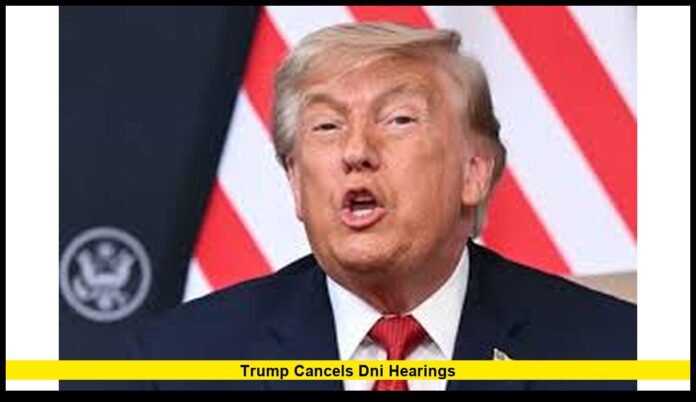

The political debate surrounding intelligence leadership in Washington took a dramatic turn after trump cancels dni hearings became one of the most discussed topics across the nation’s capital. The decision has placed renewed attention on the future of the Office of the Director of National Intelligence, the Senate confirmation process, and the broader relationship between the White House and Congress.
The development arrives at a time when lawmakers are already engaged in heated discussions involving national security priorities, surveillance authorities, and leadership transitions within the federal government. What might have been a routine nomination process has now evolved into a major political story with implications for intelligence operations, congressional negotiations, and executive branch authority.
As Washington works through these disputes, the outcome could influence not only the leadership of the intelligence community but also the future direction of several important national security initiatives.
A Critical Role in the U.S. Government
The Director of National Intelligence serves as one of the most important national security officials in the federal government. The position was established to coordinate the work of the nation’s intelligence agencies and improve information sharing across departments.
The DNI oversees a vast intelligence network that includes agencies responsible for gathering information, assessing threats, and advising policymakers on issues affecting national security. The office helps ensure that intelligence collected by different agencies is integrated into a coherent picture for decision-makers.
Because of the significance of the role, Senate confirmation hearings traditionally receive substantial attention from lawmakers and security experts. Nominees are typically questioned on intelligence priorities, management experience, cybersecurity concerns, foreign threats, and their vision for the future of the intelligence community.
For that reason, any disruption to the confirmation process quickly becomes a major political story.
How the Current Dispute Began
The vacancy created an opening at the top of the intelligence community, requiring the White House to nominate a candidate capable of leading one of the most complex organizations in government.
Initially, the nomination process appeared likely to move through standard congressional procedures. However, disagreements over timing, political strategy, and related legislative priorities gradually transformed the nomination into a larger political confrontation.
As discussions intensified, questions emerged about whether Senate hearings should move forward immediately or wait until other personnel and policy matters were resolved.
Those disagreements ultimately set the stage for the current standoff.
Why the Hearing Delay Matters
Confirmation hearings are more than procedural events. They provide lawmakers with an opportunity to evaluate nominees in public, question them about policy positions, and assess their qualifications for high-level government service.
A delay can have several consequences.
First, it extends uncertainty regarding permanent leadership of the intelligence community.
Second, it creates additional political tension between the executive and legislative branches.
Third, it may affect ongoing policy discussions involving national security, intelligence reform, and surveillance programs.
Supporters of a quicker confirmation process argue that leadership stability is especially important during periods of international uncertainty. They contend that permanent leadership can improve coordination and provide clearer direction across intelligence agencies.
Others believe that broader political and legislative issues should be addressed before the nomination proceeds.
The debate highlights the competing priorities currently shaping Washington politics.
The Role of Acting Leadership
Temporary appointments are not uncommon in Washington. Administrations frequently rely on acting officials when vacancies arise or when nominees await Senate confirmation.
Supporters of the current arrangement argue that acting officials can maintain continuity and ensure government functions continue without interruption.
Critics counter that long-term reliance on acting appointments may create uncertainty and limit strategic planning.
The debate surrounding acting leadership has become intertwined with broader disagreements about the confirmation process itself.
As a result, discussions that initially focused on one nomination have expanded into larger questions about governance and accountability.
Congress and the White House Face Another Test
Relations between Congress and the White House often become most visible during confirmation battles.
The Constitution divides authority between the executive branch, which nominates senior officials, and the Senate, which provides advice and consent through the confirmation process.
That balance can produce cooperation, but it can also generate conflict.
The latest dispute demonstrates how nominations can become focal points for broader political disagreements. Lawmakers may use confirmation proceedings to raise concerns about policy decisions, administrative priorities, or government management.
At the same time, administrations frequently seek to advance nominees who align with their strategic goals and policy agenda.
When those objectives collide, confirmation battles can quickly become national political stories.
National Security Implications
Beyond politics, the dispute has raised questions about national security management.
The intelligence community operates in an environment that requires constant monitoring of global developments. Intelligence agencies assess military activity, terrorism threats, cyberattacks, foreign influence operations, and emerging geopolitical risks.
Leadership transitions inevitably attract attention because senior officials help establish priorities and coordinate responses across multiple agencies.
Supporters of a prompt confirmation argue that a permanent DNI can provide stability during a period marked by complex international challenges.
Others maintain that taking additional time to review leadership decisions does not necessarily weaken intelligence operations because experienced career professionals continue carrying out essential responsibilities.
The debate reflects differing views on how leadership transitions should be handled during periods of heightened global uncertainty.
The Political Calculations Behind the Fight
Every major nomination involves political calculations.
For the White House, nominations offer an opportunity to shape federal agencies and implement policy objectives through trusted leadership.
For senators, confirmation hearings provide a platform to examine nominees and influence national policy discussions.
As a result, nomination battles often become proxy fights over broader political issues.
The current dispute appears to fit that pattern.
Questions involving surveillance authorities, executive authority, intelligence oversight, and congressional procedure have all become part of the discussion.
Rather than focusing solely on one nominee, lawmakers are debating larger issues that affect the structure and operation of government.
That dynamic has helped keep the controversy in the national spotlight.
Public Attention Grows
Although intelligence leadership changes do not always attract widespread public interest, this situation has generated significant attention.
Part of that attention stems from the prominence of the political figures involved.
Another factor is the broader debate over national security and government oversight.
Americans increasingly pay attention to issues involving intelligence agencies, cybersecurity, foreign threats, and federal accountability. As a result, leadership changes within the intelligence community often receive more scrutiny than they did in previous decades.
The hearing dispute has therefore become more than a procedural matter. It has evolved into a broader conversation about how government institutions function and how national security decisions are made.
What Happens When Hearings Are Delayed
When confirmation hearings are postponed or delayed, several scenarios can unfold.
The administration may continue discussions with Senate leaders in an effort to build support for moving forward.
Lawmakers may negotiate compromises related to scheduling, policy concerns, or legislative priorities.
Additional reviews and consultations may take place behind the scenes before a hearing is ultimately scheduled.
In some cases, delays are relatively brief and produce little long-term impact.
In others, they can significantly reshape the political environment surrounding a nomination.
The outcome often depends on whether key stakeholders find common ground or remain locked in disagreement.
Trump Cancels DNI Hearings and the Debate Intensifies
As the controversy continues, the issue of trump cancels dni hearings remains at the center of political discussion in Washington.
The situation has brought together several major themes shaping the current political landscape: executive authority, congressional oversight, intelligence leadership, and national security policy.
Each of these issues carries significance beyond a single nomination.
The debate has also underscored the importance of the Senate confirmation process as a constitutional check on executive power. While administrations nominate senior officials, lawmakers retain a critical role in evaluating those candidates and determining whether they should receive confirmation.
That balance remains one of the defining features of the American political system.
Potential Paths Forward
Several possible outcomes remain on the table.
The administration and Senate leaders could reach an agreement that allows the confirmation process to proceed.
Lawmakers could continue debating related policy issues before revisiting the nomination.
The hearing schedule could be adjusted to accommodate broader legislative negotiations.
Alternatively, political disagreements could persist, extending uncertainty surrounding intelligence leadership.
Regardless of which path emerges, the dispute has already become a significant chapter in the ongoing relationship between the White House and Congress.
Observers across Washington will be watching closely for signs of progress or further escalation.
Why This Story Matters Beyond Washington
Although the dispute is unfolding inside the nation’s capital, its implications extend far beyond Capitol Hill.
Leadership decisions involving intelligence agencies affect how the government responds to security challenges at home and abroad.
They also influence public confidence in institutions responsible for protecting national interests.
For that reason, confirmation battles involving senior national security officials often attract attention from policymakers, security experts, and citizens alike.
The current controversy serves as a reminder that leadership transitions can carry both political and operational significance.
As negotiations continue and lawmakers debate the next steps, the future direction of the intelligence community remains one of the most closely watched issues in Washington.
The coming weeks may determine whether the nomination moves forward, whether additional political obstacles emerge, and how Congress and the White House navigate one of the most prominent confirmation disputes of the year.