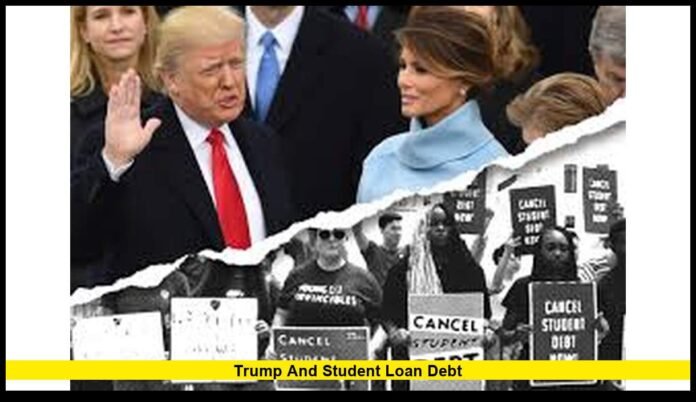

Trump and student loan debt has become one of the most closely watched policy areas in the United States as federal enforcement, repayment expectations, and borrowing limits continue to shift. Millions of Americans with student loans are now navigating a system that emphasizes repayment discipline, reduced federal exposure, and tighter oversight. These changes are already affecting household finances, credit outcomes, and long-term financial planning across the country.
Student loans are no longer treated as a background issue in federal policy. They now sit at the center of economic conversations involving personal responsibility, taxpayer protection, and the cost of higher education. Understanding how these changes work in practice is essential for borrowers at every stage of repayment.
The Federal Shift in Student Loan Philosophy
The current direction of federal student loan policy reflects a broader shift toward enforcement and accountability. Under this approach, student loans are viewed primarily as financial obligations that must be repaid, rather than social tools designed for widespread relief. This mindset drives policy decisions that prioritize repayment completion, cost control, and administrative simplicity.
Supporters of this approach argue that it restores balance to a system they believe had grown too complex and costly. They point to rising national debt levels and the long-term burden placed on taxpayers. Critics argue that strict enforcement ignores economic realities facing borrowers, including rising housing costs, healthcare expenses, and stagnant wages.
Regardless of political alignment, the impact of this shift is being felt across the country.
Why Student Loan Enforcement Has Returned
One of the most visible developments tied to Trump and student loan debt policy is the full return of federal loan enforcement tools. During previous years, enforcement actions were limited or paused. Those protections are no longer in place.
Federal agencies are once again authorized to:
- Collect defaulted loans through wage withholding
- Offset federal tax refunds
- Reduce certain federal benefit payments
These actions occur administratively, without the need for court involvement. For borrowers in default, this represents a major change in day-to-day financial reality.
Wage Garnishment and Its Real-World Impact
Wage garnishment is one of the most powerful collection tools available to the federal government. When triggered, a portion of a borrower’s disposable income is withheld directly from paychecks.
This can have immediate consequences:
- Reduced take-home pay
- Increased financial stress
- Difficulty covering rent, utilities, and food
Borrowers typically receive notice before garnishment begins. However, failure to respond can result in automatic deductions that continue until the debt is resolved. For many households, this enforcement tool creates urgency around addressing loan status.
Default Rates and Borrower Challenges
After years of paused payments, many borrowers struggled to resume repayment. Defaults rose as borrowers adjusted to monthly obligations they had not faced for an extended period.
Factors contributing to default include:
- Income instability
- Rising living costs
- Confusion over repayment options
Under current policy, default is no longer treated as a temporary hardship but as a condition requiring resolution through repayment or structured intervention.
Changes in Repayment Plan Structure
Federal repayment plans have undergone structural changes designed to reduce complexity. The goal is to create clearer expectations and predictable timelines for repayment.
Key characteristics of the updated framework include:
- Fewer overlapping repayment options
- More standardized payment calculations
- Emphasis on full repayment rather than indefinite balances
While income-based repayment still exists, it is now more tightly aligned with repayment completion rather than long-term balance cancellation.
Forgiveness Programs Under Tighter Oversight
Loan forgiveness remains available in limited forms, but eligibility standards are more strictly enforced. Broad cancellation initiatives are not a focus of current policy.
Forgiveness pathways generally require:
- Long repayment histories
- Verified employment or hardship conditions
- Strict compliance with program rules
Borrowers pursuing forgiveness must closely monitor eligibility requirements to avoid disqualification.
Public Service Loan Forgiveness Considerations
Public service loan forgiveness continues to operate, but administrative oversight has increased. Borrowers must ensure that employers qualify and that repayment plans meet program requirements.
Common challenges include:
- Employer misclassification
- Missed qualifying payments
- Incorrect repayment plan enrollment
Attention to detail has become essential for borrowers relying on this path.
Borrowing Limits and Education Costs
A significant component of Trump and student loan debt policy involves limiting how much borrowers can take out in federal loans, particularly for graduate and professional education.
The reasoning behind these limits includes:
- Preventing excessive debt accumulation
- Encouraging institutions to control tuition costs
- Reducing federal financial exposure
As a result, students may need to explore alternative funding sources or choose lower-cost programs.
How Future Students Are Affected
Prospective students are entering a system that places greater responsibility on personal financial planning. Unlimited federal borrowing is no longer an option in many cases.
This shift encourages:
- Greater price comparison between schools
- Increased use of grants and scholarships
- Consideration of workforce-aligned programs
While some see this as a positive correction, others worry about reduced access to advanced education.
The Role of Grants and Workforce Training
Grant programs remain a key element of federal education support. Pell Grants continue to assist low-income students and, in some cases, support workforce training initiatives.
This reflects a growing focus on education paths tied directly to employment outcomes rather than debt-funded degrees with uncertain returns.
Economic Ripple Effects of Student Loan Policy
Student loan enforcement affects the broader economy. When borrowers resume repayment or face garnishment, discretionary spending declines.
This can influence:
- Consumer spending patterns
- Housing affordability
- Credit market activity
At the same time, proponents argue that disciplined repayment strengthens long-term economic stability.
Borrower Action Steps in the Current Environment
Borrowers navigating Trump and student loan debt policy should take proactive steps to protect their finances.
Important actions include:
- Reviewing loan status regularly
- Responding promptly to official notices
- Exploring repayment or rehabilitation options early
Ignoring loan communications often leads to harsher outcomes later.
Options for Borrowers in Default
Borrowers in default still have paths to recovery. Rehabilitation and consolidation allow borrowers to return loans to good standing under specific conditions.
Each option has trade-offs related to:
- Credit impact
- Monthly payment amounts
- Long-term cost
Careful evaluation is essential before choosing a path forward.
Credit Score Consequences
Student loan default has serious credit implications. Negative marks can remain on credit reports for years, affecting access to housing, transportation, and employment.
Returning to good standing improves long-term credit health, but recovery requires consistent repayment behavior.
Public Debate and Political Division
Student loan policy remains deeply divisive. Some Americans support strict repayment enforcement, while others favor broader relief measures.
This debate reflects differing views on:
- Government responsibility
- Economic fairness
- Access to education
Student loans continue to shape political and economic discussions nationwide.
Legal Challenges and Policy Stability
Some student loan policies face ongoing legal scrutiny. While the overall direction remains focused on enforcement and repayment, individual rules may continue to evolve.
Borrowers should rely on official communications and verified account information rather than assumptions.
What Borrowers Should Expect Next
Looking ahead, the trajectory of Trump and student loan debt policy suggests continued emphasis on repayment completion, administrative efficiency, and fiscal restraint.
Borrowers should prepare for:
- Ongoing enforcement of defaulted loans
- Limited forgiveness opportunities
- Continued refinement of repayment systems
Planning for repayment rather than expecting future relief is increasingly important.
Final Perspective on Student Loan Policy
Trump and student loan debt policy reflects a fundamental redefinition of how the federal government approaches higher education financing. While these changes pose challenges for many borrowers, they also create a clearer framework centered on accountability and long-term system sustainability.
Understanding these policies allows borrowers to make informed decisions, avoid costly missteps, and take control of their financial futures.
How do you see these changes affecting borrowers across the country? Share your thoughts and stay engaged as federal student loan policy continues to evolve.