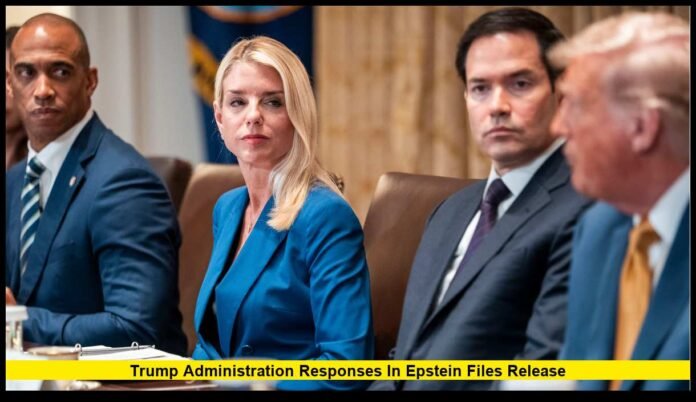

Trump administration responses in Epstein files release discussions have intensified as newly disclosed emails, congressional documents, and DOJ materials continue to generate national attention. Fresh information tied to Jeffrey Epstein’s network, combined with heightened demands for transparency, has pushed the White House into a defensive but highly visible position as scrutiny deepens across Washington.
The Latest Epstein Files: What Has Been Released
The term “Epstein files” now refers to multiple batches of documents made public throughout 2025. These releases include DOJ records, large congressional document dumps, and thousands of pages of emails involving Epstein, his associates, and individuals in political and business circles.
Recent public documents include:
- DOJ records containing redacted flight logs, evidence inventories, and archived investigative materials.
- Tens of thousands of pages released by a House committee, consisting of interviews, audio files, and documents from earlier law-enforcement actions.
- A newly public collection of roughly 20,000 pages of emails, some referencing former President Donald Trump and containing allegations that have become central to political debate.
The emails drawing the most attention include claims made by Epstein about Trump’s past interactions with people within Epstein’s circle. These statements appear in private correspondence and have not been affirmed by investigators or courts. Trump has faced no criminal charges in connection with the Epstein case.
How the Administration Has Handled the Unfolding Releases
Since resuming office, the Trump administration has attempted to position itself as a champion of transparency. The White House promoted early DOJ disclosures as part of a broader commitment to release Epstein-related records. However, many of the documents made public were already known through previous cases, leading to frustration from supporters who expected dramatic revelations or a clear, definitive list of Epstein’s associates.
This frustration surged after DOJ officials clarified that no formal “client list” exists in the way many had imagined, and that much of the remaining sealed material is protected under court orders or privacy laws. Those explanations, while legally grounded, created tensions between the administration and segments of its political base.
Pam Bondi’s Role and Rising Criticism
Attorney General Pam Bondi became a key figure in the controversy after helping oversee the DOJ’s first major release of documents. When expectations of more explosive material went unmet, she faced strong backlash from some political influencers and activists.
In response, Trump publicly defended Bondi, emphasizing that she was working within strict legal limits. The DOJ then released a memo outlining why certain materials remain sealed. The memo cited victim privacy protections, the absence of any single consolidated “client list,” and the fact that many requested documents are held under long-standing judicial restrictions.
Bondi’s handling of the process remains one of the most debated aspects of the administration’s approach.
Congress Increases Pressure With Major File Dumps
While the administration attempted to manage what it could legally release, Congress took a more aggressive approach. A Republican-led committee published tens of thousands of pages from earlier investigations, framing the move as a commitment to full transparency.
Simultaneously, lawmakers introduced the Epstein Files Transparency Act, designed to compel the DOJ to publish all unclassified Epstein-related records in a searchable online database. The bill includes protections for victims but seeks mandatory public access to the maximum extent possible.
Under additional pressure, the DOJ began turning over more materials to congressional investigators, though often with heavy redaction. Former officials, including former Attorney General William Barr, have participated in closed-door sessions to address questions about past handling of the case.
The Emails Naming Trump: White House Response and Public Reaction
The newest set of Epstein emails has generated the strongest political reaction yet. These messages include Epstein’s own statements regarding Trump and references to social interactions between Trump and individuals in Epstein’s circle more than a decade ago.
Key points from the newly circulated emails include:
- Epstein’s claims that Trump was aware of certain behaviors within Epstein’s environment.
- References to interactions involving Trump and a victim, described in the emails without independent verification.
- Exchanges with outside figures who discussed Trump and Epstein’s past association.
The White House has sharply rejected the implications of these emails. Trump has stated that he ended his relationship with Epstein long before Epstein’s legal troubles resurfaced, and maintained that he had no knowledge of any abuse. Senior officials have emphasized that private statements from Epstein do not constitute evidence and that Trump remains uncharged in every Epstein-related matter.
This issue has fueled partisan divides. Some lawmakers argue the emails raise significant questions that must be addressed, while Trump’s supporters frame them as politically motivated attempts to damage the administration.
Legal Steps and Court Battles Over Sealed Records
The administration has taken a selective approach to unsealing records. At times, it has supported releasing specific grand jury materials related to Ghislaine Maxwell’s prosecution. In one high-profile ruling, a federal judge denied such a request, citing strict grand jury secrecy rules and warning that wide-scale unsealing could undermine legal protections fundamental to the justice system.
These mixed strategies—pursuing limited releases while resisting broader disclosures—have fueled criticism from both sides of the political spectrum.
Political Messaging, Blame Shifting, and Intensified Debate
As scrutiny increases, the administration has aimed to shift attention toward political rivals with historical ties to Epstein. Statements from Trump and his allies have highlighted relationships between Epstein and prominent Democrats, arguing that investigations should be broadened.
Outside Washington, this controversy has triggered new fractures among political influencers. Some who previously demanded full transparency now downplay the significance of emails referencing Trump, while others accuse the administration of withholding sensitive information to protect the president.
Despite political maneuvering on all sides, one fact remains clear: the ongoing file releases have become a major national issue that blends legal complexity with intense public interest. The debate will continue as new records emerge and congressional inquiries advance.
As more developments unfold, feel free to share your thoughts below and join the conversation about where the Epstein files story goes next.