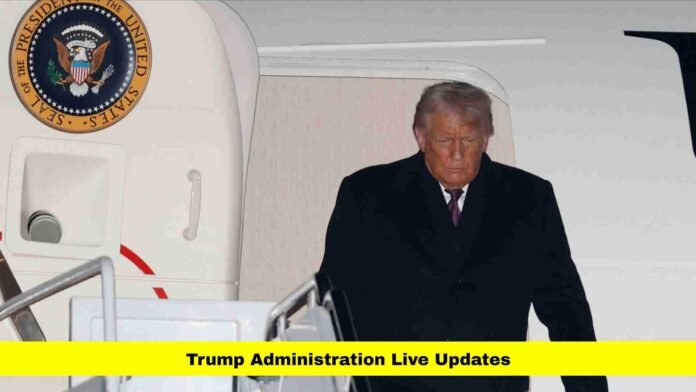

The Trump Administration Live Updates on Thursday brought a significant change to federal immigration enforcement policy, particularly in Minnesota, where an extensive surge of immigration agents is now ending after months of controversy, protests, and fatal shootings. Officials from the White House confirmed that the large-scale operation known as “Operation Metro Surge” will be concluded following intense public backlash, political pressure, and negotiations with state and local authorities.
This long-running national story has drawn widespread attention across the United States, with impacts felt in Minneapolis-Saint Paul and beyond. Today’s developments mark a turning point in how the federal government executes immigration enforcement in one of the most challenging and contentious environments in recent years. This detailed article presents the confirmed status of this major policy change, laying out the timeline, key players, outcomes, and broader implications for communities and immigration policy nationwide.
A Controversial Enforcement Surge Begins
Late last year, the federal government deployed a large number of Immigration and Customs Enforcement (ICE), Border Patrol, and Customs and Border Protection (CBP) agents to the Minneapolis area. Officials described this deployment as part of an intensified effort to target undocumented immigrants believed to be involved in serious criminal activity and fraud. The operation brought thousands of federal agents into Minnesota — far more than the usual baseline presence that had historically covered the region.
The sudden arrival of these agents, many in tactical gear and operating with broad authority, raised immediate concern among local residents, law enforcement officials, and community leaders. Cities like Minneapolis and Saint Paul had long relied on established cooperation between federal and local authorities, but the scale and nature of this surge altered that dynamic significantly.
Operation Metro Surge: Scale and Tactics
At its peak, Operation Metro Surge included an unprecedented deployment of roughly 3,000 federal personnel operating across the Twin Cities metro area. This represented a dramatic increase from the approximately 150 immigration officers normally stationed in the region. The mission focused on apprehending individuals without legal status, alleged public safety threats, and suspected participants in large-scale fraud schemes that federal officials claimed were undermining public welfare programs.
Federal agents conducted raids, made arrests, and apprehended thousands of people during the months-long operation. Senior federal law enforcement officials asserted that the initiative had made Minnesota “less of a sanctuary state” for undocumented individuals they characterized as criminal threats.
Backlash and Community Response
The operation quickly generated widespread public backlash. Minneapolis and Saint Paul residents, civil rights advocates, and immigrant rights organizations raised serious concerns over the scale and conduct of federal actions. Many criticized the tactics used, alleging that they created fear among communities regardless of immigration status.
Protests erupted in the streets as residents and activists demanded accountability and transparency. These demonstrations were driven in part by local outrage over the policing of raids, the presence of armed federal agents in neighborhoods, and concerns about racial profiling. Some protest activities led to confrontations with law enforcement, adding to tensions across the city.
Local officials, including city and state leaders, consistently expressed concern about the impact of the federal operation on public safety and community trust. They argued that the presence of a large federal force was straining local resources and damaging relationships between residents and law enforcement.
Fatal Shootings Intensify Scrutiny
The controversy around the Minnesota surge deepened dramatically after two fatal shootings involving federal agents. In early January, a Minneapolis woman was shot and killed by a federal agent operating as part of the enforcement surge. Later in the month, another Minnesota resident was fatally shot during an encounter with federal officers.
These deaths, both involving U.S. citizens, drew national attention and heightened outcry from local leaders, activists, and community members. County medical examiners ruled at least one of the deaths a homicide, further intensifying demands for accountability and limits on federal enforcement authority.
The shootings sparked larger protests and became focal points for broader criticism of immigration enforcement policy under the Trump administration, particularly as questions mounted about tactics, transparency, and oversight.
Legal Challenges and State Opposition
In response to the federal actions, the state of Minnesota, along with the cities of Minneapolis and Saint Paul, filed a lawsuit seeking to halt the operation and challenge its legality. State officials alleged that the federal surge violated constitutional rights and undermined local governance. They argued that the large-scale deployment of armed, masked agents operating with broad authority led to constitutional violations and civil liberties abuses.
The lawsuit cited concerns over arrests of individuals who were U.S. citizens or legally present in the United States, as well as aggressive enforcement actions in sensitive locations such as schools and churches. State leaders emphasized the economic and social impact of the federal presence, including school closures, increased security costs, and harm to local businesses.
At one point, a federal judge denied a request to temporarily block the immigration operation, noting procedural issues with the request. However, the legal battle remained a prominent backdrop to ongoing protests and political debate.
Pressure Builds on the Trump Administration
As protests escalated and state and local leaders pressed their case, political pressure on the federal government mounted. National polling showed increasing concern among Americans about the scale of immigration enforcement tactics and the potential for overreach. Across the political spectrum, questions arose about balancing law enforcement goals with civil liberties and community stability.
State officials, including Minnesota’s governor, expressed optimism that the federal government would begin scaling back the surge. Local leaders underscored the need for meaningful dialogue and agreed that any reduction in federal agent presence needed to be coupled with long-term strategies to restore trust and protect civil rights.
This pressure set the stage for significant policy shifts in the federal enforcement approach, culminating in the developments of this week.
The Turning Point: Ending the Surge
On Thursday, federal officials announced a major shift: the large-scale immigration enforcement surge in Minnesota will be ending. Border enforcement officials confirmed that the operation, which began in December and had persisted through early February, will be brought to a close after achieving what they described as key objectives and in light of evolving cooperation with local law enforcement agencies.
The decision follows extensive discussions between the White House’s top border enforcement advisor, state officials, and local leaders. Federal authorities stated that they had reached agreements with county jails and local law enforcement that would allow for continued immigration enforcement through established channels rather than through the heightened surge model.
Under this new framework, federal agents are beginning to withdraw from the statewide operation, with a full transition expected soon. Some operational staff will remain temporarily to ensure a coordinated handover back to regional field offices.
Federal Officials Cite Cooperation and Results
Federal enforcement officials described the drawdown as a result of “unprecedented cooperation” from local authorities, who agreed to support federal efforts in a more structured and sustainable way. According to official statements, this collaboration has minimized the need for continued large-scale federal presence and allowed for a phased withdrawal.
Officials also cited arrest data and coordination with local partners as factors in the decision to end the surge. They emphasized that while the operation in Minnesota is ending, broader immigration enforcement priorities remain a central focus for federal agencies nationwide.
Despite scaling back, authorities noted that a relatively small contingent of agents would remain for a period of time to oversee the transition and maintain continuity of enforcement activities where necessary.
Reactions from Minnesota Leaders
Local leaders in Minnesota responded to the announcement with mixed emotions. Governor Tim Walz welcomed the decision, acknowledging that communities were eager for relief from the intense federal presence that had dominated daily life for weeks. He emphasized that rebuilding trust and addressing the economic and social impact of the enforcement surge would take time and sustained effort.
The mayor of Minneapolis expressed similar sentiments, highlighting the resilience of local residents during a period of upheaval. He underscored the need for communities to come together in the aftermath of the enforcement operation and to focus on healing and recovery.
Both leaders stressed that while the end of the operation does not resolve all concerns, it represents a major step toward restoring normalcy and rebuilding community trust.
Continued Enforcement Goals Nationwide
Even as the Minnesota surge ends, federal immigration enforcement efforts will continue elsewhere under the Trump administration’s broader policy framework. Officials reaffirmed their commitment to enforcing immigration laws nationwide, particularly in areas with high concentrations of undocumented immigrants or serious criminal activity.
Federal authorities reiterated that the conclusion of the Minnesota surge is not a retreat from enforcement goals, but rather a recalibration of tactics in response to community needs, legal considerations, and cooperation from local law enforcement partners.
This evolution reflects a dual approach: maintaining robust immigration enforcement while adapting strategies to minimize conflict and disruption in local communities.
Social and Economic Impact on Local Communities
The federal surge had deep effects on Minnesota communities, particularly in Minneapolis and surrounding areas. Businesses reported revenue declines due to residents staying indoors amid fears about federal raids. Schools temporarily closed due to security concerns, and many families experienced heightened stress due to the intense presence of law enforcement agents in neighborhoods.
Recovering from these economic and social disruptions will be a long process. Community advocates and local officials emphasized the need for targeted support and resources to help small businesses rebound, restore public trust, and address emotional and psychological trauma linked to the operation.
Looking Ahead: What Comes Next
With the surge ending, attention now turns to how immigration enforcement will be carried out in Minnesota and across the country going forward. Federal officials say enforcement will continue through traditional methods, with an emphasis on coordination and cooperation with state and local partners.
Legal proceedings related to the controversial operation may continue, as state officials pursue accountability and clarify constitutional boundaries for future federal actions. Community demands for transparency and oversight are likely to shape public debate and policy discussions in the months ahead.
As enforcement priorities evolve, many Minnesotans and Americans nationwide will be watching how federal authorities implement lessons learned from this high-profile operation.
What are your thoughts on how this policy shift will impact Minnesota communities and national immigration enforcement? Share your perspective below and stay informed on developments.