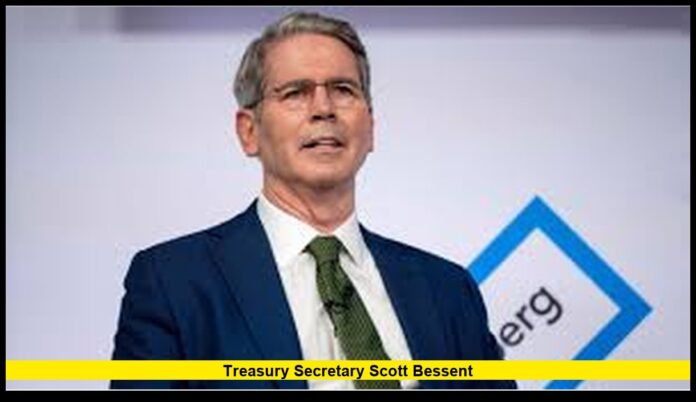

In one of his first major moves at the helm of the Treasury, Treasury Secretary Scott Bessent has signalled a decisive pivot in policy direction. From tightening the debt ceiling debate to opening the door for innovation in payments systems, he is clearly positioning the Treasury for a wide-ranging role in shaping the national economy and financial infrastructure.
A New Era at Treasury
When Bessent took office, he inherited a massive portfolio: overseeing federal finances, coordinating with global financial institutions, and ensuring economic growth. He stepped into the role during a time of mounting public debt, evolving trade tensions, and rapid innovation in technology and finance. His leadership style appears to embrace both financial-market sophistication and political-economic activism.
Holding the Line on the Debt Ceiling
One of the earliest priorities under Bessent’s watch is the statutory limit on U.S. government borrowing. In recent remarks, he stressed that the debt ceiling must be raised by mid-year to avoid triggering market disruption and jeopardising the nation’s credit standing. His public insistence on “full faith and credit” underscores how he views the Treasury’s role as not just a manager of money flows but as a stabiliser of confidence in global finance.
This urgency reflects both long-standing structural challenges — ballooning deficits, large rollover volumes of debt — and a desire to avoid the kind of brinkmanship that plagued past budget fights. His message: the markets should not doubt Washington’s ability to pay its bills.
Opening the Gate to Payments Innovation
Simultaneously, Bessent has shifted attention from purely macro-economic issues to the future of money itself — within the United States and internationally. He has directed the Treasury to review regulatory roadblocks facing blockchain, stablecoins and next-generation payment networks. By doing so, he is signalling that the department intends to be at the forefront of financial-technology policy, not on the sidelines.
This dual track — managing large-scale fiscal and debt issues while adapting to cutting-edge fintech developments — suggests the Treasury under Bessent is broadening its remit.
Geopolitical & Commodity Leverage Strategy
In a recent interview, Bessent made waves when he suggested that a shift in Venezuelan conditions could drive oil prices lower — an unusual statement for a Treasury chief, and one that hints at how he plans to treat commodity and geopolitical events as economic levers. Rather than simply react to energy prices, he appears prepared to use them as instruments of strategic policy.
His approach shows that the Treasury is not simply managing the domestic budget and debt, but playing in a global arena where energy, trade, sanctions and financial flows all converge.
Worker Take-Home Pay and Tax Withholding
On the domestic front, Bessent has flagged a change in payroll tax withholding rules starting January 2026 that he says will boost take-home pay for many workers. While not a wage increase, this policy tweak could deliver meaningful income improvement for households if implemented smoothly and broadly.
By linking fiscal policy mechanics directly to household income, Bessent is sending a message that the Treasury sees major implications not only for markets and governments, but for everyday Americans’ paychecks.
Key Policy Pillars Under Review
Here are the major axes of Bessent’s current agenda:
- Ensuring a smooth passage for the debt-ceiling resolution to maintain market confidence.
- Overseeing orderly, predictable debt issuance and refinancing amid large rollover requirements.
- Reforming regulatory frameworks to allow modern payment methods and digital assets to flourish.
- Using commodity policy and global leverage (energy, minerals) as tools of economic strategy.
- Adjusting tax and payroll mechanisms to lift households’ net income without direct wage legislation.
- Engaging more actively in trade and sanctions policy, viewing them as contiguous with fiscal and debt policy.
Institutional and Market Implications
For the financial markets, a Treasury with more visible strategic ambition is something new. Bond markets, credit markets and global investors will be watching whether issuance patterns change, how debt is managed, and how signalling from the Treasury evolves.
The focus on payment-technology regulation is also critical. If policy opens a clearer path for blockchain and stable-coin innovation, it could reshape parts of the U.S. financial system, competitiveness in fintech, and the role of the Treasury in supervising emergent market infrastructure.
Risks and Balance Points
Any shift of this magnitude carries risks:
- Should the debt ceiling process become protracted, markets could react with volatility, higher yields and costlier financing.
- Boosting take-home pay via withholding changes could lift consumer spending; if inflationary pressure builds, the Treasury may have to recalibrate.
- Opening regulatory pathways for fintech and stablecoins has upside—but also demands stronger oversight against fraud, money-laundering and systemic risk.
- Using energy or commodity policy as economic leverage is inherently risky: unintended consequences, retaliation or supply-chain disruption could undercut the strategy.
- The more outward-facing the Treasury becomes — engaged in trade discussions, sanctions, global finance reform — the more the role overlaps with diplomacy, defense, commerce. That could blur lines and provoke institutional friction.
What to Monitor in the Coming Months
Ahead, keep an eye on:
- How the debt-limit timeline plays out and whether any market stress appears before the resolution.
- The size, cadence and composition of Treasury debt auctions and whether any shifts emerge under Bessent’s leadership.
- Regulatory pronouncements from the Treasury about blockchain, stablecoins or real-time payments systems.
- Moves in commodity and energy markets in response to Treasury comments or policy signals, particularly in Venezuela, Russia/Ukraine or rare-earth minerals.
- Employer implementation of the withholding changes and any data showing impact on worker net pay, consumer spending and household finances.
- Investor reactions to Treasury messaging: yield curves, spreads, risk premiums and fintech valuations will all tell part of the story.
A Larger Vision for Growth, Jobs and Markets
At a higher level, Bessent’s strategy presents a coherent vision: stabilise the foundations of U.S. public finance, harness innovation in payments and technology, and leverage America’s energy and commodity position to shape global economic outcomes. He seems intent on redefining the Treasury’s role — not simply as guardian of the Treasury market, but as an active driver of growth, innovation and strategic power.
He has signalled that prosperity is not incidental; it is a goal. Boosting take-home pay, encouraging new payment platforms, aligning finance with geopolitics — all point to a Treasury that is repositioning itself for the 2020s era.
Final Thoughts
In economic terms, momentum is essential. What matters now is execution. Can the department under Bessent align institutional capacity, market expectations and technological readiness to deliver? Will legislation, employer systems, market structures all come together?
The next few quarters will be telling: low-yield pressure may return, fintech questions will intensify, and global commodity dynamics could surprise. But one thing appears clear: the era of passive Treasury management is giving way to active strategic ambition.
Let me know your thoughts below — what are you watching most closely, and how do you feel about the direction being taken?
DISCLAIMER:
The information in this article is intended for general informational purposes only. It should not be taken as financial, legal, tax, or investment advice. Readers should evaluate all details independently and consult qualified professionals before making any decisions based on the content provided.