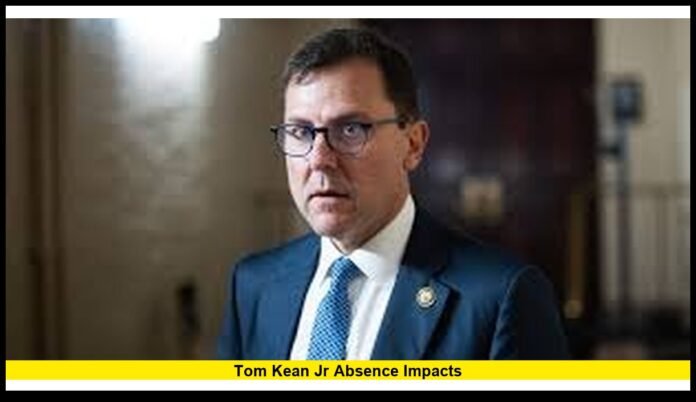

The tom kean jr absence impact has become one of the most closely watched political developments in Washington and New Jersey during 2026. As Representative Tom Kean Jr. spent months away from public duties while addressing a personal medical matter, questions emerged about congressional representation, legislative voting power, and the future of one of the nation’s most competitive House districts. What began as concern over a lawmaker’s health quickly evolved into a broader discussion about transparency, governance, and the challenges that arise when a member of Congress is unable to actively participate for an extended period.
As attention intensified, political observers, constituents, party leaders, and campaign strategists all found themselves examining the consequences of Kean’s absence and what it could mean for the political landscape moving forward.
Key Points Summary
╔════════════════════════════════════════════════════════════════════╗
║ – Tom Kean Jr. has remained largely out of public view during a lengthy medical recovery in 2026. ║
║ – His absence occurred during a period of narrow margins in the U.S. House of Representatives. ║
║ – New Jersey’s 7th Congressional District remains one of the most competitive districts in the country. ║
║ – Questions about representation and constituent services became central topics of discussion. ║
║ – Political analysts believe the situation could influence campaign strategies ahead of the next election. ║
╚════════════════════════════════════════════════════════════════════╝
A Congressman From One of America’s Most Competitive Districts
Tom Kean Jr. is no ordinary member of Congress. Representing New Jersey’s 7th Congressional District, he serves an area that frequently determines which party gains momentum in statewide and national elections.
The district stretches across several counties and includes communities with diverse political views. Unlike districts that consistently favor one party, the 7th District is considered highly competitive, making every election closely watched by both Republicans and Democrats.
Kean entered Congress after years of service in New Jersey politics. Before winning a seat in the House of Representatives, he built a lengthy record in the state legislature and became one of the most recognizable Republican figures in New Jersey. His moderate political profile helped him attract support from independent voters, making him a valuable figure for Republicans seeking to maintain influence in suburban districts.
Because of the district’s importance, any significant development involving its representative quickly attracts national attention.
The Beginning of Public Concern
Early in 2026, observers began noticing that Kean was missing from public events and congressional activities. At first, there was little public discussion surrounding his absence. Members of Congress occasionally miss votes or spend time away from Washington for personal reasons, district work, or family matters.
However, as the weeks passed, questions began to grow.
Constituents wanted to know whether their representative was actively performing his duties. Political reporters sought clarification from congressional staff. Opponents began asking whether voters were receiving adequate representation.
The lack of frequent public appearances fueled speculation, creating an unusual situation in which rumors often spread faster than verified information.
Eventually, Kean acknowledged that he was dealing with a medical issue and indicated that physicians expected a full recovery. While the statement provided reassurance regarding his health outlook, it did not immediately end public interest in the story.
Why Congressional Absences Matter
Most Americans may not closely follow congressional attendance records, but extended absences can have significant consequences.
The House of Representatives often operates on tight vote margins. When party control is closely divided, every member can become important during legislative debates and final votes.
Members of Congress serve multiple roles simultaneously. They vote on legislation, participate in committee work, meet with constituents, communicate with federal agencies, and advocate for local priorities. When a representative is unavailable for an extended period, questions naturally arise about how those responsibilities are being managed.
In Kean’s case, the timing made the situation even more notable. Congress was considering several important legislative matters while partisan divisions remained intense. Any prolonged absence therefore attracted heightened scrutiny.
Political analysts noted that the issue was not simply about one lawmaker’s attendance record. Instead, it highlighted broader concerns about how congressional institutions function when elected officials face unexpected personal challenges.
The Challenge of Representing a District From Afar
One of the biggest concerns among residents involved representation at the local level.
Constituents depend on congressional offices for assistance with a wide range of issues. These can include matters involving federal agencies, veterans’ benefits, immigration cases, Social Security questions, and other government services.
Even when a representative is unavailable, congressional staff typically continue handling constituent requests. However, many voters view direct engagement from their elected official as an important aspect of representation.
Town halls, community events, public meetings, and local appearances allow representatives to maintain connections with the people they serve. When those interactions become limited, some constituents feel disconnected from the political process.
The situation sparked debate about what level of communication the public should expect when an elected official faces a serious health challenge. Some voters emphasized the importance of privacy, while others argued that transparency becomes especially important when public responsibilities are involved.
A Test for House Leadership
The absence also created challenges inside Congress.
House leaders constantly calculate vote counts when deciding how and when legislation moves forward. In a chamber where major bills can pass or fail by only a handful of votes, every member becomes part of a larger strategic equation.
An unavailable lawmaker can force leadership teams to reconsider legislative schedules, delay votes, or seek additional support from members who may be undecided.
Although congressional leaders publicly expressed support for Kean’s recovery, the practical reality remained clear: fewer available members can make governing more difficult.
The episode served as a reminder of how fragile legislative margins can become during periods of political polarization.
Political Reactions Across Party Lines
Not surprisingly, reactions varied depending on political perspectives.
Many Republicans emphasized compassion and respect for personal privacy. They argued that health matters are deeply personal and that public officials should not be required to disclose every detail of a medical situation.
Supporters pointed to Kean’s years of public service and argued that temporary health challenges should not overshadow a broader record of work on behalf of constituents.
Democrats, meanwhile, focused on questions of representation and accountability. Some argued that voters deserve regular updates when an elected official is unable to actively perform public duties.
The debate reflected a larger national conversation about balancing personal privacy with public responsibility. Similar discussions have occurred throughout American political history whenever elected officials faced significant health concerns.
The Election Implications
As the next election approaches, the political consequences remain uncertain.
Competitive districts often magnify every issue facing an incumbent. Campaigns frequently revolve around voter perceptions regarding effectiveness, visibility, and leadership.
For Kean, the central challenge may be convincing voters that his absence was temporary and did not diminish his ability to serve effectively.
Republican strategists generally believe that a successful return to public life could minimize long-term political damage. If voters view the situation as a short-term health setback followed by a full recovery, the issue may gradually fade from public attention.
Democratic challengers, however, are expected to highlight the period of absence as part of their broader argument for political change.
Whether voters ultimately view the issue as significant could depend on events that unfold over the coming months.
The Role of Media Coverage
Media attention played a major role in transforming the situation into a national story.
In today’s digital environment, prolonged absences from public view rarely go unnoticed. Social media, political newsletters, television coverage, and online reporting can rapidly amplify questions about public officials.
The absence of detailed information often creates a vacuum that attracts speculation. Political observers closely monitored every statement, appearance, and update connected to Kean’s condition.
The resulting coverage extended far beyond New Jersey. National political publications, television networks, and commentators all examined what the situation might mean for congressional operations and electoral politics.
The story demonstrated how quickly local political developments can become matters of national interest.
The Broader Debate About Transparency
The tom kean jr absence impact has also revived a longstanding discussion about transparency in government.
Many Americans believe elected officials deserve privacy regarding personal health matters. At the same time, voters often expect sufficient information to understand whether their representatives can fulfill official responsibilities.
Finding the balance between those principles is rarely simple.
Public officials are individuals with families and personal challenges, yet they also hold positions that affect millions of people. Determining how much information should be shared remains one of the most difficult questions in democratic governance.
Kean’s situation illustrates that tension. While many constituents expressed sympathy and support, others sought greater clarity about his condition and expected timeline for returning to full duties.
The debate is likely to continue long after this specific episode concludes.
Looking Ahead
As 2026 progresses, attention will increasingly focus on Kean’s return to active public service and the approaching election cycle.
Political observers will monitor his participation in congressional activities, public appearances, campaign events, and constituent outreach efforts. Voters will ultimately decide whether the absence altered their views about his leadership.
For now, the story remains significant because it touches on several important issues at once: health, representation, congressional operations, electoral politics, and public trust.
While the long-term political impact remains uncertain, the episode has already become one of the most discussed congressional stories of the year. It serves as a reminder that even a single member’s absence can create ripple effects throughout Washington and far beyond, especially when that member represents one of America’s most closely contested districts.
What are your thoughts on the political and legislative effects of Tom Kean Jr.’s extended absence? Join the conversation and stay updated as this developing story continues to shape the 2026 political landscape.