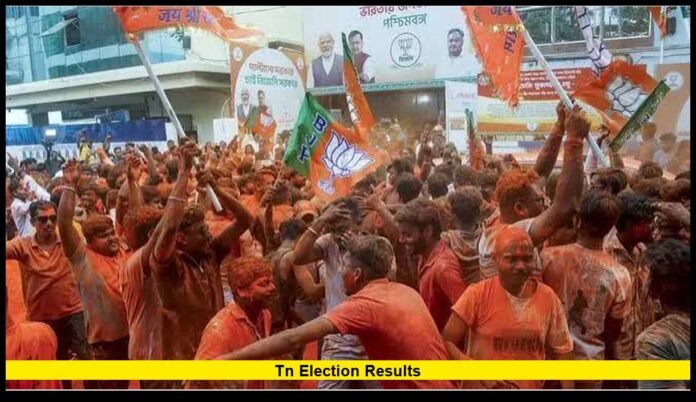

The 2026 Tamil Nadu Assembly election has delivered one of the most significant political verdicts in the state’s modern history. After weeks of campaigning, public debates, and high voter participation, the final verdict has reshaped the balance of power in Tamil Nadu. The election has not only determined who will govern the state for the next five years but has also marked a turning point in regional politics with the emergence of a new ruling force.
Across all 234 Assembly constituencies, voters cast their ballots to decide the future of Tamil Nadu’s leadership. The official count confirmed a decisive result, bringing an end to intense political competition and setting the stage for a new government. The outcome has generated nationwide interest because Tamil Nadu has long been regarded as one of India’s most influential political states, often setting trends that extend beyond its borders.
A Historic Election for Tamil Nadu
Tamil Nadu has traditionally witnessed contests dominated by powerful regional parties that have shaped the state’s governance for decades. The 2026 election, however, introduced a different political landscape. New campaign strategies, changing voter expectations, and the entry of emerging political forces transformed what many expected to be another closely fought contest.
From major cities like Chennai and Coimbatore to remote rural constituencies, voter participation reflected strong public engagement. Citizens from every region took part in choosing their representatives, making this one of the most closely watched Assembly elections in recent years.
The final results demonstrated that voters were willing to embrace significant political change while continuing to support candidates they believed could address local issues effectively.
Official Seat Distribution
The election concluded with all 234 constituencies declaring their winners, providing a clear picture of the new Assembly.
The final party-wise tally is as follows:
- Tamilaga Vettri Kazhagam (TVK) – 108 seats
- Dravida Munnetra Kazhagam (DMK) – 59 seats
- All India Anna Dravida Munnetra Kazhagam (AIADMK) – 47 seats
- Indian National Congress – 5 seats
- Pattali Makkal Katchi (PMK) – 4 seats
- Communist Party of India (CPI) – 2 seats
- Communist Party of India (Marxist) – 2 seats
- Indian Union Muslim League (IUML) – 2 seats
- Viduthalai Chiruthaigal Katchi (VCK) – 2 seats
- Amma Makkal Munnetra Kazhagam (AMMK) – 1 seat
- Bharatiya Janata Party (BJP) – 1 seat
- Desiya Murpokku Dravida Kazhagam (DMDK) – 1 seat
These results define the composition of the newly elected Tamil Nadu Legislative Assembly and establish the political balance for the coming term.
TVK Achieves a Landmark Victory
The biggest story of the election is undoubtedly the remarkable rise of Tamilaga Vettri Kazhagam. Winning 108 Assembly constituencies, the party secured enough seats to emerge as the dominant political force in the state.
For many political observers, this result represents a dramatic shift from previous electoral cycles. TVK succeeded in building support across diverse regions rather than relying on victories in only a handful of districts.
The party’s candidates performed well in metropolitan areas, growing industrial centers, and several rural constituencies, indicating broad voter acceptance across different demographic groups.
The victory positions TVK to lead the state’s administration and implement its policy priorities over the next five years.
DMK Transitions to the Opposition
Although the Dravida Munnetra Kazhagam remained one of Tamil Nadu’s largest political organizations, the election outcome placed the party in the opposition.
Winning 59 Assembly seats, DMK retained a substantial legislative presence but was unable to secure enough constituencies to continue governing the state.
The party continues to enjoy considerable support in several districts and remains an influential voice in Tamil Nadu politics. As the principal opposition, it will play an important role in legislative discussions, policy scrutiny, and debates inside the Assembly.
AIADMK Continues to Hold Ground
The All India Anna Dravida Munnetra Kazhagam secured 47 seats, maintaining representation across multiple regions.
Although the party did not challenge for government formation, its performance demonstrates that it continues to possess a loyal voter base.
Several AIADMK candidates achieved convincing victories in competitive constituencies, particularly in districts where the party has historically maintained organizational strength.
The election also highlighted the party’s ability to remain relevant despite increasingly competitive political conditions.
Performance of Smaller Parties
While larger regional parties dominated the election, several smaller organizations succeeded in securing representation in the Assembly.
Congress finished with five seats, while PMK earned four.
Left parties continued their presence through victories by both CPI and CPI(M). The Indian Union Muslim League and Viduthalai Chiruthaigal Katchi also secured representation.
Meanwhile, BJP, DMDK, and AMMK each won one constituency, ensuring that multiple political perspectives will be represented during Assembly proceedings.
Although these parties hold relatively few seats, they can still contribute to legislative discussions and committee work.
Regional Patterns Across Tamil Nadu
The election demonstrated that voting behavior varied considerably across different parts of the state.
Urban constituencies displayed distinct electoral preferences compared with many rural districts. Industrial regions often experienced highly competitive races, while certain agricultural constituencies delivered decisive victories for individual candidates.
Northern Tamil Nadu witnessed several closely contested elections where victory margins remained relatively narrow.
Western districts continued to be politically competitive, with multiple parties performing strongly depending on the constituency.
Southern Tamil Nadu produced mixed outcomes, reflecting local political dynamics rather than uniform statewide trends.
The Chennai metropolitan region also illustrated diverse voter preferences, with different parties securing victories in neighboring constituencies.
These regional variations highlight the complexity of Tamil Nadu’s political landscape.
Constituency Battles That Drew Attention
Every Assembly election includes contests that attract extraordinary public attention, and the 2026 election was no exception.
Several constituencies became closely watched because prominent candidates contested them.
Some races remained too close to call until the later rounds of counting, while others produced surprisingly comfortable victory margins.
Throughout counting day, supporters closely monitored changing leads as postal ballots and electronic voting machine totals were added to the official count.
The final constituency declarations confirmed numerous upsets as well as expected victories.
What Influenced Voters?
Several factors appeared to influence voter decisions across the state.
Among the issues frequently discussed during the campaign were:
- Employment opportunities
- Economic development
- Infrastructure expansion
- Public transportation
- Education
- Healthcare services
- Agricultural concerns
- Urban development
- Welfare initiatives
- Local constituency issues
Different regions prioritized different concerns, making the election highly localized despite its statewide importance.
Candidates who successfully addressed constituency-specific challenges often performed particularly well.
Importance of the Election Outcome
The new Assembly composition carries significance beyond simple seat numbers.
It reflects changing voter expectations and signals a shift in Tamil Nadu’s political direction.
A new governing party brings different administrative priorities, legislative goals, and policy initiatives. Government departments, development projects, welfare programs, and infrastructure planning may all evolve under the new administration.
Businesses, investors, educational institutions, and residents will all be watching how the government translates campaign commitments into policy implementation.
Government Formation and Administration
Following the declaration of results, the constitutional process of government formation moved forward.
With a clear majority in the Assembly, the leading party gained the ability to form the government without relying on coalition negotiations.
A stable majority generally enables smoother passage of legislation, easier implementation of administrative decisions, and greater political certainty throughout the Assembly’s five-year term.
The incoming government is expected to focus on fulfilling its electoral promises while addressing immediate governance priorities.
Role of the Opposition
A healthy democracy depends not only on an effective government but also on a strong opposition.
The newly constituted opposition will examine legislation, question government policies, and participate in Assembly debates.
Constructive opposition contributes to transparency and accountability while ensuring that multiple viewpoints receive consideration during policymaking.
The diversity of parties represented in the Assembly is likely to produce active legislative discussions on major issues affecting Tamil Nadu.
Public Response to the Election
The declaration of results generated widespread public interest across Tamil Nadu and beyond.
Television channels, digital platforms, and newspapers devoted extensive coverage to constituency trends, winning margins, and party performance.
Supporters celebrated victories in many districts, while political organizations began reviewing their campaign strategies for future elections.
Citizens also shifted their attention toward the new government’s priorities, cabinet formation, and administrative agenda.
For many voters, the election represented an opportunity to influence the state’s future direction through democratic participation.
Looking Ahead
With the electoral process complete, the focus now moves toward governance.
The newly elected representatives will begin their legislative responsibilities, while the government prepares to implement its development agenda.
Infrastructure projects, investment initiatives, education reforms, healthcare improvements, industrial growth, agriculture, environmental policies, and social welfare programs are expected to remain among the major areas of public attention.
The coming months will provide a clearer picture of how the new administration intends to address the expectations expressed by voters across the state.
Political analysts will also continue monitoring how the opposition reorganizes itself and how emerging political forces shape future electoral contests.
The Significance of This Electoral Verdict
The 2026 Assembly election will likely be remembered as one of the defining moments in Tamil Nadu’s democratic history.
A significant change in political leadership, a reconfigured Legislative Assembly, and the emergence of a new governing party have collectively reshaped the state’s political environment.
While election campaigns often focus on promises and debates, the attention now turns toward governance, public policy, and the delivery of development initiatives that affect millions of residents.
The newly elected Assembly reflects the choices made by voters across every corner of Tamil Nadu, reinforcing the importance of democratic participation in determining the state’s future.
What are your thoughts on the 2026 Tamil Nadu Assembly election outcome? Share your views in the comments and stay connected for more updates on the state’s political developments.