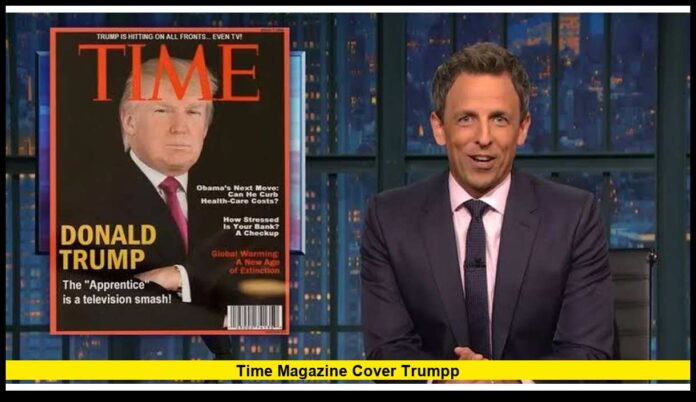

Donald Trump’s relationship with TIME magazine has become one of the most recognizable stories in modern American media. The time magazine cover trump topic continues to attract attention because his appearances document an extraordinary journey from real estate businessman to television personality, presidential candidate, and leader of the United States. With 56 cover appearances reported in October 2026, Trump has established a record that places him ahead of former President Richard Nixon.
His presence on the magazine’s cover has reflected important moments in American political and cultural history. Some covers have focused on his business reputation, while others have examined his election campaigns, presidential decisions, diplomatic efforts, and political controversies.
TIME’s repeated coverage also illustrates how Trump’s public image has changed over several decades. His early appearances presented him as a prominent businessman. Later editions examined his influence on the Republican Party, his two presidential victories, and his approach to governing.
The October 2026 issue, featuring the headline Trump’s Way, has brought renewed attention to this relationship. Its accompanying White House interview examines the president’s leadership, policy priorities, and approach to several major national and international challenges.
For readers interested in American politics, these covers provide more than recognizable photographs. They offer a visual record of the events, personalities, and debates that have shaped Trump’s public career.
How Donald Trump Became a Regular Presence on TIME Magazine
Donald Trump’s association with TIME began long before his entry into presidential politics. During the 1980s, he became a familiar name in American business and entertainment. His real estate projects, luxury developments, public statements, and ambitious approach to branding helped establish a recognizable public identity.
In 1989, Trump appeared on a TIME cover as a prominent businessman. At that point, his national reputation was primarily connected to commercial success, property development, and his growing celebrity status.
His appearance was significant because it introduced readers to a personality who would eventually become one of the most influential figures in American politics. However, nobody could have predicted the full extent of his future political career from his business profile alone.
During the following decades, Trump continued to attract media attention. His business ventures, television appearances, public comments, and involvement in political discussions kept him in the national conversation.
His role on television also strengthened his recognition among American audiences. The Apprentice introduced him to viewers as a businessman who evaluated contestants competing for professional opportunities. His television presence helped establish a distinctive public persona built around confidence, competition, and business leadership.
That visibility became important when he entered the Republican presidential race in 2015. Unlike many candidates who needed years to introduce themselves to voters, Trump already had substantial name recognition.
TIME’s coverage subsequently shifted toward his political activities, campaign strategy, and influence on the Republican Party.
The 2015 Presidential Campaign Changed Everything
Trump’s announcement of his presidential campaign in June 2015 marked a major turning point in his relationship with American political journalism.
His candidacy attracted immediate attention because he approached the Republican primary differently from many traditional candidates. He relied heavily on public rallies, television appearances, direct communication with voters, and an aggressive campaign message.
Immigration, trade, national security, employment, and criticism of Washington’s political establishment became prominent subjects in his campaign.
His communication style generated strong reactions. Supporters viewed him as a candidate willing to challenge established political practices. Critics questioned his statements, policy proposals, and approach to political debate.
As the Republican primary progressed, Trump became a dominant subject of national coverage.
TIME’s interest in his campaign reflected the growing importance of his candidacy. His political rise was not simply another presidential campaign story. It represented a significant development within the Republican Party and the wider American political system.
In 2016, Trump secured the Republican nomination and faced Democratic candidate Hillary Clinton in the general election.
The November election produced a major political upset. Trump won the Electoral College, defeating Clinton and becoming president-elect, although Clinton received more votes nationwide.
His victory transformed his public identity. The businessman and television personality had become the incoming president of the United States.
Why TIME Named Trump Person of the Year in 2016
TIME selected Trump as its 2016 Person of the Year following his presidential election victory.
The recognition reflected his extraordinary influence on American politics and the year’s major developments. It was an editorial assessment of his impact, not an endorsement of his political positions.
Person of the Year has a different purpose from a standard magazine cover. TIME uses the annual designation to recognize the individual or group that has had the greatest influence on events during the year.
Trump’s selection reflected the scale of his political achievement. His campaign had disrupted expectations, reshaped the Republican primary, and produced an unexpected presidential victory.
The selection also generated discussion because Trump was a divisive political figure. His supporters celebrated the recognition, while critics questioned the attention given to his political influence.
Nevertheless, the decision reflected a major historical development. Trump was preparing to enter the White House after winning an election that had attracted worldwide attention.
His 2016 recognition became an important milestone in his relationship with TIME and contributed to the magazine’s continuing coverage of his presidency.
TIME’s Coverage During Trump’s First Presidency
Trump took office on January 20, 2017. His first presidency introduced a new range of subjects for TIME’s political reporting.
The administration pursued changes involving taxation, immigration, trade, environmental regulation, foreign policy, and federal government operations.
His presidency also generated significant political disputes. Investigations, congressional disagreements, legal questions, and public controversies frequently dominated national political discussions.
TIME covered these developments through interviews, political analysis, photographs, and cover stories.
Several major events shaped the coverage during this period:
- Tax legislation: Trump signed the Tax Cuts and Jobs Act in December 2017.
- Immigration policy: His administration pursued significant changes to border enforcement and immigration rules.
- Foreign relations: Relations with China, North Korea, NATO allies, and other governments became major subjects of presidential coverage.
- Impeachment: Trump was impeached by the House of Representatives in 2019 and again in 2021.
- COVID-19: The coronavirus pandemic became a defining challenge during the final year of his first presidency.
- 2020 election: Trump lost his reelection campaign to Democratic nominee Joe Biden.
These developments provided substantial material for political journalism.
TIME’s coverage during Trump’s first administration reflected both the responsibilities of the presidency and the controversies surrounding his decisions.
The magazine’s covers became part of a broader media environment in which photographs, headlines, and political commentary frequently shaped public conversations.
The 2020 Election and Trump’s Departure From the White House
The 2020 presidential election marked another significant chapter in Trump’s relationship with TIME.
Trump faced Democratic nominee Joe Biden during an election conducted amid the COVID-19 pandemic and widespread public debate about the country’s future.
Biden won the election, receiving 306 electoral votes to Trump’s 232. Trump disputed the outcome and made allegations of election irregularities.
His efforts to challenge the results became a major subject of national political and legal scrutiny. Courts rejected numerous challenges that attempted to overturn the outcome.
On January 6, 2021, a violent attack on the U.S. Capitol interrupted the congressional certification of electoral votes. Congress later completed the certification, confirming Biden’s victory.
Trump left office on January 20, 2021.
His departure did not end his influence on American politics. Instead, he continued to shape Republican debates and remained a major figure in national political discussions.
For TIME, the post-presidency period introduced another important dimension to its coverage: the political future of a former president who remained active and influential within his party.
Trump’s Political Comeback and the 2024 Election
Trump’s return to presidential politics became one of the defining developments of the 2024 election cycle.
He announced another presidential campaign in November 2022 and sought the Republican nomination for a third consecutive election cycle.
His campaign focused on immigration, inflation, border security, energy policy, government spending, and criticism of the Biden administration.
He secured the Republican nomination and selected Senator JD Vance of Ohio as his running mate.
The campaign attracted significant attention because Trump was attempting to return to the presidency after losing his 2020 reelection bid.
His political and legal challenges also remained important subjects of national coverage.
On November 5, 2024, Trump defeated Democratic nominee Kamala Harris. He won the Electoral College and the national popular vote, becoming the first Republican presidential candidate since George W. Bush in 2004 to win the national popular vote.
His victory represented a remarkable political comeback.
TIME named Trump its 2024 Person of the Year for the second time. The selection recognized his return to power and the substantial influence his election had on American politics and international affairs.
The recognition also reinforced the magazine’s longstanding coverage of his political career.
Trump Returned to the White House in January 2025
Trump began his second presidential term on January 20, 2025, becoming the second president in American history to serve two nonconsecutive terms. Grover Cleveland was the first.
His return introduced another phase of presidential coverage for TIME.
The administration began pursuing a broad policy agenda involving immigration, federal government operations, trade, energy, foreign relations, and executive authority.
Several developments attracted particular attention:
- Changes to federal immigration enforcement.
- New executive actions involving government agencies.
- Trade and tariff decisions affecting international commerce.
- Changes to federal spending and regulatory priorities.
- Diplomatic efforts involving international conflicts.
- Disputes over presidential authority and constitutional responsibilities.
These subjects became important because they affected domestic policy and America’s relationships with other countries.
TIME continued examining the administration through political reporting and presidential interviews.
The magazine’s coverage also reflected the importance of Trump’s second term in the broader history of the American presidency.
His return demonstrated that his influence had survived an election defeat, a period outside the White House, and substantial political challenges.
The 2025 TIME Cover That Sparked a Reaction From Trump
One of the most widely discussed Trump covers in 2025 featured the headline His Triumph.
The issue focused on Trump’s involvement in diplomatic efforts surrounding the Israel-Gaza conflict. The cover photograph showed the president looking upward, with sunlight creating a distinctive visual effect behind him.
The image attracted attention beyond the magazine’s regular audience after Trump publicly criticized the photograph.
On October 14, 2025, Trump responded to the cover on Truth Social. Although he acknowledged that the accompanying story was relatively positive, he objected to the photograph and described it as unflattering.
His criticism focused on the camera angle, lighting, and appearance of his hair.
The reaction became another example of how TIME’s visual presentation of Trump can generate discussion independently of the reporting itself.
Political magazine covers often combine photography and editorial judgment. A photograph can influence how readers initially perceive a story, even before they examine the accompanying article.
In Trump’s case, the public response demonstrated how closely his personal image remains connected to his political identity.
The incident also highlighted the difference between a magazine’s written assessment and its choice of cover photography. A favorable discussion of a particular achievement does not necessarily mean the subject will approve of the image selected to accompany it.
For TIME, the episode became another notable moment in its long record of covering Trump.
The October 2026 TIME Interview: Trump’s Way
The October 26, 2026, TIME issue brought renewed attention to Trump’s presidency through a cover story titled Trump’s Way: The White House Interview.
The interview was conducted at the White House on September 28, 2026. It featured TIME senior correspondent Eric Cortellessa and Editor-in-Chief Sam Jacobs speaking with the president.
The conversation covered several major questions involving the administration and the direction of American government.
Rather than focusing exclusively on one policy area, the interview examined Trump’s approach to leadership and his priorities across domestic and international affairs.
The timing was particularly important because the United States was approaching the November 2026 midterm elections.
Those elections could influence congressional control and determine how easily the administration could advance its legislative priorities.
The interview also provided an opportunity to examine Trump’s views on the performance of his administration.
Among the subjects discussed were the economy, Iran, artificial intelligence, the Federal Reserve, the Supreme Court, and changes to the White House grounds.
The combination of these subjects made the issue relevant to readers interested in both presidential leadership and the practical consequences of government decisions.
Economic Conditions and the Administration’s Priorities
The economy remains one of the most important subjects in presidential reporting.
Americans evaluate economic conditions through everyday experiences, including housing costs, grocery bills, energy prices, employment opportunities, and household income.
Presidents regularly highlight economic achievements when discussing their administrations. However, economic performance involves several measurements that must be considered separately.
Inflation, wage growth, unemployment, consumer spending, and economic output can move in different directions.
For this reason, evaluating presidential economic claims requires more than examining a single headline or statistic.
TIME’s October 2026 interview addressed economic conditions and the challenges confronting the administration.
The discussion also placed economic questions within the political environment leading into the midterm elections.
For voters, the central concern is often whether government decisions improve their financial circumstances.
This makes economic coverage particularly important when assessing the political consequences of a presidential administration.
Foreign Policy and the Iran Conflict
Foreign policy was another major subject in the October 2026 interview.
The president’s approach to Iran and the broader international situation formed part of the discussion.
Decisions involving Iran have implications for American national security, regional stability, energy markets, and diplomatic relationships.
The president has significant responsibilities in directing foreign policy, although major decisions can also involve Congress, military leadership, diplomatic institutions, and international partners.
TIME’s interview examined Trump’s position on these challenges and his approach to international negotiations.
Foreign policy coverage is particularly important because presidential decisions can have consequences extending beyond the United States.
For American readers, the issue raises questions about national security, military commitments, diplomacy, and the country’s international standing.
Artificial Intelligence and America’s Technological Future
Artificial intelligence has become an increasingly important issue for American policymakers.
The technology is transforming industries, creating new business opportunities, and raising questions about employment, privacy, competition, and national security.
The United States also faces international competition in the development of advanced AI systems.
Government decisions can influence investment, research, infrastructure, and regulatory standards.
Trump’s discussion of artificial intelligence in the October interview placed the subject within the broader debate about America’s technological future.
The issue is relevant to workers, businesses, universities, investors, and government agencies.
It also illustrates how presidential reporting increasingly involves technology policy alongside traditional subjects such as foreign affairs and economic management.
The Federal Reserve and the Supreme Court
The Federal Reserve and Supreme Court also featured in the interview.
Both institutions occupy important positions within the American system of government, although their responsibilities are different.
The Federal Reserve conducts monetary policy and plays a central role in managing interest rates and supporting economic stability.
The Supreme Court serves as the nation’s highest judicial authority and resolves important questions involving federal law and the Constitution.
Presidential relationships with these institutions can become politically significant.
However, the Federal Reserve has statutory independence in conducting monetary policy, while the judiciary operates under constitutional and legal principles that separate its responsibilities from those of the executive branch.
Discussions involving these institutions therefore raise important questions about presidential authority and institutional independence.
Why TIME’s Trump Covers Attract Such Different Reactions
Trump’s TIME covers often generate reactions from people with different political viewpoints.
Supporters may view a prominent cover as recognition of his importance in American politics. Critics may interpret the same image or headline as controversial or overly favorable.
Others approach the magazine’s coverage as historical documentation rather than a political endorsement.
Several elements influence public reactions:
- Photography: The selected image can influence the emotional impression of a cover.
- Headline selection: A short headline can establish the central theme of an article.
- Political timing: Covers released around elections or major international developments often receive additional attention.
- Editorial interpretation: Readers may disagree with how a publication frames a political event.
- Social media: Public reactions can spread quickly and introduce the cover to audiences who might not otherwise see the issue.
These factors explain why Trump’s covers frequently become subjects of discussion beyond the magazine itself.
They also demonstrate the importance of separating an editorial image from the reporting that accompanies it.
A cover can capture attention, but the article provides the additional context needed to understand the underlying event.
TIME’s Historical Record and Richard Nixon
TIME’s reported count of 56 Trump cover appearances in October 2026 represents a significant milestone in the magazine’s history.
Richard Nixon previously held the distinction of appearing on the cover more times than any other individual.
Nixon’s appearances reflected his long political career, including his time as vice president, presidential campaigns, presidency, resignation, and continuing influence on American political history.
Trump’s record reflects a different but similarly extended public journey.
His career has included business, entertainment, presidential campaigns, two administrations, and an extraordinary period of political activity outside the White House.
The comparison is especially interesting because both men experienced major political controversies and became central figures in debates about presidential power.
However, cover counts should not be interpreted as measurements of political success or public approval.
They indicate how frequently an individual became a central subject of the magazine’s editorial coverage.
The number also depends on the publication’s historical archive and the counting method used for different editions.
For that reason, the significance of Trump’s record is best understood as a measure of sustained media attention rather than a judgment about his presidency.
How TIME Uses Magazine Covers to Document American Politics
TIME’s cover history provides a visual record of important developments in American political life.
Presidential covers are particularly significant because they often introduce stories about executive decisions, national challenges, elections, and international relationships.
Trump’s appearances demonstrate how a magazine can follow one individual through several different stages of public life.
His early coverage focused on business and celebrity. Later editions examined campaign developments, presidential victories, government policies, and diplomatic decisions.
This changing focus makes his cover history particularly interesting to readers studying American political communication.
Magazine covers also preserve the visual style of different historical periods. Photography, graphic design, typography, and editorial headlines can reveal how publications present important public figures to their audiences.
Trump’s repeated appearances provide an opportunity to compare those choices over time.
The Difference Between a TIME Cover and Person of the Year
Many readers associate Trump’s TIME appearances with the magazine’s Person of the Year designation. However, these are two different editorial decisions.
A standard cover can accompany an interview, profile, investigation, political analysis, or special feature.
Person of the Year is an annual recognition of the person or group considered most influential in shaping events during the year.
Trump received the designation in 2016 and 2024.
The first recognition followed his unexpected presidential victory. The second came after his successful return to the White House through the 2024 election.
Neither selection should automatically be interpreted as an endorsement.
The designation reflects influence and historical significance, not necessarily agreement with the recipient’s political beliefs or decisions.
This distinction helps explain why TIME can feature the same individual in stories with very different editorial perspectives.
Can Readers Collect Trump’s TIME Magazine Covers?
Trump’s repeated appearances have also created interest among magazine collectors and readers who follow American political history.
Original print issues can serve as historical memorabilia, particularly when they feature important events or distinctive photographs.
Collectors may be interested in covers connected to:
- Trump’s first appearance in 1989.
- His presidential campaign and 2016 election victory.
- His 2016 Person of the Year recognition.
- His 2024 election victory.
- His 2024 Person of the Year recognition.
- His second presidential administration.
- The 2025 His Triumph cover.
- The October 2026 Trump’s Way issue.
The condition of a physical magazine can influence its collectible appeal. Original covers, intact pages, and properly preserved copies are important considerations.
TIME’s announced special edition devoted to Trump’s covers has also generated interest. Its scheduled shipping date is November 19, 2026, which remains in the future as of November 5.
Readers interested in purchasing an issue should distinguish between original editions, reprints, and specially produced collections.
What Trump’s TIME Cover History Reveals About His Public Image
Trump’s long relationship with TIME reflects the evolution of his public identity.
During his business career, he was recognized for real estate development, branding, and television appearances. His entry into presidential politics introduced a different dimension to his public profile.
His election victories made him a central figure in American government. His political disputes, policy decisions, and international relationships subsequently became major subjects of coverage.
The magazine’s repeated attention also illustrates the relationship between politics and modern media.
Political figures increasingly operate in an environment where photographs, interviews, televised appearances, and online discussions can influence public perceptions.
Trump has used this media environment extensively throughout his career. His communication style and public reactions to media coverage have frequently become news stories themselves.
The 2025 photograph controversy demonstrated how even a single cover image could generate substantial discussion.
The October 2026 interview, meanwhile, shifted attention toward presidential leadership and the policy challenges confronting his administration.
These developments show that Trump’s media history is not limited to one election or presidential term. It encompasses decades of changing public roles and political circumstances.
What Comes Next for TIME’s Coverage of Trump?
Trump’s continuing presidency means that his decisions will remain relevant to national political reporting.
The November 2026 midterm elections are particularly important because congressional results will influence the administration’s legislative opportunities.
Issues involving the economy, immigration, foreign policy, technology, and federal government operations are likely to remain central to public discussion.
TIME’s editorial coverage will continue to reflect developments that its journalists consider significant.
However, future cover appearances cannot be predicted with certainty. Editorial decisions depend on news developments, reporting priorities, and the importance of particular events.
For readers following Trump’s career, the most useful approach is to consider each cover within its historical context.
A photograph may attract immediate attention, but the accompanying reporting provides the information needed to understand why the issue matters.
Trump’s reported 56 appearances have already established an extraordinary place for him in TIME’s cover history. His political career and second presidency have created a continuing record of developments for journalists to examine.
Final Thoughts
Donald Trump’s relationship with TIME magazine reflects one of the most unusual public careers in modern American history. From his 1989 business appearance to his presidential interviews and record-breaking cover count, the magazine has documented his transformation into a central figure in national and international politics.
The October 2026 Trump’s Way issue adds another important moment to that history. Its examination of presidential leadership, economic concerns, foreign affairs, and political challenges provides a snapshot of Trump’s second administration as the country approaches another major election.
Ultimately, these covers are valuable because they preserve different moments in a changing political landscape. They allow readers to examine how Trump’s public image, political influence, and relationship with American institutions have evolved.
Which Donald Trump TIME magazine cover do you consider the most memorable? Share your opinion and follow the latest developments surrounding the president and his TIME magazine history.