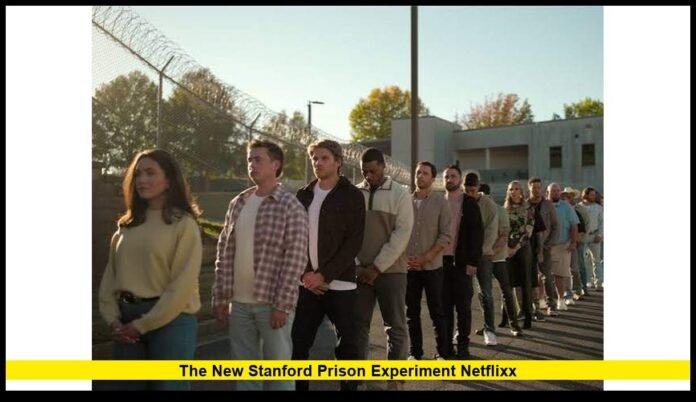

The new stanford prison experiment netflix release brings one of psychology’s most debated subjects back into the spotlight through a reality television series that examines authority, obedience, group behavior, and personal responsibility. The six-episode production premiered on October 21, 2026, introducing 30 volunteers to a prison environment where they are assigned roles as guards or prisoners and must navigate a structured system of power and restrictions.
Inspired by the controversial Stanford Prison Experiment conducted in 1971, the Netflix series revisits questions that have fascinated researchers and audiences for decades. How does authority influence ordinary people? Can restrictive environments change the way individuals treat one another? And what happens when people must choose between following rules and standing up for their personal values?
Rather than simply retelling the history of the original experiment, the production places a new group of participants in a contemporary setting. Their interactions create a framework for examining leadership, conformity, conflict, and the psychological effects of unequal power.
The series also raises an important distinction between entertainment and scientific research. Although it explores serious behavioral questions, its participants are part of a filmed television production, and the situations they encounter cannot automatically be treated as definitive evidence about human nature.
The New Netflix Series Revisits a Famous Psychological Experiment
The Stanford Prison Experiment remains one of the most recognizable studies in the history of psychology. Conducted at Stanford University in August 1971 under the direction of psychologist Philip Zimbardo, the original study examined how people responded when assigned positions within a simulated prison environment.
Participants were divided into groups representing guards and prisoners. The researchers intended to observe how the assigned roles and surrounding environment influenced behavior over time.
The study was originally planned to continue for a longer period but ended after six days amid growing concerns about participant distress and troubling interactions within the prison setting.
Its dramatic conclusion helped make it widely known, but the experiment subsequently became the subject of substantial methodological and ethical criticism. Researchers have questioned the influence of the study’s design, the instructions participants received, and the extent to which its findings could support broad conclusions about human behavior.
The Netflix production returns to the underlying questions without simply reproducing the original study. It brings together a new group of volunteers and explores how people respond when their daily choices are shaped by an assigned social position.
This modern approach gives viewers an opportunity to consider why the original experiment remains culturally significant while recognizing that its scientific legacy is more complicated than its popular reputation suggests.
Inside the Series: Thirty Participants Enter a Prison Environment
The new production places 30 volunteers inside a real prison setting for a planned two-week experience. Participants are assigned to one of two groups, each with a different relationship to the rules governing the environment.
The guards are expected to maintain order, while the prisoners must live within the restrictions imposed by the system. This division creates a clear imbalance in authority and establishes the conditions for the series’ central behavioral questions.
The structure is simple, but the decisions facing participants are not necessarily straightforward. Guards must determine how to exercise their responsibilities, while prisoners must decide whether to comply with instructions, question decisions, or challenge the boundaries of their assigned roles.
As relationships develop, individual personalities and group expectations can influence the atmosphere. A decision that appears minor at first may affect trust, cooperation, and the way other participants perceive someone in a position of authority.
The prison environment also creates opportunities to observe how people respond to uncertainty. Participants may arrive with strong ideas about how they would behave, only to discover that unfamiliar rules and social pressures complicate their expectations.
However, the production’s design remains an important consideration. Participants know they are taking part in a television series, and the awareness of cameras may influence their choices. The resulting behavior therefore reflects a combination of the environment, individual personalities, and the circumstances of filming.
How the Guards Experience Authority and Responsibility
The guard role is central to the series because it gives selected participants responsibility for maintaining order within the environment.
Authority can influence how people communicate, make decisions, and interpret their obligations. Someone who receives control over rules or routines may begin to view situations differently from someone who has limited freedom.
The series creates an opportunity to examine these changes through everyday interactions rather than relying exclusively on dramatic confrontations.
Some guards may prioritize consistency and fairness. Others may emphasize discipline or take a more assertive approach to leadership. Differences in management style can influence whether the group experiences cooperation, tension, or disagreement.
Another important consideration is accountability. Having authority does not necessarily mean that every decision is justified. The way power is exercised matters, particularly when other people have limited ability to challenge instructions.
The experience also raises questions about peer influence. Guards may be affected by the behavior of colleagues, the expectations of the group, and their understanding of what the role requires.
For viewers, these dynamics provide a way to think about leadership in ordinary settings. Similar questions arise in workplaces, schools, organizations, and other environments where some individuals have greater decision-making power than others.
The Prisoners Face Restrictions and Difficult Choices
The prisoner role provides a contrasting perspective. Participants must navigate restrictions and respond to decisions made by people who hold greater authority within the environment.
Their reactions may differ according to personality, expectations, and perceptions of fairness. Some individuals may choose cooperation, while others may question the rules or attempt to negotiate greater control over their circumstances.
These responses can affect the wider group. When participants believe that instructions are inconsistent or that decisions are unfair, disagreements may emerge. When expectations are clear and treatment appears consistent, cooperation may become easier.
The experience also highlights the difference between accepting a rule and believing that it is legitimate. A participant might follow an instruction without agreeing with it, while another might decide that challenging the decision is necessary.
Such situations raise questions about conformity and personal responsibility. How much should people adapt to an established system? When does cooperation become passive acceptance? And what options remain available when an individual believes that authority is being used improperly?
The answers depend on the specific circumstances, and the reactions of individual participants should not be generalized to everyone who experiences restrictions or unequal power.
Psychological Oversight and Participant Safety
Any production that deliberately creates a stressful social environment must address the possibility of psychological distress. This concern is particularly important when the concept draws inspiration from an experiment associated with ethical controversy.
The modern production has described several protective measures, including psychological screening, expert oversight, ongoing monitoring, and a mechanism that allows participants to leave the experience. A safe word is also among the reported safeguards.
These arrangements are intended to establish boundaries and give participants a way to seek help when necessary.
Nevertheless, the existence of safeguards does not eliminate every potential risk. Living within a restrictive environment, managing disagreements, and participating in a public television production can create different forms of pressure.
The responsibility of a production team is therefore broader than simply establishing rules before filming begins. Participant welfare must remain a priority throughout the experience, particularly if interactions become increasingly uncomfortable.
This issue also creates an important distinction between dramatic television and ethical experimentation. A production should not need to expose participants to unnecessary harm to make its central questions meaningful.
For audiences, the safety measures provide relevant context for understanding how the modern series approaches a subject that has generated debate for more than half a century.
Why the Original Experiment Continues to Face Scientific Criticism
The original Stanford Prison Experiment became famous partly because its outcome appeared to demonstrate how quickly social roles could influence behavior. However, its popular interpretation has been challenged by later analysis of the study’s methods and historical record.
One criticism concerns the role of the researchers. Questions have been raised about whether the instructions and expectations surrounding the experiment influenced how participants behaved, particularly those assigned as guards.
Another concern involves the small and specific participant group. A study involving a limited number of volunteers cannot automatically establish how people in different populations or circumstances would respond.
Researchers have also debated whether the original findings support the conclusion that social situations inevitably cause people to become cruel or authoritarian. Human behavior is affected by multiple factors, including individual beliefs, group expectations, institutional rules, and the way authority is exercised.
The ethical questions are equally significant. The early termination of the study reflected concerns about the participants’ experiences and the responsibilities of researchers conducting potentially distressing research.
These debates do not make the original experiment irrelevant. Instead, they demonstrate why its conclusions require careful interpretation.
The new series can encourage audiences to revisit the subject, but it cannot settle every disagreement about the original research. A contemporary television production and a controlled scientific investigation have different objectives, procedures, and limitations.
Is the Netflix Production a Documentary or a Reality Show?
The series is presented as reality television. It follows participants through a structured experience and uses their interactions as the basis for the program.
A conventional historical documentary might concentrate on archival footage, interviews, original research records, and retrospective analysis. A scripted drama, by contrast, uses actors and predetermined scenes to tell a story.
This production occupies a different category. Participants engage with an arranged environment, and the resulting interactions are filmed and edited for an audience.
That format can make complicated behavioral questions accessible to viewers. It can also create limitations that deserve attention.
Editing determines which conversations and events appear in the finished episodes. The selection and arrangement of scenes can influence how viewers interpret particular participants, disagreements, and changes in group relationships.
The presence of cameras may also affect behavior. Some participants might become more conscious of how they appear, while others may respond differently because they know their decisions are being recorded.
For these reasons, the series is best understood as reality television exploring psychological themes, rather than as a definitive scientific demonstration of how people behave under pressure.
Why Power, Conformity, and Leadership Matter Beyond the Prison
The central questions explored by the production extend into everyday life.
In workplaces, employees may face pressure to follow instructions even when they disagree with a decision. In schools, students may be influenced by group expectations or the authority of those responsible for discipline. In organizations, leaders must balance the need for consistent rules with the importance of fairness and accountability.
These situations differ significantly from a prison environment, but they can raise related questions about authority and individual judgment.
Leadership is particularly relevant. A person who holds power can influence the behavior of an entire group through communication, decision-making, and the standards they establish.
Fair and consistent leadership can help build trust. Unclear expectations or arbitrary decisions can create resentment and uncertainty.
Conformity is another important theme. People sometimes follow group expectations because they want acceptance, fear conflict, or believe that others possess better information. However, agreement with a group does not necessarily mean that its decisions are correct.
The series encourages viewers to think about the choices people make when social pressure and personal values come into conflict.
What Viewers Should Keep in Mind While Watching
The new stanford prison experiment netflix series offers an opportunity to examine difficult questions, but viewers should approach its conclusions thoughtfully.
First, a participant’s behavior in a specific environment does not necessarily reveal how that person would act in every other situation. Human decisions are shaped by circumstances, relationships, incentives, and personal history.
Second, dramatic scenes should not be mistaken for scientific proof. Television editing can present compelling narratives, but an engaging sequence is not the same as a controlled experiment.
Third, individual differences matter. Participants may respond to authority in contrasting ways, and their reactions can change as the environment develops.
Finally, the original Stanford Prison Experiment should be understood through both its historical influence and the criticism it has received. Its reputation does not remove the need to examine its methodology, ethics, and limitations.
Watching with these considerations in mind can make the series more meaningful. Instead of asking only which participants behave well or badly, viewers can consider how rules, relationships, expectations, and personal decisions interact.
Release Details, Episodes, and Viewing Information
The first season consists of six episodes and premiered on Netflix on October 21, 2026. The program is categorized as reality television and carries a TV-MA rating in the U.S. listing.
Viewers can search for the full title in the Netflix app to locate the series and check the available episode information. Availability may vary by region and subscription arrangements.
The six-episode format allows the production to follow the development of group relationships and the consequences of decisions within the prison environment.
For viewers interested in psychology, the program may also provide a starting point for exploring the original study and the wider debates surrounding social roles, authority, and ethical research.
Its greatest value may come from the questions it raises rather than any single conclusion it appears to offer.
Frequently Asked Questions
What is The New Stanford Prison Experiment on Netflix?
It is a reality series featuring 30 volunteers assigned to guard and prisoner roles in a prison environment. The production explores authority, social pressure, leadership, and human behavior.
When was the series released?
The first season premiered on October 21, 2026.
How many episodes are available in the first season?
The season contains six episodes.
Is the series based on the original Stanford Prison Experiment?
Yes. It draws inspiration from the 1971 study led by psychologist Philip Zimbardo, but it uses a contemporary television format and a different group of participants.
Why was the original study stopped?
The original experiment ended after six days amid concerns about participant distress, escalating interactions, and ethical issues.
Does the Netflix series prove that power changes people?
No. The program provides a setting for observing behavior, but a reality television production cannot establish a universal psychological rule on its own.
What makes the series different from a historical documentary?
It follows volunteers through a structured, filmed experience rather than focusing exclusively on historical records and retrospective interviews.
Why is the experiment still controversial?
The original study has faced criticism over its methodology, researcher influence, participant welfare, and the strength of the conclusions drawn from its findings.
Conclusion
The New Stanford Prison Experiment brings a familiar psychological controversy into a contemporary television setting, giving audiences a new opportunity to consider how authority, group pressure, and personal responsibility shape human interactions.
Its prison environment creates a clear contrast between those who enforce rules and those who must follow them. Yet the deeper questions extend well beyond the roles assigned to participants. The series invites viewers to think about fairness, accountability, leadership, and the choices people make when their freedom or influence changes.
The original experiment’s scientific limitations and ethical controversies remain essential context. By keeping those issues in mind, audiences can engage with the series without treating its dramatic moments as universal truths about human nature.
Have you watched the series? Share your thoughts about power, leadership, and human behavior in the comments, and keep following the latest entertainment updates.