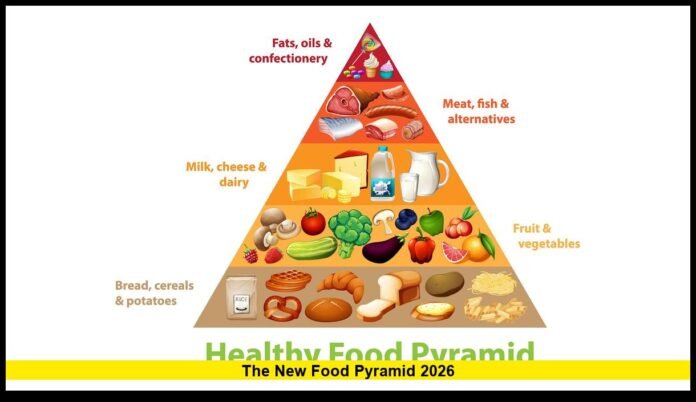

The new food pyramid 2026 has officially been introduced as the latest guide for how Americans should eat to improve health, reduce disease, and support sustainability. Developed by the U.S. Department of Agriculture (USDA) and the Department of Health and Human Services (HHS), it represents a major update to the nation’s dietary recommendations and reflects the scientific findings from the 2025–2030 Dietary Guidelines for Americans.
This version reimagines the food pyramid for a new generation—one shaped by digital technology, modern health challenges, and growing environmental awareness. It focuses on practical, real-world choices rather than rigid rules, aiming to help every American eat in a way that supports both personal well-being and the planet’s long-term stability.
A Shift Toward Smarter, Sustainable Eating
The new food pyramid 2026 signals a clear shift in how America approaches healthy eating—one that connects personal health to the broader systems that grow, produce, and deliver food. The 2026 model redefines what “balanced” means by combining nutrition science with sustainability, accessibility, and cultural awareness.
The USDA’s mission with this update is to make national dietary guidance practical for everyone, not just health professionals or fitness enthusiasts. It’s designed for real families—parents planning school lunches, young adults navigating busy schedules, and seniors aiming to maintain energy and longevity. The agency emphasizes that a sustainable diet should be both nutritionally sound and achievable in everyday life.
This modern approach moves away from rigid calorie counts and serving lists. Instead, it centers on flexibility and quality, encouraging people to build meals that fit their lifestyles while still meeting nutritional goals. For example, a balanced plate might look different for a vegetarian, an athlete, or someone managing diabetes, yet all three can follow the same core principles: eat a variety of whole foods, prioritize plants, and reduce unnecessary processing.
Accessibility and Affordability
A key priority of the 2026 model is making healthy eating attainable for all income levels. Many Americans face limited access to fresh, nutritious food—particularly in rural areas or urban “food deserts.” The USDA has emphasized affordable options such as frozen fruits and vegetables, bulk grains, and canned beans with low sodium as equally valuable to fresh produce.
The updated guidance also integrates with federal food assistance programs like SNAP and WIC, ensuring that the pyramid’s recommendations can be followed by households relying on government nutrition support. The intention is to close the gap between dietary ideals and economic reality, helping families stretch their food budgets while maintaining quality.
Adapting to Modern Eating Habits
Today’s eating patterns are shaped by changing work schedules, technology, and social trends. Americans increasingly eat on the go, order delivery, and rely on meal kits or ready-to-eat options. The 2026 food pyramid recognizes this reality. Instead of discouraging convenience, it encourages smarter choices within those frameworks.
For instance, choosing a grain bowl with brown rice, grilled vegetables, and tofu offers the same nutritional balance as a home-cooked dinner. Ordering fish instead of fried meat or opting for whole-grain wraps rather than white bread sandwiches are small, sustainable adjustments that align with the new model.
Building a Sustainable Food System
The 2026 model also reflects a growing awareness that individual eating habits have collective impact. Every meal contributes to a food system that affects the environment, local economies, and public health. By promoting locally sourced produce, sustainable seafood, and reduced food waste, the pyramid connects dietary choices to broader sustainability goals.
The USDA’s long-term vision is to guide Americans toward foods that nourish the body while conserving resources. This includes supporting farming practices that protect soil health, reduce greenhouse gas emissions, and minimize chemical inputs. In this way, the pyramid becomes not just a personal guide but a national framework for responsible consumption.
Diversity and Cultural Relevance
Another important change is the pyramid’s focus on cultural inclusivity. America’s population represents hundreds of culinary traditions, and the USDA recognizes that nutrition guidance must respect those differences. The new model offers examples of balanced meals that reflect diverse cuisines—such as brown rice and tofu stir-fries, lentil stews, whole-grain tortillas with beans and vegetables, or Mediterranean-style plates with olive oil and fish.
By incorporating culturally familiar foods, the 2026 pyramid removes barriers that made earlier models feel too narrow or prescriptive. It sends a clear message: healthy eating doesn’t have to mean giving up traditional dishes. Instead, it’s about finding ways to prepare them with balance, moderation, and better ingredient choices.
A Smarter Future for Nutrition
Overall, the new food pyramid 2026 encourages Americans to think of food not just as fuel but as a lifelong partnership between the body, the community, and the planet. It combines the best of modern science with practical strategies that meet people where they are—at home, at work, and on the move.
This smarter, sustainable approach reflects a broader movement in U.S. nutrition policy: one that seeks to make healthy eating realistic, inclusive, and environmentally responsible. By aligning dietary habits with both health goals and ecological needs, the 2026 model creates a foundation for a stronger, healthier, and more resilient America.
1. Putting Whole and Minimally Processed Foods First
At the base of the new food pyramid are foods in their most natural state—fresh fruits, vegetables, legumes, and whole grains. The USDA’s research shows that these foods deliver the most vitamins, minerals, and fiber with the fewest calories.
The pyramid encourages Americans to choose:
- Fresh or frozen fruits and vegetables over canned or pre-seasoned options.
- Whole grains like oats, quinoa, brown rice, and whole wheat bread instead of refined versions.
- Home-cooked meals with simple ingredients instead of heavily packaged or ultra-processed foods.
By emphasizing whole foods, the new pyramid addresses the country’s high consumption of processed products, which account for over half of total daily calories in the average U.S. diet. Studies continue to connect these foods to higher risks of obesity, diabetes, and heart disease.
This guidance supports the return to natural eating habits that prioritize food quality, flavor, and freshness over convenience.
2. Greater Protein Variety and Balance
Protein remains essential, but the 2026 pyramid reshapes how Americans think about getting it. Rather than centering meals around red meat or poultry, the updated model promotes diversity across both plant and animal sources.
The new pyramid encourages:
- Plant-based proteins such as lentils, beans, peas, soy products, nuts, and seeds.
- Seafood twice a week for omega-3 fatty acids.
- Fermented dairy and plant-based alternatives like yogurt, kefir, and fortified soy milk.
- Emerging protein sources including lab-grown chicken and beef, which meet USDA and FDA safety standards.
This shift supports both human and environmental health. Research from the American Heart Association and the National Institutes of Health has shown that replacing even one daily serving of red meat with plant or fish protein can significantly reduce cardiovascular disease risk.
In addition to variety, portion balance is key. The pyramid advises making about one-fifth of the daily plate protein-based, with half of that from plants. This change not only supports heart health but also contributes to a smaller ecological footprint.
3. Integrating Environmental Sustainability
A groundbreaking addition to the new food pyramid 2026 is the inclusion of sustainability as a core principle. For the first time, federal nutrition guidance officially recognizes that what Americans eat affects both personal and planetary health.
The USDA’s sustainability framework emphasizes:
- Choosing seasonal, locally grown produce to reduce transportation emissions.
- Buying sustainably caught or farmed seafood certified by national programs.
- Reducing food waste by planning meals and reusing leftovers.
- Limiting high-emission foods, particularly those tied to intensive livestock production.
These recommendations align with the federal 2030 environmental goals, which aim to reduce food waste nationwide by half. By connecting dietary habits to sustainability, the government hopes to foster healthier ecosystems and communities.
This approach encourages Americans to see food not only as nourishment but also as a tool for environmental stewardship.
4. Personalized Digital Guidance and MyPlate 2.0
Technology now plays a major role in how the USDA communicates nutrition. The launch of MyPlate 2.0 brings the 2026 pyramid into the digital era with an interactive platform that personalizes dietary advice.
Through the MyPlate 2.0 app and website, users can:
- Create custom nutrition profiles based on age, sex, height, weight, and activity level.
- Scan product barcodes to instantly check sugar, sodium, and fat content.
- Use augmented reality (AR) to visualize portion sizes on a real plate.
- Sync with fitness trackers to balance calorie intake and energy use.
- Receive daily tips and reminders to improve long-term eating habits.
This integration makes nutrition guidance accessible in a modern, engaging way. It replaces static charts with real-time support that adapts as a person’s health needs change.
For families, schools, and healthcare professionals, this tool simplifies education and ensures that the nation’s dietary standards can be applied in practical, everyday settings.
5. Clearer Serving Proportions and Nutrient Priorities
The 2026 pyramid replaces confusing serving counts with a more intuitive visual layout that highlights proportions rather than numbers. This helps users understand how to balance meals without needing to calculate exact portions.
Here’s how the updated proportions break down:
| Food Group | Proportion of Daily Intake | Primary Guidance |
|---|---|---|
| Fruits & Vegetables | About 50% | Aim for a colorful mix, including leafy greens, berries, citrus, and root vegetables. |
| Whole Grains | About 25% | Choose whole varieties such as quinoa, barley, brown rice, and oats. |
| Protein Foods | About 20% | Include fish, lean meat, poultry, legumes, nuts, seeds, and plant-based proteins. |
| Healthy Fats & Oils | Small daily portions | Use olive, avocado, walnut, and flaxseed oils. Limit saturated fats. |
| Dairy or Alternatives | Moderate intake | Choose low-fat dairy or fortified non-dairy alternatives with calcium and vitamin D. |
This simplified model is supported by the latest dietary science, which emphasizes nutrient density and calorie balance. It also addresses key public health goals such as reducing sodium intake, improving fiber consumption, and promoting adequate hydration through water-based beverages.
6. Addressing Major Health Challenges
The new food pyramid directly responds to the country’s most pressing nutrition-related health issues. The Centers for Disease Control and Prevention (CDC) reports that nearly half of American adults live with at least one chronic condition linked to diet.
The pyramid aims to help reduce:
- Obesity, now affecting over 42% of adults.
- Heart disease, the nation’s leading cause of death.
- Type 2 diabetes, which continues to rise among both adults and children.
- Nutrient deficiencies, particularly in fiber, potassium, calcium, and vitamin D.
By emphasizing balance, portion control, and natural foods, the 2026 model aligns with research showing that diet quality plays a greater role in long-term health than calorie restriction alone.
It promotes eating patterns that stabilize blood sugar, support heart health, and maintain a healthy weight over time.
7. Inclusion and Cultural Flexibility
The USDA has made inclusivity a defining feature of the new pyramid. Recognizing that American diets are diverse, the model celebrates regional and cultural food traditions.
It includes examples from a wide range of cuisines:
- Latin American: Beans, avocado, corn, tropical fruits, and plantains.
- Asian: Rice, tofu, seaweed, bok choy, fermented vegetables, and soy-based proteins.
- African American heritage foods: Okra, sweet potatoes, collard greens, black-eyed peas, and legumes.
- Mediterranean and Middle Eastern: Olive oil, lentils, chickpeas, fish, and whole-grain flatbreads.
This flexibility ensures that every household can follow the pyramid using familiar ingredients while meeting nutritional targets. It’s an acknowledgment that healthy eating can look different across cultures—and that diversity is a strength in achieving national nutrition goals.
8. A Practical Guide for Schools, Health Programs, and Communities
The new food pyramid 2026 will influence how schools, healthcare providers, and food companies shape their policies.
- Schools will gradually adjust lunch menus to reflect new portion ratios by the 2027–2028 academic year.
- Healthcare professionals will use the updated visuals in nutrition counseling and disease prevention programs.
- Food manufacturers are reformulating products to reduce added sugars and improve nutrient profiles.
This coordinated effort aims to build consistency between personal choices and public food systems, creating a stronger link between dietary education and real-world practice.
Read Also-Why Is Trump Cutting SNAP: Inside the 2025 Food Assistance Controversy
9. Encouraging Mindful and Informed Eating
Beyond nutrients and proportions, the 2026 pyramid encourages Americans to reconnect with the experience of eating. It highlights behaviors that improve overall well-being:
- Eating slowly and listening to natural hunger cues.
- Preparing meals at home whenever possible.
- Sharing meals with family and friends to strengthen social health.
- Paying attention to food marketing and reading nutrition labels carefully.
This behavioral approach complements the nutritional framework, turning healthy eating into a lifestyle rather than a short-term goal.
The Road Ahead
The new food pyramid 2026 represents a turning point in how the U.S. approaches food and health. It moves beyond calorie counting toward a holistic model built on balance, sustainability, and technology.
If widely adopted, it could help reduce chronic disease rates, improve dietary literacy, and strengthen America’s relationship with food. As the model becomes part of school curricula, healthcare programs, and everyday life, its long-term impact will depend on how well Americans translate these principles into daily habits.
The new food pyramid 2026 is more than a chart—it’s a roadmap to a healthier, more resilient nation. Share your thoughts on how these changes could shape the way your family eats in the years ahead.