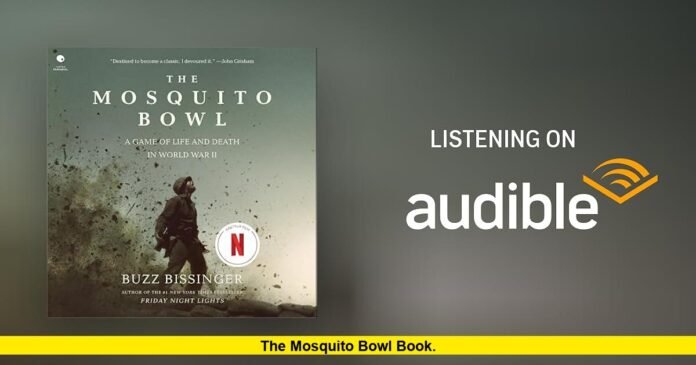

The mosquito bowl book by Buzz Bissinger tells the remarkable true story of American football players who became Marines during World War II. Published in 2022, The Mosquito Bowl: A Game of Life and Death in World War II explores a football game played on Guadalcanal on Christmas Eve 1944 and the devastating wartime experiences that followed. The book brings together college football history, military service, personal sacrifice, and the lives of young athletes caught in one of the most consequential conflicts in American history.
Rather than focusing exclusively on the outcome of a football game, Bissinger examines the men who played in it. Many had competed at prominent American colleges before joining the military. Their athletic careers had once promised bright futures, but the war placed those ambitions against the harsh realities of combat.
The book has attracted renewed attention through interest in its screen adaptation. For readers seeking the historical story behind the title, the original nonfiction account offers a deeper look at the players, their military experiences, and the events that made their game memorable.
What Is The Mosquito Bowl Book About?
The Mosquito Bowl follows a group of Marines whose shared passion for football brought them together during World War II. The men came from different backgrounds, but many had played competitive college football before entering military service.
While stationed on Guadalcanal in the Solomon Islands, Marines from the 4th and 29th Marine Regiments developed a football rivalry. Their teams brought together experienced players who wanted to test their abilities against one another.
The resulting contest took place on December 24, 1944. It offered the participants a brief opportunity to compete in a familiar sport while preparing for the next stage of the Pacific campaign.
However, the game became much more than a military sporting event. Many of the players would soon face the dangers of the Battle of Okinawa, one of the bloodiest campaigns of the Pacific war.
Bissinger uses this contrast to build the book’s central narrative. He explores the players’ lives before enlistment, their football achievements, their experiences as Marines, and the consequences of the conflict.
The story demonstrates how quickly ordinary ambitions can change during wartime. For these young men, college football had represented competition, friendship, and the possibility of future success. Military service brought uncertainty, danger, and decisions that extended far beyond the playing field.
Who Wrote The Mosquito Bowl Book?
Buzz Bissinger wrote The Mosquito Bowl. He is an American journalist and nonfiction author best known for Friday Night Lights: A Town, a Team, and a Dream, his acclaimed examination of high school football in Texas.
Bissinger has built his reputation by exploring the people and communities behind sporting competition. His writing often looks beyond scores and statistics to examine ambition, identity, pressure, and the circumstances that shape athletes’ lives.
In The Mosquito Bowl, he applies that approach to a very different setting. Instead of following a modern football team, he reconstructs the experiences of young men whose athletic careers intersected with World War II.
The book combines biographical storytelling with military history. It gives individual players attention while placing their experiences within the larger story of the American war effort in the Pacific.
This approach helps readers understand why the contest mattered. The participants were not simply Marines who happened to play football. They were athletes with personal histories, competitive ambitions, families, and plans for life after college.
Their wartime experiences changed the meaning of their shared game. Bissinger’s account seeks to preserve those stories and explain how an unusual sporting event became associated with the sacrifices of an entire generation.
When Was The Mosquito Bowl Book Published?
Harper published The Mosquito Bowl: A Game of Life and Death in World War II on September 13, 2022.
The original hardcover edition contains approximately 480 pages, although the total varies among editions. Readers may encounter hardcover, paperback, electronic, and audiobook formats, depending on availability.
The audiobook offers an alternative for readers who prefer listening to historical nonfiction. The book’s extensive biographical detail and military background also make it suitable for readers who want more than a brief account of the football contest.
Its publication brought attention to a relatively unusual intersection of American sports history and military history. Football books often concentrate on famous teams, championships, professional careers, or influential coaches. Bissinger instead explores athletes whose lives became inseparable from the Pacific war.
The book also appeals to readers interested in the experiences of American servicemen during World War II. Through the players’ stories, it examines the distance between their earlier lives and the responsibilities they faced after entering the Marines.
The Real Football Game on Guadalcanal
The Mosquito Bowl took place on Guadalcanal on December 24, 1944. The island had already been an important location in the Pacific war and served as a staging area for American military operations.
The football matchup developed from competition between Marines in the 4th and 29th Regiments. The presence of numerous experienced football players gave the contest a distinctive character.
Unlike a traditional college game, the event did not take place in a purpose-built stadium with carefully maintained facilities. The Marines played in a remote military environment, far from the crowds and comforts associated with organized American football.
The game provided a temporary break from military duties. For the participants, it also offered a chance to compete against fellow Marines who understood the demands of the sport.
Yet the surrounding circumstances gave the event a meaning that extended beyond athletic rivalry. The players were preparing for further military operations, and many would soon experience combat on a devastating scale.
The contest brought together men who shared a sporting background at a moment when their lives were changing dramatically. Their participation preserved a connection to their earlier identities, even as the war increasingly defined their futures.
Bissinger reconstructs this episode as part of the larger history of the players. The game serves as a central meeting point for their individual stories, connecting their athletic pasts with the experiences that followed.
Why The Battle of Okinawa Is Central to the Story
The Battle of Okinawa forms a crucial part of the book’s historical setting. American forces launched the invasion of Okinawa on April 1, 1945, during the final stages of the Pacific war.
The campaign became one of the conflict’s bloodiest battles. American troops encountered fierce resistance, difficult terrain, fortified defensive positions, and sustained fighting.
For the Marines connected to the Mosquito Bowl, the transition from football to combat was especially stark. Their Christmas Eve contest took place only months before the Okinawa campaign began.
Bissinger follows the players into this difficult period and examines what happened to them as the war progressed. Some survived, while others died during the fighting.
The book identifies 15 players from the game who were killed at Okinawa. Their deaths give the story its tragic dimension and explain why the contest is remembered as more than a remarkable football matchup.
Each casualty represented an individual life rather than merely a name on a military record. These men had once pursued education, athletic achievement, professional opportunities, and relationships outside the armed forces.
Their stories illustrate the enormous human cost of war. The book places their football experience alongside the military events that ultimately shaped their lives, showing how a brief sporting encounter became linked to lasting loss.
The Football Players Behind The Mosquito Bowl Book
One of the book’s defining features is its attention to the athletes who took part in the contest. Their college careers provide important context for understanding the talent assembled among the Marines.
John McLaughry, associated with Brown University football, is one of the figures connected to the story. Bob Bauman, Tony Butkovich, and David Schreiner are also among the players whose athletic backgrounds and wartime experiences feature in accounts of the Mosquito Bowl.
Butkovich played college football at the University of Illinois, while Schreiner established himself as a standout athlete at the University of Wisconsin. Their football achievements represented years of competition and preparation before military service changed their circumstances.
These players were part of a broader group of young men who had experienced the discipline and camaraderie of college athletics. Football had taught them to work within a team, handle pressure, and compete toward a common goal.
Military life demanded many of those same qualities, but the consequences were far more serious. The players entered an environment where teamwork could mean survival and where individual courage did not guarantee safety.
Bissinger’s biographical approach makes the participants more than names associated with a historic game. It encourages readers to consider their lives before the war and the futures they might otherwise have pursued.
Is The Mosquito Bowl Book Based on a True Story?
Yes. The Mosquito Bowl is a nonfiction account of a real football game involving Marines during World War II. Its central events are rooted in the historical record of the Pacific campaign and the experiences of the servicemen involved.
Bissinger combines the history of the contest with the backgrounds of its participants. The book examines their sporting achievements, military service, and experiences during the war.
The distinction between historical nonfiction and dramatized entertainment matters, particularly as interest in the story reaches new audiences. A screen adaptation may present events through a more concentrated narrative, while a book can devote additional space to individual biographies and historical context.
Readers interested in the real events can use Bissinger’s account to understand how the football rivalry emerged and why the subsequent military campaign became central to the story.
The book’s emotional impact comes from the connection between documented events and individual experiences. Its subjects were real athletes and servicemen whose lives were shaped by the circumstances of World War II.
The Mosquito Bowl Movie and Its Connection to the Book
Interest in the book has also been driven by a planned film adaptation associated with filmmaker Peter Berg. Known for sports and military dramas, Berg is an appropriate creative figure for a story that brings football and wartime experiences together.
The adaptation has introduced the title to people who may not previously have encountered Bissinger’s work. It also highlights the dramatic contrast at the heart of the story: young athletes competing in a football game while preparing for the dangers of war.
Readers should distinguish the film’s production and release information from the historical facts established by the book. Movie casting, distribution arrangements, and release schedules can change, so specific claims about current availability should be checked before publication.
For those discovering the story through its screen adaptation, the book offers a broader account of the participants and their experiences. It explores the historical background behind the game rather than limiting the narrative to a small group of characters.
The relationship between the book and its adaptation also demonstrates how historical nonfiction can bring lesser-known events to a wider audience. The football contest provides an accessible starting point, while the military history reveals the much deeper significance of the players’ lives.
Who Should Read The Mosquito Bowl Book?
The book is particularly suited to readers interested in American football, World War II, military biographies, and narrative nonfiction.
Football fans may appreciate learning about college athletes who entered military service during a period when the United States mobilized millions of people for the war effort.
Military history readers can explore the context surrounding Guadalcanal, the Marines’ preparations, and the Battle of Okinawa. The personal histories also help connect large military campaigns with the individuals who experienced them.
Readers who enjoy character-driven nonfiction may find the book especially compelling. Bissinger examines the men behind the event rather than treating the game as an isolated sports story.
However, the book is not simply a celebration of athletic competition. Its subject matter includes combat, death, and the consequences of war. The narrative’s emotional weight comes from the contrast between the players’ earlier ambitions and the uncertainty they faced as servicemen.
Anyone looking for a deeper understanding of the people behind the historical event will find that the book’s biographical focus is central to its appeal.
Why The Mosquito Bowl Book Still Matters
The lasting significance of The Mosquito Bowl lies in its connection between a familiar American sport and a defining period in world history.
Football celebrates teamwork, determination, and competition. Those qualities were meaningful to the Marines, but wartime conditions placed them in situations that no sporting experience could fully prepare them to face.
The Guadalcanal game brought together men who shared a passion for football at a time when their futures remained uncertain. Their later experiences transformed the contest into a story of remembrance, sacrifice, and loss.
Bissinger’s account preserves the players’ identities as individuals. Their lives involved more than athletic records, and their experiences during the war cannot be understood solely through the results of a single game.
The book also offers a reminder that history becomes more meaningful when it includes personal stories. Military campaigns are often remembered through dates, locations, strategies, and casualty figures. The experiences of individual servicemen help explain the human consequences behind those broader events.
For American readers interested in the relationship between sports and military history, the book provides a distinctive perspective. It shows how a football rivalry became connected to the lives of Marines preparing for one of the Pacific war’s most consequential battles.
Ultimately, The Mosquito Bowl is a story about more than football. It is about young men whose athletic ambitions intersected with war, the friendships they formed, and the sacrifices that became part of their legacy.
Have you read The Mosquito Bowl book, or does its remarkable combination of football and World War II history interest you? Share your thoughts in the comments and follow future updates about the book and its adaptation.