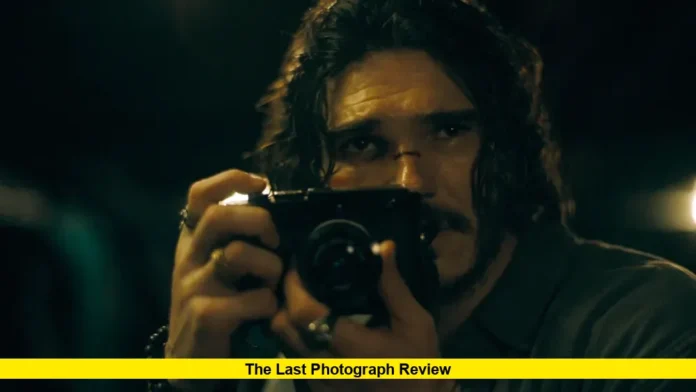

The last photograph review landscape is taking shape after Zack Snyder’s long-awaited independent thriller made its world premiere at the 2026 Toronto International Film Festival. The film, starring Stuart Martin and Fra Fee, has generated strong reactions from early viewers, with praise for its visual ambition but significant criticism of its storytelling, tone and treatment of its subject matter.
What Is The Last Photograph About?
The Last Photograph is a drama-thriller centered on Ethan Black, a former DEA operative who travels into the mountains of South America searching for his missing niece and nephew. Their diplomat parents have been murdered, and Ethan turns to Joe Wallace, a troubled war photographer who witnessed the killers, for help.
As the two men move deeper into remote territory, the story becomes increasingly psychological. Ethan is not simply pursuing the people responsible for the killings; he is also forced to confront painful memories and unresolved trauma. The film gradually blurs the distinction between what is real and what may be shaped by memory, guilt and perception.
Photography is also more than a decorative element. Joe’s profession makes the camera an important part of the story, connecting ideas of witnessing, memory and the reliability of images with the characters’ increasingly unstable journey.
Zack Snyder Takes a Different Approach
The biggest reason for interest in The Last Photograph is its director.
Zack Snyder is widely associated with large-scale productions such as 300, Watchmen, Man of Steel, Batman v Superman: Dawn of Justice, Zack Snyder’s Justice League, Army of the Dead and Rebel Moon. This project represents a substantially smaller and more personal filmmaking exercise.
Snyder has reportedly been developing the project for many years. Earlier versions were associated with major stars including Christian Bale and Sean Penn, but those plans eventually fell apart. The filmmaker ultimately revived the movie independently with Stuart Martin and Fra Fee in the lead roles.
That history is important when considering the movie’s reception. The Last Photograph was not simply another studio assignment for Snyder. It was a project he had continued trying to make for a significant portion of his career.
Snyder also handled the cinematography, continuing his interest in controlling the visual language of his films. The production was filmed across locations including Colombia, Iceland and Los Angeles.
The First Reviews Are Far From Unanimous
Early reactions following the TIFF premiere have been noticeably divided.
Audience discussion has included criticism of the film’s narrative and tone, with some viewers describing the experience as confusing, excessive or difficult to connect with. Others have acknowledged the movie’s ambitious visual style even while finding its story unsuccessful.
One of the clearest themes emerging from early audience discussion is the contrast between Snyder’s technical confidence and the film’s storytelling choices. The movie appears determined to combine an action thriller with a meditation on grief, death, trauma and redemption.
For some viewers, that combination works as an unconventional personal film. For others, the dramatic ambitions appear overwhelmed by the movie’s more provocative material and stylized presentation.
Because the film has only just premiered, it is too early to describe the initial audience response as a definitive critical consensus. A festival premiere can produce particularly polarized reactions, especially for a filmmaker with an established fan base and a highly recognizable visual style.
Visual Style Remains a Major Talking Point
Even before the premiere, photography was one of the most interesting aspects of The Last Photograph.
The trailers emphasize cameras, photographs, darkroom imagery and dramatic landscapes. The movie’s visual identity is therefore closely connected to its subject matter rather than simply being an incidental feature.
Photography publications have also taken an unusual interest in the equipment appearing on screen. The photographer character appears to use a Yashica rangefinder, while another camera resembles a Leica M10 Monochrom. These details reinforce how deliberately photography has been incorporated into the movie’s world.
That visual emphasis is consistent with Snyder’s filmmaking background. His movies frequently rely on highly controlled compositions, stylized lighting, slow motion and carefully constructed images.
The difference here is that the camera itself is part of the story.
Stuart Martin and Fra Fee Lead the Film
Stuart Martin plays Ethan Black, the former DEA operative at the center of the search.
Fra Fee plays Joe Wallace, the war photographer whose knowledge of the killings makes him essential to Ethan’s mission. The two actors previously worked with Snyder on Rebel Moon, giving the director established working relationships with both leads.
The supporting cast includes Costanza Andrade, Jackie Kay, Carolina Henao and Marlon Moreno.
The central relationship between Ethan and Joe is crucial because the film is structured around their journey into increasingly isolated territory. One represents a man driven by family and revenge, while the other carries the burden of having witnessed violence through his camera.
That pairing gives Snyder a framework for exploring different responses to trauma and mortality.
Why The Film Has Been So Long in Development
The Last Photograph has an unusually complicated development history.
Snyder began pursuing the project during the mid-2000s. In an earlier incarnation, the story was significantly different from the version eventually produced. Christian Bale and Sean Penn were once attached before the project stalled.
Years later, Snyder returned to the material and reshaped it into the independently produced film that eventually reached TIFF.
The project was revived in 2025, when Stuart Martin and Fra Fee were announced as the leads. Production subsequently moved ahead in several international locations, with Snyder taking a hands-on role in the filmmaking process.
The lengthy development period makes the TIFF premiere particularly significant. After years of uncertainty, Snyder finally had an opportunity to present his completed version to an audience.
The Film’s Mature and Graphic Content
The Last Photograph is not being presented as a conventional adventure thriller.
The promotional material already indicated that the movie contains substantial violence, and TIFF has issued an extreme-violence content advisory. The trailers also suggested that Snyder was pursuing a darker and more disturbing tone than audiences might expect from a conventional action film.
Early audience reactions have also drawn attention to the film’s mature material. Because those reactions come from individual festival attendees rather than a settled critical consensus, they should be treated as early impressions rather than a definitive description of the film’s overall reception.
For potential viewers, the important takeaway is that The Last Photograph is intended for mature audiences and is considerably more intense than its title might initially suggest.
Is There a Release Date Yet?
The September 13, 2026 TIFF screening is the film’s world premiere, not a confirmed nationwide theatrical release.
At the time of this latest update, The Last Photograph remains an independently produced movie seeking wider distribution. No confirmed U.S. theatrical release date or streaming launch has been announced.
That means most moviegoers cannot yet watch the film simply by heading to a local theater or streaming service.
The TIFF premiere is nevertheless an important step because festival exposure can help an independently financed movie attract distributors and buyers.
What the Early Reception Means
The most useful way to interpret the current The Last Photograph review conversation is to separate established facts from early opinion.
The film has premiered. It has attracted substantial attention because of Snyder’s reputation and its unusually long development. Early audience discussion has been mixed to strongly negative in places, while the film’s visual ambition and personal nature remain points of interest.
However, it would be premature to declare the movie a critical failure based solely on first-day audience reactions.
A broader assessment requires reviews from professional critics, additional festival screenings and eventually a larger audience. Those factors can substantially change the perception of a movie after its initial premiere.
What is already clear is that Snyder has made something considerably more personal and independent than many of his recent large-scale productions.
The Last Photograph Review: Final Takeaway
The Last Photograph is shaping up as one of Zack Snyder’s most unusual projects. Its long journey to the screen, independent production, photography-centered themes and psychological approach make it notably different from the filmmaker’s better-known blockbusters.
The first TIFF reactions suggest that the movie will remain divisive. Its striking imagery and personal ambitions may appeal strongly to Snyder’s supporters, while its narrative choices and mature material could make it difficult viewing for others. With no wider release date confirmed yet, the full critical picture is still developing.
For now, the fairest The Last Photograph review is that Snyder has delivered an ambitious, highly personal film that is generating considerably more debate than consensus after its world premiere.
What do you think about the early reaction to The Last Photograph? Share your thoughts in the comments and stay tuned for the latest updates on Zack Snyder’s film.