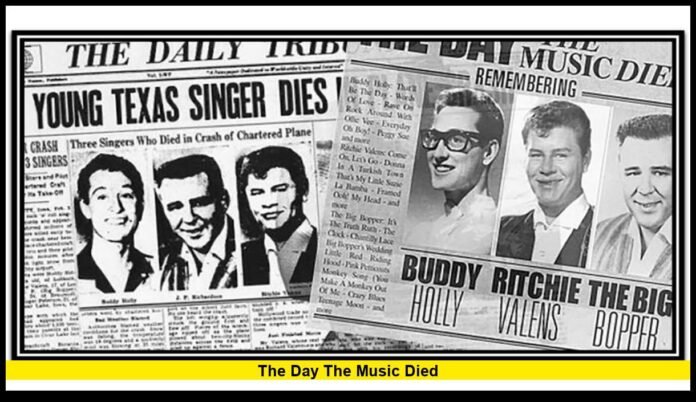

The day the music died is remembered as February 3, 1959, a moment that profoundly changed the American music landscape. On this day, a plane crash near Clear Lake, Iowa, claimed the lives of rock and roll pioneers Buddy Holly, Ritchie Valens, and J.P. “The Big Bopper” Richardson, along with pilot Roger Peterson. Their deaths shocked fans nationwide and left an enduring impact on the music industry, making this date a defining point in rock history.
The Winter Dance Party Tour
In early 1959, Buddy Holly embarked on the Winter Dance Party Tour, a series of concerts across the Midwest. The tour was designed to bring popular rock and roll acts to audiences in smaller towns, but it faced logistical challenges from the start. The buses provided for transportation were often unreliable and exposed performers to harsh winter conditions. The long distances, combined with cold temperatures, made travel exhausting and dangerous.
After performing in Clear Lake, Iowa, Holly decided to charter a small plane to reach the next concert in Moorhead, Minnesota. Ritchie Valens and J.P. Richardson joined Holly on the flight, which was piloted by Roger Peterson. The aircraft, a Beechcraft Bonanza 35, encountered poor weather and icing conditions shortly after takeoff, leading to the fatal crash that ended their lives.
The Musicians Lost
The day the music died claimed the lives of three significant figures in early rock and roll:
- Buddy Holly (22 years old): A singer, songwriter, and guitarist, Holly had already created hits like Peggy Sue and That’ll Be the Day. His approach to music, including innovative harmonies and recording techniques, influenced countless artists.
- Ritchie Valens (17 years old): A groundbreaking Mexican-American musician, Valens is best known for La Bamba and Donna .
- J.P. “The Big Bopper” Richardson (28 years old): Known for Chantilly Lace, Richardson was a performer and radio personality whose charisma helped popularize rock and roll in the 1950s.
- Roger Peterson (21 years old): The young pilot faced challenging winter conditions that contributed to the crash, despite his skill and experience.
The sudden deaths of these young artists left fans in mourning and marked a tragic turning point for rock and roll in the United States.
The Crash and Immediate Aftermath
The crash occurred shortly after takeoff from Mason City Municipal Airport, near Clear Lake. The plane encountered heavy snow, low visibility, and severe icing on the wings. Within minutes, the aircraft lost control and crashed into a cornfield, killing all four aboard instantly.
The news quickly spread across the country. Fans and fellow musicians were devastated, and radio stations broadcast continuous tributes. The Surf Ballroom, where the musicians had last performed, became a memorial site, attracting visitors and fans eager to honor their memory.
Key Immediate Reactions
- Fans held vigils and memorial concerts at local venues.
- The Surf Ballroom began hosting commemorative events annually.
- Industry leaders started paying closer attention to touring safety for performers.
The tragedy underscored the risks of extensive touring schedules in adverse weather, highlighting the need for improved travel arrangements for musicians.
Cultural and Musical Legacy
The day the music died left a lasting imprint on American culture. Don McLean immortalized the event in his 1971 song American Pie, referring to the loss as “the day the music died.” McLean’s lyrics connected the tragedy to a broader narrative about the transformation of American society and the evolution of rock and roll.
The event also inspired countless documentaries, books, and retrospectives exploring the lives and careers of Holly, Valens, and Richardson. Their music continues to resonate, influencing generations of artists across genres.
Influence on Future Musicians
The legacy of these artists shaped the trajectory of rock and roll:
- The Beatles: Paul McCartney and John Lennon often cited Buddy Holly’s songwriting and band arrangements as major influences.
- Bob Dylan: Admired Holly and Valens for their lyrical storytelling and innovative approaches.
- Modern Artists: Musicians across pop and rock genres frequently reference their work as foundational to contemporary music.
The loss of such promising talent serves as a reminder of the transformative power of rock and roll and the fleeting nature of fame.
Memorials and Annual Tributes
The Surf Ballroom in Clear Lake, Iowa, remains a central site for commemorating the day the music died. Every February, fans and musicians gather to honor the legacy of Holly, Valens, and Richardson with concerts and ceremonies.
- Memorial Concerts: Feature tribute bands performing hits from the three artists.
- Educational Exhibits: Display instruments, personal items, and memorabilia from their careers.
- Fan Pilgrimages: Fans travel from across the country to visit the site and pay respects.
These events ensure the musicians’ contributions are remembered and continue to inspire new audiences.
The Winter Dance Party Tour Challenges
The Winter Dance Party Tour placed extraordinary demands on its performers. Long bus rides in subzero temperatures caused fatigue and illness among the musicians. Breakdowns and mechanical failures frequently delayed travel, adding to the strain.
The decision to charter a plane for Holly and his companions was meant to alleviate the exhausting bus travel, but harsh weather conditions proved fatal. This event highlighted the need for improved safety measures for touring artists and set new standards for travel planning in the music industry.
Remembering Each Musician
Buddy Holly
Buddy Holly’s innovative approach to music left an enduring legacy. He introduced new recording techniques and harmonies, influencing both his contemporaries and future generations of musicians. His songwriting style became a blueprint for rock and pop bands that followed.
Ritchie Valens
Ritchie Valens broke cultural barriers as one of the first prominent Mexican-American rock stars. His fusion of Latin rhythms with rock and roll helped diversify the genre and inspired countless musicians to blend different musical traditions.
J.P. “The Big Bopper” Richardson
Richardson’s charisma and energetic performances made him a household name. Beyond his hits, he played a crucial role in popularizing rock and roll on radio and stage, connecting with audiences across the country.
Roger Peterson
The young pilot’s tragic death underscores the challenges of winter flying in the 1950s. Despite his experience, the severe weather conditions contributed to the fatal accident, highlighting the dangers performers and pilots faced during that era.
Lasting Impact on Rock and Roll
The day the music died serves as a symbol of both loss and inspiration. Holly, Valens, and Richardson’s work continues to influence the music industry:
- Encouraging innovation in songwriting and performance.
- Inspiring tribute bands, documentaries, and educational programs.
- Reminding artists and fans of the sacrifices made by performers during grueling tours.
Their contributions have transcended decades, making the tragedy a defining chapter in rock and roll history.
Key Facts
| Fact | Detail |
|---|---|
| Date | February 3, 1959 |
| Location | Near Clear Lake, Iowa |
| Victims | Buddy Holly, Ritchie Valens, J.P. Richardson, Roger Peterson |
| Tour | Winter Dance Party |
| Legacy | Influenced generations of musicians |
Conclusion
The day the music died is more than a historical event; it is a reflection of the enduring power of rock and roll. Buddy Holly, Ritchie Valens, and J.P. Richardson may have been lost at young ages, but their influence continues to shape music today. Their legacy is preserved through memorial concerts, fan pilgrimages, and the timeless appeal of their songs.
Fans and music lovers can honor these artists by revisiting their work, attending memorial events, and celebrating the transformative power of rock and roll.