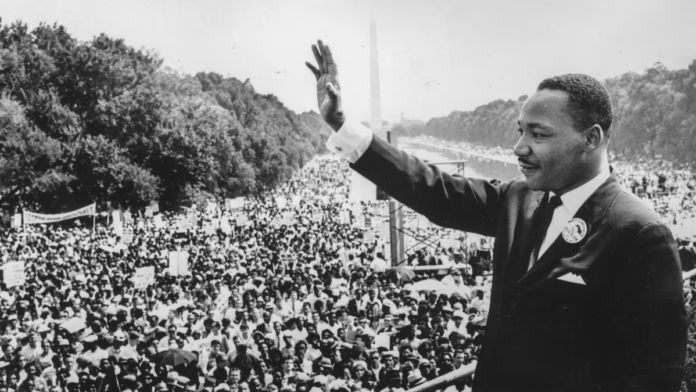

The phrase “the crowd is your king” has become more than just a catchy line. Across culture, business, and politics in the United States, it reflects a fundamental shift in power. Once, decisions were made at the top, and the public simply reacted. Today, it’s the opposite. Crowds can shape markets, elevate celebrities, topple executives, or alter political strategies in real time.
This growing reality is visible everywhere — from music fandoms and brand controversies to political pressure campaigns. It’s transforming how leaders communicate, how companies operate, and how culture evolves.
Cultural Power: When Fans Take the Driver’s Seat
One of the clearest examples of “the crowd is your king” is in the world of entertainment. For decades, artists and media companies dictated what audiences consumed. Now, fans have the tools to influence everything from creative direction to marketing strategy.
A perfect case study is the modern music industry. Social media, streaming platforms, and direct fan engagement have given listeners unprecedented control. Musicians now build careers not only through talent but through understanding the power of their communities.
Artists with massive, engaged fanbases can turn album releases into global events overnight. A single fan-led campaign can push a song to the top of streaming charts or trigger a trend that dominates social media for weeks. Crowds can pressure labels to release alternate versions, bring back retired songs, or even shape tour setlists.
This dynamic has turned fandoms into powerful ecosystems. Fans organize streaming parties, fund promotional campaigns, and defend artists against critics in real time. In many ways, they act as both audience and marketing team. When they move collectively, their influence is undeniable.
The phrase “the crowd is your king” perfectly captures this shift: fans no longer sit on the sidelines — they rule the arena.
Corporate Accountability: The Crowd as a Boardroom Force
In the corporate world, the crowd has become a decisive force in shaping reputations and policies. Companies that once operated behind closed doors are now held accountable in public spaces, often within hours of making a decision.
A single controversial statement, product, or executive appointment can spark massive public backlash online. Consumer reactions can move stock prices, trigger boycotts, or force companies to issue apologies and policy reversals.
Brands have learned that they no longer control their message alone. Public sentiment spreads faster than official press releases. When a wave of outrage or enthusiasm sweeps across social platforms, boardrooms must respond quickly — not because of regulatory pressure, but because the crowd’s opinion can directly impact sales and investor confidence.
Executives are also more vulnerable than ever to public reaction. High-profile corporate figures have faced resignation calls based not on internal investigations, but on how the public interprets their decisions, history, or affiliations.
This dynamic has forced companies to rethink how they communicate, who they hire, and how they align themselves with social values. It’s no longer just about business strategy; it’s about cultural awareness and real-time reaction to the crowd.
Political Power: Mobilizing the Masses
Politics in the U.S. has long involved public opinion, but the way crowds shape political outcomes today is fundamentally different. The rise of digital communication has allowed movements to form and mobilize in hours rather than months.
Political figures understand that their base — their “crowd” — can make or break careers. Public statements are crafted to energize supporters and control narratives before opposition campaigns can respond. At the same time, large online communities now act as decentralized amplifiers for political messages, spreading slogans, videos, and talking points far beyond official channels.
When a major figure makes a controversial move, the public reaction often becomes the real battleground. Crowd responses can set media agendas, influence polling, and pressure policymakers. Politicians increasingly cater to the power of public momentum, knowing that ignoring it can be politically fatal.
Technology: The Amplifier of the Crowd
The rise of “the crowd is your king” wouldn’t be possible without the digital platforms that connect people instantly. Social media, streaming platforms, comment sections, and live broadcasts have created feedback loops where the public’s voice doesn’t just respond — it actively shapes outcomes.
Several key technological shifts make this possible:
- Instant communication: Millions can react simultaneously within seconds of an event.
- Viral amplification: A single post can trigger nationwide debates and affect stock markets or political decisions.
- Decentralized influence: Power isn’t held by traditional media gatekeepers anymore; anyone with a following can shape narratives.
- Measurable sentiment: Likes, shares, hashtags, and engagement metrics give tangible weight to public opinion.
This technological landscape means leaders, artists, and companies must constantly listen to their audiences. Ignoring crowd dynamics is no longer an option.
Opportunities in the New Power Structure
While some fear the volatility of crowd-driven influence, there are clear benefits when the public holds more sway.
- Greater accountability: Institutions and individuals can no longer hide behind bureaucracy. Misconduct or poor decisions are exposed quickly.
- Faster innovation: Direct feedback from audiences allows creators and companies to adapt products or ideas in real time.
- Community building: Crowds can rally around shared causes, cultural movements, or creative projects, producing collective impact that was previously impossible.
- Democratized influence: Individuals who once had no voice in cultural or political decisions can now be part of major shifts.
For those who know how to harness it, crowd power is not just a threat — it’s a transformative tool.
Risks of Letting the Crowd Rule
However, the phrase “the crowd is your king” also comes with serious risks. Public sentiment is not always consistent, rational, or informed. The same force that can hold institutions accountable can also lead to destructive outcomes if misdirected.
Key risks include:
- Mob mentality: Rapid online outrage can lead to rushed decisions without full facts.
- Misinformation spread: Crowds can amplify false narratives faster than truth can catch up.
- Short-term thinking: Leaders may prioritize popularity over sound strategy or long-term stability.
- Unpredictability: What pleases the crowd today can become tomorrow’s controversy.
For decision-makers, balancing responsiveness with integrity is crucial. Yielding completely to public pressure can create instability; ignoring it entirely can lead to irrelevance or backlash.
Historical Echoes: Not Entirely New
While technology has supercharged the crowd’s role, the idea that collective voices can shape power isn’t entirely new. Throughout history, movements led by the masses have changed governments, influenced culture, and toppled entrenched systems.
What’s different now is the speed, scale, and visibility. In the past, mass movements required physical mobilization. Today, millions can mobilize digitally within hours, influencing events before any formal organization takes place.
The phrase “the crowd is your king” fits our era because the mechanisms that allow the public to act have never been this direct, this fast, or this influential.
The Future of Power
Looking ahead, this crowd-driven power dynamic will only grow stronger. Cultural figures will continue to build communities rather than traditional fan bases. Companies will rely on real-time sentiment analysis to make strategic choices. Politicians will increasingly depend on their ability to energize and direct public movements rather than rely solely on institutions.
But with this growth comes responsibility — both for leaders and for the crowd itself. If the crowd is the king, then it must recognize its own power and wield it wisely. Institutions must also find ways to listen without losing their capacity for long-term decision-making.
The relationship between leaders and the public is being rewritten in real time.
Final Thoughts
The phrase “the crowd is your king” captures one of the most significant power shifts of our time. Across culture, business, and politics, collective public voices now shape narratives, decisions, and outcomes in ways that were unimaginable even a decade ago.
This change brings both opportunity and risk. It can foster accountability and innovation but can also fuel volatility and misinformation. Navigating this landscape requires awareness, agility, and respect for the immense influence the crowd now holds.
Whether you’re a fan, a consumer, a leader, or a citizen, your voice is no longer background noise. It’s part of the story. And increasingly, it determines who succeeds and who falls.
What’s your take on this shift? Share your thoughts below and join the conversation.