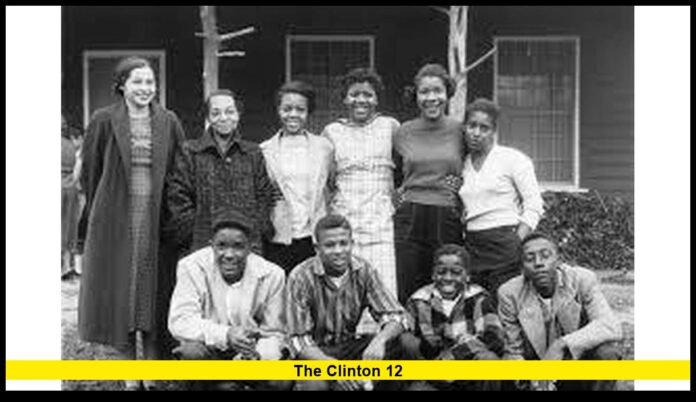

THE CLINTON 12 remain a defining symbol of courage in American education, and the group returned to national conversation this year after the deaths of Jo Ann Allen Boyce, Anna Theresser Caswell, and Bobby Cain. Their passing in 2025 has renewed attention on a history that shaped school integration in the United States long before it held national headlines. In the opening days of December, communities across Tennessee and beyond reflected on the remarkable bravery these students displayed when they walked into Clinton High School in 1956.
Jo Ann Allen Boyce’s death on December 4, 2025, marked a significant moment in public remembrance. At age 84, she closed a life defined not only by her role in desegregation but also by decades spent educating others about the challenges she faced as a teenager during one of the most turbulent periods in civil rights history. Her passing followed earlier losses in the year, making 2025 a turning point for how the nation reflects on the Clinton 12’s legacy.
This article looks closely at that renewed attention and the lives behind it, offering a fuller picture of a group whose courage helped reshape public education in the South.
A Year Marked by Loss and Reflection
The deaths of Boyce, Caswell, and Cain have guided much of the conversation around the Clinton 12 in 2025. Their absence has reminded many Americans that the generation who directly confronted early desegregation battles is aging, and their stories must continue to be told with care and accuracy.
Jo Ann Allen Boyce inspired many through her willingness to speak openly about the isolation and fear she faced while attending an all-white high school under federal court order. Her storytelling offered younger generations a chance to hear firsthand the emotional toll carried by students who stepped into a hostile environment simply to secure an equal education.
Earlier in the year, Anna Theresser Caswell died at age 82. Her life reflected a quieter strength, remembered by many in her community as a woman who never sought attention but who understood the importance of the role she played. She maintained close ties to Tennessee and supported efforts to preserve the Clinton 12’s history in local cultural centers.
In September 2025, the death of 85-year-old Bobby Cain drew broad recognition. Cain holds a distinct place in American history as the first Black student to graduate from an integrated public high school in the South. His perseverance through threats, taunts, and daily intimidation offers a powerful example of the determination required to push desegregation forward in the years before the civil rights movement gained national momentum.
Together, these three losses have encouraged a deeper public examination of a group whose story helped set precedents that would guide desegregation efforts for decades.
Understanding Who the Clinton 12 Were
The Clinton 12 consisted of twelve African American students who integrated Clinton High School in Clinton, Tennessee, in August 1956. This occurred two years after the Supreme Court’s ruling in Brown v. Board of Education. While other desegregation battles would later receive widespread media attention, the Clinton 12 faced their struggle earlier and with far fewer protections in place.
The twelve students were:
- Jo Ann Allen Boyce
- Bobby Cain
- Anna Theresser Caswell
- Gail Ann Epps
- Minnie Ann Dickey
- Ronald Gordon Hayden
- William Latham
- Alvah Jay McSwain
- Maurice Soles
- Robert Thacker
- Regina Turner
- Alfred Williams
Their entry into Clinton High School was met with hostility from segments of the community. Jeers, threats, and mob gatherings made the daily walk to school dangerous. State guards were eventually deployed to stabilize the situation. The students endured taunts in the hallways, vandalism, and an ongoing effort by extremists to halt their attendance.
Despite the resistance, they stayed the course. Their perseverance served as a blueprint for later integration efforts in the South. Though their story is not always as widely taught as later civil rights events, historians have increasingly highlighted the Clinton 12 as foundational contributors to school desegregation.
The Social Climate Surrounding Their Integration
Clinton, Tennessee, in 1956 was a community in transition. The federal government mandated compliance with Brown v. Board of Education, and local residents had mixed reactions. Some supported integration quietly. Others protested loudly, rallying crowds that grew at times into violent mobs.
The atmosphere placed immense pressure on the twelve students and their families. Many parents faced threats at work or at home. Teachers struggled to manage classrooms that carried emotional tensions. The students themselves experienced intimidation not only outside but inside the school.
In spite of these challenges, they continued to attend classes. Their decision to show up every morning demonstrated a level of determination that reshaped the trajectory of public schooling in Tennessee.
A Pivotal Timeline in American Education
A look at the key moments surrounding their history helps illustrate the significance of their role:
- 1954: Brown v. Board of Education rules segregation in public schools unconstitutional.
- 1956: Federal courts order Clinton High School to integrate.
- August 1956: The twelve students enter Clinton High School for the first time.
- 1956–1957: Tension escalates, prompting deployment of the National Guard.
- 1958: Clinton High School is bombed, though later rebuilt.
- 1958: Bobby Cain becomes the first Black graduate of an integrated public high school in the South.
- 2025: The deaths of Boyce, Caswell, and Cain renew widespread discussion about the group’s legacy.
These milestones capture the intensity of the period and the courage required for the students to remain committed to their education.
How Their Legacy Is Preserved Today
The Clinton 12’s legacy lives on through memorials, cultural centers, educational programs, and ongoing community discussions. Exhibits focus on preserving photographs, oral histories, personal artifacts, and school-related materials from the 1950s.
A central gathering place for learning about the group is a cultural center in Clinton dedicated to sharing their history. The center hosts student groups, researchers, tourists, and locals who want to understand how early desegregation shaped Tennessee. Displays often feature recorded interviews that help audiences connect emotionally with the people behind the historical events.
Educators across the U.S. have also incorporated the Clinton 12 into lesson plans that address desegregation, youth activism, and civic courage. Their story is especially meaningful for students learning about the civil rights movement from a personal perspective rather than a purely legal or political one.
Why 2025 Has Brought New Focus to Their Story
This year’s attention reflects more than the passing of three members. It underscores the importance of recording their stories with care. As the remaining members age, communities stress the urgency of preserving firsthand accounts. Their experiences represent voices that can explain not just what happened, but how it felt to live through it.
The renewed interest also stems from broader national conversations about education, equity, and race. Many communities continue to navigate questions about school demographics, student access, and the role of public institutions in expanding opportunity. The Clinton 12 offer a historic lens through which those issues can be better understood.
Public tributes for Boyce, Caswell, and Cain have highlighted themes of resilience, dignity, and commitment to fairness. Their courage continues to inspire civic leaders, students, and activists who draw lessons from the persistence they demonstrated almost seven decades ago.
Personal Stories Behind the Public Legacy
The Clinton 12 were not merely symbols of legal change. They were teenagers with dreams, friendships, fears, and ambitions. Each carried personal memories of the experience.
Jo Ann Allen Boyce often spoke about the emotional impact of walking down hallways lined with hostile students. She described moments of fear but also moments of determination that strengthened her resolve. After leaving Tennessee, she pursued a long career in nursing, where she cared for thousands of children and continued to advocate for kindness and equality.
Anna Theresser Caswell’s story reflects the quiet endurance often found in civil rights history. She did not seek the spotlight but understood her importance as part of a pivotal moment. Her connection to her hometown remained strong, and she supported efforts to ensure that young people learned the full history of the Clinton 12.
Bobby Cain’s journey stood out because he remained in Tennessee and completed his education at Clinton High School, becoming the first Black graduate of an integrated public high school in the South. His achievement signaled that desegregation could not be undone, even in the face of fierce opposition.
Their personal stories show how courage can take different forms—public, private, loud, or quiet—but each contributes to lasting change.
Looking Ahead: What Their Legacy Means for Future Generations
The Clinton 12’s story carries lessons about perseverance, citizenship, and the importance of standing for equality even when circumstances feel overwhelming. Their legacy encourages communities to continue discussing how young people can shape the nation’s progress.
As more Americans revisit their history in 2025, educators and civic leaders emphasize that the group’s courage should not fade with time. Preserving their memory ensures that their sacrifices help guide future decisions about fairness in education.
Final Reflection
THE CLINTON 12 created a path that altered the course of education in the United States. The loss of three members in 2025 invites renewed appreciation for the students who risked their safety to claim their rightful place in a public school classroom.
Share your thoughts below and join the conversation as we honor the lives and enduring legacy of these remarkable trailblazers.