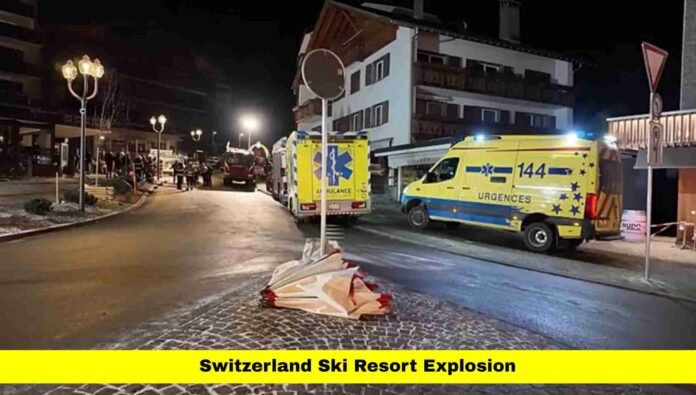

In a devastating incident that stunned the world on New Year’s Day 2026, a Switzerland ski resort explosion in the Alpine town of Crans‑Montana claimed the lives of at least 40 people and left around 115 more injured when a fire tore through a crowded bar during late‑night celebrations. The fire at the popular Le Constellation venue quickly escalated into an inferno, transforming what should have been a night of celebration into one of the deadliest peacetime crises in modern Swiss history.
This article delivers the most current and verified details about the incident, emergency responses, investigation status, victim information, and broader safety implications for resort communities globally. Each section is crafted to give U.S. readers a clear, factual, and comprehensive understanding of this tragic event.
How the Fire Broke Out
The blaze erupted shortly after 1:30 a.m. local time on January 1, 2026, near the heart of Crans‑Montana’s nightlife district as revelers celebrated the arrival of the new year. Fire officials believe the initial spark was unintentional, likely caused when decorative sparklers attached to champagne bottles were held too close to the ceiling. Those sparklers may have ignited flammable sound‑dampening materials lining the ceiling space, triggering an intense and fast‑moving fire that enveloped the bar’s interior in seconds.
Witnesses described how a wooden ceiling quickly caught fire from overhead decorations, and the blaze rapidly spread through the crowded basement dance floor, cutting off primary escape routes and forcing terrified patrons to seek alternative exits.
Impact on Victims
Local authorities confirmed that around 40 people lost their lives in the fire, and about 115 were injured, many with severe burns and respiratory trauma. Hospitals in the Valais canton reached full capacity almost immediately, prompting a mass evacuation of patients to other medical facilities in Switzerland and abroad. Intensive care units in regional hospitals had to transfer patients to specialized burn centers due to the severity of their injuries.
Many of the injured came from across Europe and beyond, with nationalities including Swiss, French, Italian, Belgian, Bosnian, Polish, Portuguese, and Serbian among those treated. The scale of critical injuries and burns means that identification efforts are ongoing and expected to take significant time as authorities ensure accuracy and sensitivity.
Emergency Response and Rescue Operations
In the immediate aftermath, authorities declared a state of emergency in Crans‑Montana. Firefighters, medical personnel, and emergency responders mobilized quickly, with some 13 helicopters, 42 ambulances, and numerous disaster response vehicles arriving to support rescue efforts. Operational teams set up triage centers and coordinated the transfer of severely injured individuals to hospitals in major Swiss cities like Lausanne and Zurich, and some were transported to burn units in neighboring countries.
A no‑fly zone was imposed over the resort to facilitate aerial rescue and transport operations. Police cordoned off the area surrounding the bar, and local emergency hotlines were established to assist families seeking information about missing loved ones.
Investigators Rule Out Deliberate Attack
Swiss authorities have made clear that there is no indication of a deliberate attack or terrorism in connection with the fire. The Valais canton prosecutor’s office and national forensic teams are leading a detailed investigation into the factors that allowed the fire to ignite and spread so quickly.
Key elements of the investigation include examining the materials used in the bar’s construction, fire safety systems and exits, occupancy limits at the time of the celebration, and whether safety protocols were followed. Officials are also reviewing social media footage and witness accounts to reconstruct how the fire progressed and why it proved so lethal.
Eyewitness Descriptions and Survivor Accounts
Eyewitnesses painted a harrowing picture of the moments following the fire’s ignition. Many described thick smoke filling the basement and flames spreading faster than expected, with partygoers scrambling toward narrow staircases and exits. Some survivors spoke of breaking windows in a desperate attempt to escape as smoke and heat rendered interior routes impassable.
One recurring description involved a bartender holding a bottle with a lit sparkler near the wooden ceiling, moments before the first flames were spotted. Panic spread as people in the crowded venue struggled to flee, and several recalled scenes of mass confusion as those near the entrance pushed to get out.
Victim Identification and Support Efforts
The severity of burns sustained by many of the victims has complicated identification efforts. Swiss authorities are working closely with international partners to confirm identities through DNA analysis and other forensic means, prioritizing accuracy before repatriating remains to families. Provisional figures indicate that many of the injured are young adults, and several hospitals have reported treating patients as young as 16.
To support those affected, crisis centers and psychological aid lines have been set up in the resort and nearby towns. Officials have also created information desks to help families coordinate travel, medical updates, and necessary paperwork.
Swiss National Response and Mourning
The federal government declared a period of national mourning, during which flags at official buildings are flown at half‑mast in memory of the victims. Switzerland’s president described the event as “one of the worst tragedies our country has experienced,” recognizing the deep emotional impact on both local residents and the international community.
Cities across Switzerland postponed or canceled New Year’s festivities out of respect for the victims, and memorial sites with flowers, candles, and tributes sprang up around Crans‑Montana.
Safety Standards Under Scrutiny
In the wake of the fire, authorities are carefully reviewing safety regulations for nightclubs, bars, and other entertainment venues. Investigators are examining whether the Le Constellation bar complied with fire safety standards, including exit accessibility, occupancy limits, fire suppression equipment, and the use of flammable materials.
Questions are emerging about whether the venue exceeded recommended capacity and whether all required fire exits were functioning effectively. Officials are expected to release findings that could influence new safety protocols not only in Switzerland but in ski resort towns across Europe.
Community and International Support
In the days following the disaster, local residents and business owners in Crans‑Montana stepped forward with support for those displaced by the fire. Nearby hotels offered temporary shelter, and volunteer groups helped coordinate donations, food, and comforts for survivors and families.
International governments have assisted in treating foreign nationals and helping families navigate the identification process. Coordinated diplomatic efforts have ensured consistent communication with affected relatives abroad, underlining the global significance of the tragedy.
Medical Care and Rehabilitation Challenges
Hospitals treating victims faced extraordinary challenges as intensive care units reached capacity quickly due to the number and severity of burn injuries. Specialized burn treatment, rehabilitation, and long‑term care will likely be required for many of the injured. Medical teams from across Europe have pledged support, offering expertise and resources to assist with recovery.
The lengthy treatment process underscores the need for specialized facilities and highlights how mass casualty events strain medical infrastructure even in countries with advanced healthcare systems.
Broader Safety Conversations in Resort Communities
The fire has sparked widespread discussion about public safety at large gatherings in resort towns, particularly during peak periods like New Year’s Eve. Leaders and safety experts are now urging that lessons from this tragedy be incorporated into updated policies for fire prevention, emergency planning, crowd control, and the use of decorative materials in indoor venues.
Other ski resorts globally are reviewing their safety measures to avoid similar incidents. These conversations are expected to shape how entertainment venues operate during holidays and major events in the future.
Remembrance and Healing Initiatives
Plans are underway for formal remembrance ceremonies that will honor those lost in the fire. These gatherings are intended to bring together survivors, families, officials, and community members for reflection and healing. Local and regional leaders have emphasized the importance of collective remembrance while reinforcing commitments to prevent future tragedies.
Such ceremonies provide a space for shared mourning, allowing affected communities to support one another and acknowledge the profound impact of the disaster.
Lessons for Tourism and Public Safety
The tragedy in Crans‑Montana has raised urgent questions about how communities balance vibrant nightlife and tourism with rigorous safety protocols. The incident demonstrates that celebrations in confined spaces with large crowds require meticulous planning, strict enforcement of fire codes, and continuous assessment of potential hazards.
Tourism boards and safety regulators across Europe are now under increased pressure to ensure that venues hosting large events meet stringent safety standards and provide clear evacuation routes.
What do you think are the most important safety reforms that should come from this tragedy? Share your perspective in the comments or stay informed as more developments continue.