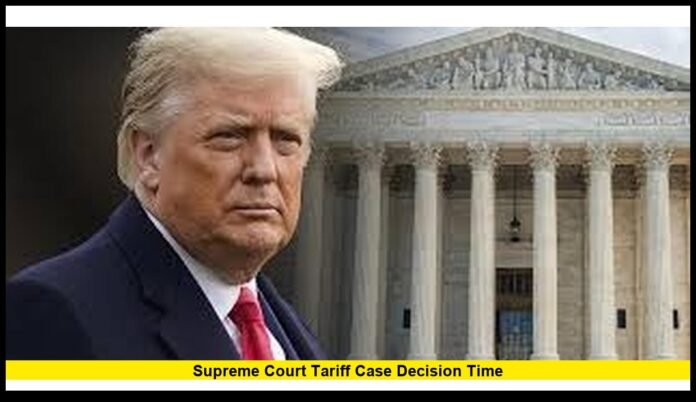

The “supreme court tariff case decision time” has taken center stage in Washington after the Supreme Court of the United States heard arguments on November 5, 2025, in a landmark case determining whether the president can use emergency-powers law to impose sweeping tariffs. The timing of the ruling isn’t fixed yet—but the Court’s expedited handling and pointed questioning suggest a decision could come sooner than typical.
Why the Case Matters and What’s on the Line
At issue is whether the International Emergency Economic Powers Act (“IEEPA”) authorizes the president to levy broad import tariffs without explicit congressional authorization. That question lies squarely at the heart of this case. The implications go far beyond trade: they reach into the balance of power between Congress and the executive branch, affect global economic relationships, and impact the everyday cost of goods for American consumers.
Key stakes include:
- Tariff authority: If the Court sides with the executive branch, future presidents may wield greater unilateral power over trade policy.
- Economic impact: Hundreds of billions of dollars in tariffs are tied up. Businesses, supply chains, and consumers face uncertainty until a ruling lands.
- Precedent for government power: The decision could establish how far emergency powers extend in regulating commerce, not just in crises but in major economic policy.
Because of this, the timing—decision time—takes on added meaning: how quickly the Court acts may signal its view of urgency and stability for business and policy.
What We Know About the Decision Timeline
Oral Arguments and Expedited Schedule
- Oral arguments took place on November 5, 2025.
- The Court accepted the case on an accelerated calendar, indicating it regards the matter as urgent.
- Legal analysts expect the decision to arrive before the usual end of term (June 2026), given the expedited nature.
Possible Decision Windows
While no official date is set, likely windows for the Supreme Court tariff case decision time include:
| Timeframe | Chance & Description |
|---|---|
| Spring 2026 (March–April) | A fast-track decision if opinion drafts move quickly. |
| June 2026 | The standard period for landmark decisions. |
| Later Summer 2026 (July) | If the Court splits heavily or issues multiple opinions. |
The fact the Court moved quickly to schedule this case hints at a faster decision—though no guarantees exist.
What Can Speed or Delay the Decision?
Speed factors:
- Justices largely uniting on key questions.
- Clear majority view on executive trade authority.
Delay factors:
- Complex legal issues (emergency law, tariffs vs taxes, delegation doctrine).
- Strong dissent or need for multiple concurring opinions.
- Possible partial decision that remands certain issues while resolving others.
In short: the decision time will depend not only on the calendar but on how strongly the justices align behind an outcome.
When Is the Decision Likely Coming—and Why It Matters Now
Why the timing matters
The phrase “decision time” is more than scheduling—it signals stakes and stability. Markets, businesses, and international partners want to know: how long until the uncertainty ends? If the ruling is months away, companies may delay investments, suppliers may hold off contract decisions, and global trade flows may remain in limbo.
Why sooner might be better
- A faster ruling gives clarity sooner—good for businesses and the economy.
- If the Court sees the tariffs as destabilizing, it may act quickly.
- The administration signalled it wants the issue resolved early, partly because the tariffs revenue-stream and trade posture are integral to its agenda.
Why the Court may take its time
- The decision involves core constitutional questions (delegation of power, taxation, separation of powers).
- The Court might frame a detailed opinion to guide future policy—not just decide this case.
- Major decisions often arrive at term’s end when the Court can issue a full explanatory opinion—hence a June timeframe remains plausible.
What recent signals show
- Justices questioned whether tariffs under IEEPA can stand if the statute never mentions tariffs or taxes.
- Several justices asked if allowing broad tariffs equated to allowing Congress to abdicate its trade-power obligations.
- The commentary around the hearing suggests the Court may not wait months to decide.
- Yet, the Court made no guarantee of a quick release.
So, we’re left in a scenario where decision time remains a “coming months” estimate—but with plausible hope for a ruling before the standard June deadline.
What Happens in the Interim: Businesses, Consumers & Policy Makers
Business & Industrial Impacts
While the case unfolds and decision time remains unknown, several impacts are visible:
- Importers and suppliers are operating under tariffs still in place, but facing refund risk if invalidated.
- Contract delays: Many firms may postpone major sourcing or investment decisions until the ruling clarifies the horizon.
- Supply-chain adjustments might begin—companies preparing for either outcome.
- Risk management: Legal, trade, and compliance teams are monitoring the case closely and advising alternate strategies.
Consumer Impacts
- Prices for imported goods may rise or stay elevated while uncertainty persists.
- Scheduling of price reductions may depend on post-decision adjustments.
- Inflation concerns: If tariffs remain or expand, consumer budgets could feel the effects—especially on goods reliant on foreign inputs.
Policy and Government
- Congress may prepare to draft or amend laws depending on the Court’s outcome—either reinforcing or limiting executive trade power.
- The Administration already signalled fallback authorities (other than IEEPA) if tariffs get struck down.
- International partners and foreign markets are also watching decision time closely—they react not just to the ruling but to how long U.S. policy remains uncertain.
What the Court Is Deciding: Core Legal Questions
- Does IEEPA authorize tariffs?
The statute grants powers to regulate commerce during national emergencies—but makes no explicit mention of “tariffs” or “duties.” The Court must decide whether broad regulation includes tariff-imposition power. - Are these tariffs equivalent to taxes?
If the levies function like taxes, the Constitution reserves tax-imposition to Congress. The Court asked whether calling them “regulatory” changes that nature. - Does the major questions doctrine apply?
When an agency or executive claims authority over issues of vast economic and political significance, the Court often demands explicit congressional authorization. The Court considered whether broad tariffs fall under that principle. - Is the statute an unconstitutional delegation of power?
If the Court finds IEEPA gives the president nearly unbounded power to impose taxes or duties without clear limits, it may hold the law violates the non-delegation doctrine. - What scope and limitations apply moving forward?
The decision will likely establish either a broad precedent for executive trade power or set clearer limits—both of which inform the decision time and content.
Potential Outcomes and Their Significance
Outcome A: Court Upholds the Tariffs
- Executive authority over trade is strengthened; presidents may impose tariffs more freely.
- Businesses may still face high tariffs, but certainty increases—policy risk is reduced.
- Congress’s role in trade could further recede unless legislators intervene.
- The decision time might be accelerated, signaling the Court sees strong justification for rapid resolution.
Outcome B: Court Strikes Down or Limits the Tariffs
- Congress regains control over tariff policy; presidents may face stricter legal constraints.
- Thousands of importers and companies may pursue refunds or restructure pricing and supply chains.
- The decision time may be more drawn out as the Court crafts detailed limiting principles—impacting how quickly the economy adjusts.
Outcome C: Split or Narrow Decision
- The Court may uphold limited tariffs or impose specific boundaries rather than a full win for either side.
- The decision time could stretch as separate opinions are written and perhaps a partial remand occurs.
- Business and policy actors will still face uncertainty but within known limits.
The Timing Question: Why It’s in Focus Now
The expression supreme court tariff case decision time frames not just what the Court will decide, but when—and that matters for many reasons:
- Business-planning horizon: Companies need to know when they must commit or shift strategies.
- Market stability: Financial instruments, trade flows, and international deals respond to signals of certainty or delay.
- Policy signaling: A rapid decision signals urgency; a long delay signals complexity or division.
- Consumer certainty: Families and households feel price and cost effects; timing influences how quickly relief or risk emerges.
Because this decision time will ripple across trade, law, business and everyday life, many observers are tracking it as intensely as the verdict itself.
How to Prepare While Waiting for Decision Time
For Businesses
- Maintain detailed records of tariff payments and import data.
- Assess supply-chain vulnerabilities and alternative sourcing options.
- Consider legal counsel on refund risk and contract provisions tied to tariffs.
- Communicate with stakeholders (investors, suppliers, clients) about possible scenarios.
For Consumers
- Monitor price trends, especially on imported goods sensitive to tariffs.
- Stay aware of news updates—how long the delay extends can foretell how your costs may behave.
- Consider purchases and budgeting with possible shifts in cost if tariffs change.
For Policymakers & Legislators
- Prepare legislative frameworks or contingency laws that may be called upon post-ruling.
- Monitor Court’s signals and transition discussions about how trade authority might shift.
- Engage stakeholders to identify economic sectors highly exposed to tariffs.
Final Thoughts
The phrase supreme court tariff case decision time captures two inseparable components: the substance of the case (tariffs and trade authority) and the timing of its resolution (decision time). As the Court navigates this pivotal question, the world watches not only what rule emerges—but when it does. Because the answer will affect trade policy, executive-legislative balance, business planning, consumer prices, and economic performance.
Whether the ruling arrives in spring, early summer, or later in 2026, its timing and content will shape the next era of American trade governance.
What role do you think decision time will play in business planning or economic uncertainty? Share your thoughts and stay tuned for when the Court delivers its ruling.
FAQ
Q1: When is the Supreme Court likely to issue its decision in the tariffs case?
The decision is expected between spring and June 2026, with some possibility for a faster ruling given the expedited docket—but no exact date has been set.
Q2: What will the Court be deciding exactly?
The Court will decide whether the IEEPA authorises broad tariffs by the president, whether those tariffs act as taxes (which only Congress may impose), and how far emergency trade powers may extend.
Q3: How will the decision time affect businesses and consumers?
Longer delays create uncertainty, which may prolong elevated costs, postpone investments, and delay adjustments. A faster ruling could bring clarity, but its direction—upholding or striking tariffs—will determine whether costs fall or trade policy shifts.
Disclaimer:
This article is provided for informational purposes only, based on publicly available information as of November 2025. It does not constitute legal, financial, or professional advice. Readers should consult appropriate experts for specific guidance regarding trade law or policy.