
Super Bowl Sunday is packed with traditions that go far beyond football. One of the most popular and enduring traditions is the office, family, and party pool built around a simple grid and a lot of anticipation. For many fans, understanding super bowl squares rules is just as important as knowing the teams on the field, because the fun comes from following every score change and watching the numbers fall into place.
This long-form guide explains how the game works from start to finish, how winners are determined, how payouts are typically structured, and why this pool remains one of the most widely played Super Bowl games in the United States. Everything here reflects how the game is commonly played today, using standard, widely accepted rules that people rely on every year.
What Super Bowl Squares Is and Why It’s So Popular
Super Bowl Squares is a numbers-based pool that allows participants to enjoy the game without needing deep football knowledge. The appeal comes from its simplicity. Once squares are claimed and numbers are assigned, every point scored during the game matters. Even people who are not fans of either team can stay engaged because the outcome depends on the score at specific moments rather than the final result alone.
The game works especially well in group settings because it creates shared excitement. Every touchdown, field goal, or extra point changes the mood in the room. That mix of suspense and accessibility has helped this pool remain a game-day staple for decades.
The Basic Grid Structure
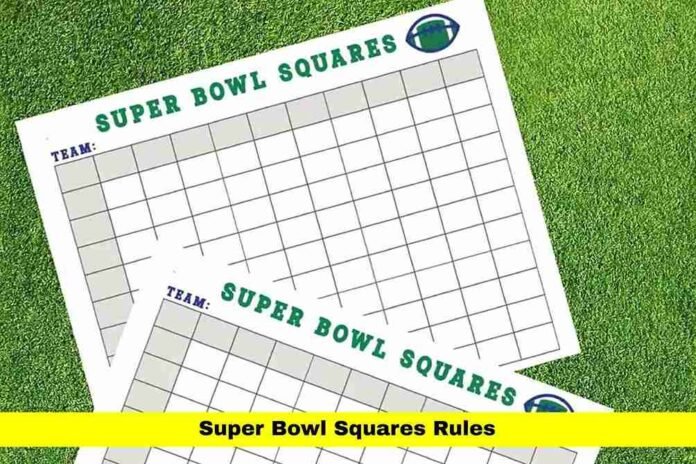
At the heart of the game is a ten-by-ten grid, creating 100 individual squares. Each square represents a unique combination of numbers that correspond to the last digit of each team’s score. One team is assigned to the horizontal axis and the other to the vertical axis.
Participants buy or claim one or more squares on the grid. Each square gives the holder a chance to win based on how the scores line up during the game. The grid must be fully or partially filled before the game begins for the pool to proceed.
How Teams Are Assigned to the Grid
Once the grid is drawn, one team is labeled across the top of the grid and the other along the side. Which team goes where is often decided randomly or by the pool organizer. The placement itself does not affect fairness, as the numbers that matter are added later.
This step is usually completed before any numbers are written on the grid. At this point, the squares only show participant names, not scoring combinations.
How Numbers Are Randomly Assigned
The most important step in setting up the pool is assigning numbers. After all squares are filled or sales are closed, the numbers zero through nine are randomly placed along the top and side of the grid. These numbers represent the last digit of each team’s score.
Random assignment is critical. It ensures that no participant can choose a square based on a preferred number combination. Once numbers are set, the grid is locked, and the game officially begins.
How Winning Squares Are Determined
Winning squares are determined by looking at the last digit of each team’s score at specific points in the game. For example, if one team has 14 points and the other has 17 points, the winning square would be the one that matches the numbers four and seven on the grid.
Only the final digit of the score matters. The total score itself does not matter beyond that last number. This rule keeps the game simple and allows dramatic swings as scores change.
Common Payout Periods During the Game
Most Super Bowl Squares pools pay out at the end of each quarter. The typical structure includes payouts for the first quarter, second quarter, third quarter, and final score. Some pools adjust this structure, but quarter-based payouts remain the most widely used format.
At the end of each designated period, the square that matches the current score wins that round’s payout. Once a round is paid, the game continues with the same grid.
Typical Payout Structures
Payouts vary depending on the group, but many pools split the total pot into percentages. A common approach is to award smaller portions for the first three quarters and a larger share for the final score.
For example, the first quarter, halftime, and third quarter might each pay out a smaller amount, while the final score receives the largest payout. The exact breakdown is usually decided before squares are sold to avoid confusion.
Square Pricing and Pool Size
Each square has a set price determined by the organizer. Prices often range from a few dollars to higher amounts depending on the group. The total prize pool equals the price per square multiplied by the number of squares sold.
Some pools allow participants to buy multiple squares, increasing their chances of winning. Others limit purchases to keep participation fair. Either approach is common and accepted.
Why Final Digits Matter More Than Total Scores
The focus on final digits rather than total scores is what makes the game unpredictable. A team leading by a large margin can still create a winning moment for someone whose square matches an unexpected number combination.
This rule also means that common football scores do not guarantee wins. A score that looks strong on the scoreboard might not align with any participant’s numbers.
What Happens in Case of Score Changes
Scores can change rapidly, especially during high-scoring games. Each time a team scores, the winning square potentially changes. This keeps everyone paying attention, even late in the game when the outcome seems decided.
Extra points, two-point conversions, and field goals all affect the final digit, making every scoring decision important to someone holding a square.
Overtime and Its Impact on the Game
If the Super Bowl goes into overtime, most pools treat the final score at the end of overtime as the final winning square. Quarter-based payouts remain unchanged, but the final payout reflects the ultimate score.
Overtime can dramatically change the outcome for participants, especially those holding squares that did not align with regulation play.
Common Variations People Use
While the standard format is widely used, some groups introduce variations. These may include paying out only at halftime and final score, or offering bonus payouts for specific events. However, the core structure remains the same.
Any variation should be clearly explained before the game begins. Transparency ensures everyone understands how winners are chosen.
Why Random Assignment Is Essential
Random number placement ensures fairness. Allowing participants to choose numbers would give an advantage to those familiar with scoring patterns. Randomization removes strategy and keeps the game purely chance-based.
This is one reason the game appeals to such a broad audience. No special knowledge is required.
How Digital and In-Person Grids Differ
Some pools use printed grids posted in offices or homes. Others use digital versions that automatically assign numbers and track winners. Both formats follow the same rules, but digital versions reduce manual errors.
Regardless of format, the rules remain the same, and the excitement comes from watching the grid align with the scoreboard.
Why This Pool Works for All Types of Fans
The game’s simplicity makes it accessible. Football experts and casual viewers participate on equal footing. The pool adds excitement to every score without requiring attention to plays, statistics, or strategies.
This universal appeal is why the game remains a staple year after year.
Etiquette and Best Practices for Organizers
Clear communication is key. Organizers should explain rules, payout structure, and timing before collecting money. Numbers should be assigned publicly to maintain trust.
Keeping records and confirming winners immediately after each period helps avoid disputes.
Why Super Bowl Squares Remains a Game-Day Tradition
The pool combines anticipation, chance, and shared excitement in a way few games do. It turns every point into a moment and every quarter into a fresh opportunity.
Its staying power comes from its simplicity and its ability to bring people together around a single grid and a shared experience.
Understanding Super Bowl Squares Rules Helps Everyone Enjoy the Game
Knowing how the pool works removes confusion and allows participants to focus on the fun. When everyone understands the structure, the game runs smoothly and adds to the overall enjoyment of Super Bowl Sunday.
Whether played at home, at work, or among friends, this grid-based pool continues to be one of the easiest ways to stay invested from kickoff to the final score.
What’s the most memorable square win you’ve seen, or which quarter do you think brings the most excitement? Share your experience and stay tuned for more game-day insights.