
Millions of Americans are preparing for another significant shift in federal student lending as student loan repayment updates continue to reshape how borrowers manage their education debt. The U.S. Department of Education is entering the next stage of its repayment system overhaul, introducing new timelines for switching repayment plans and implementing changes created under recently enacted legislation. For borrowers currently enrolled in the SAVE Plan or considering future repayment options, the coming months will bring several important deadlines and decisions.
From updated repayment programs to revised borrower protections and extended transition periods, the federal government is attempting to create a more streamlined repayment system while helping loan servicers manage one of the largest administrative transitions in recent years.
Federal Student Loan System Enters a New Era
The federal student loan landscape has changed dramatically over the past several years. Payment pauses during the pandemic, multiple forgiveness initiatives, legal challenges involving repayment programs, and congressional action have all contributed to an evolving system that borrowers must now navigate.
The latest changes represent a broader restructuring rather than a simple update to existing repayment plans. Instead of maintaining numerous overlapping options, federal officials are moving toward a simplified framework that emphasizes fewer repayment choices while establishing new rules for future borrowers.
This transition affects millions of Americans with outstanding federal student loans, making it one of the largest repayment policy changes in decades.
New Timing Emerges for Borrowers Switching Repayment Plans
One of the biggest questions surrounding the transition has been when borrowers would actually need to select a new repayment plan.
Recent guidance indicates that borrowers should not expect every account to change immediately after the new rules take effect. Instead, the Department of Education plans to implement the transition gradually through a phased approach.
Rather than issuing simultaneous deadlines for every borrower nationwide, loan servicers will contact borrowers individually as they become eligible to move into the updated repayment system.
For many borrowers, this means receiving official notification before any action is required. After receiving that notice, borrowers are generally expected to have approximately 90 days to evaluate available repayment options and submit their preferred choice.
The staggered timeline is designed to reduce administrative delays while giving borrowers additional time to understand their available options.
Why the SAVE Plan Is Being Phased Out
The Saving on a Valuable Education (SAVE) Plan was introduced as an income-driven repayment option intended to reduce monthly payments for many federal student loan borrowers.
However, legal challenges prevented full implementation of the program, eventually leading policymakers to establish a different repayment structure through new legislation.
As a result, borrowers currently enrolled in SAVE will eventually transition into newly authorized repayment programs.
Although the exact timing varies depending on individual circumstances and loan servicers, borrowers should expect future communication explaining when they need to make a selection.
Until then, many borrowers remain in temporary administrative arrangements while the Department of Education completes implementation planning.
Understanding the New Repayment Assistance Plan
The centerpiece of the new repayment framework is the Repayment Assistance Plan, commonly known as RAP.
Unlike traditional repayment plans that primarily focus on fixed payment schedules, RAP adjusts monthly payments based on a borrower’s financial circumstances.
Income remains one of the most important factors used to determine monthly obligations, helping borrowers avoid payments that become financially unmanageable during periods of lower earnings.
Additional household considerations, including family size, may also influence payment calculations.
Another notable feature is continued protection against excessive interest growth under qualifying circumstances, helping borrowers avoid situations where balances increase rapidly despite consistent monthly payments.
Borrowers who remain enrolled and satisfy long-term repayment requirements may eventually qualify for remaining balance forgiveness after meeting the program’s conditions.
For many future borrowers, RAP is expected to become the primary income-based repayment option available under federal law.
The Tiered Standard Repayment Plan Explained
Alongside RAP, borrowers will also encounter the Tiered Standard Repayment Plan.
This option differs significantly from income-driven repayment because payments are primarily tied to the loan balance rather than annual income.
Borrowers with smaller balances may complete repayment within approximately ten years, while those carrying larger loan amounts could receive longer repayment periods extending up to twenty-five years.
The structure provides predictable monthly payments and a defined payoff schedule, making it attractive for borrowers who prefer payment stability over income adjustments.
Some borrowers who do not actively choose another eligible repayment option could eventually be placed into a standard repayment plan automatically after their transition period ends.
Borrowers Should Watch for Official Notices
Federal officials emphasize that borrowers should rely on official communications from their loan servicer rather than rumors circulating online.
Each borrower may receive different deadlines depending on:
- Loan type
- Current repayment plan
- Servicer processing schedule
- Administrative workload
- Individual account status
Because notifications will not be distributed simultaneously, borrowers should regularly review their online loan accounts and ensure their contact information remains current.
Missing an important notice could delay repayment decisions or result in automatic placement into another repayment option.
Who Will Be Most Affected?
Although nearly every federal student loan borrower will notice some impact from the ongoing transition, several groups face particularly important changes.
Current SAVE Plan Participants
Borrowers enrolled in SAVE are directly affected because the program is ending.
They will eventually need to choose another eligible repayment plan once notified by their loan servicer.
Recent College Graduates
Borrowers entering repayment after graduation should carefully compare available repayment programs before making a selection.
The repayment choices available to new borrowers differ from those offered in previous years.
Graduate Student Borrowers
Graduate students also face revised borrowing limits under the new federal loan framework.
These changes may influence both future borrowing decisions and long-term repayment planning.
Parent PLUS Borrowers
Families using Parent PLUS Loans should review updated borrowing and repayment rules carefully.
Changes affecting loan availability and repayment structures could influence future education financing decisions.
How the Transition Will Be Managed
The Department of Education has indicated that implementation will occur in stages rather than through a single nationwide conversion.
Loan servicers will gradually process borrower accounts while issuing notifications explaining available repayment choices.
This phased approach serves several purposes.
First, it helps prevent customer service systems from becoming overwhelmed by millions of simultaneous repayment requests.
Second, borrowers receive additional time to evaluate repayment options instead of making rushed financial decisions.
Finally, loan servicers can address questions more effectively throughout the transition.
Although implementation officially begins during 2026, many borrowers may not receive immediate instructions.
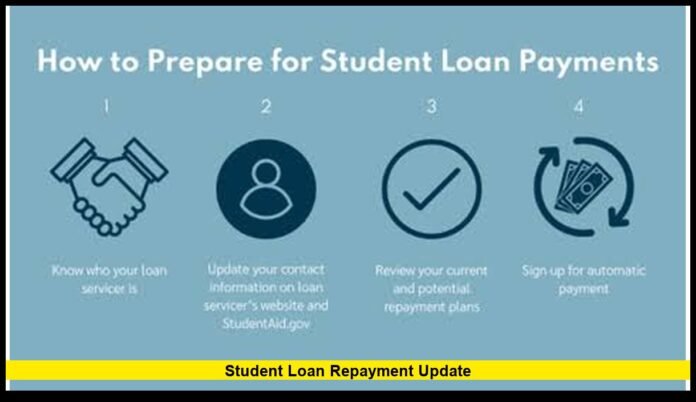
What Borrowers Should Do Right Now
While waiting for official communication, borrowers can take several practical steps to prepare.
Review your federal student loan account to confirm current repayment status.
Verify that your email address, mailing address, and telephone number remain accurate.
Monitor messages from your loan servicer regularly.
Begin comparing available repayment plans so that you’re familiar with potential monthly payment structures before receiving your transition notice.
Keep personal financial records organized, including recent income information, since some repayment plans rely on earnings to calculate monthly payments.
Preparing early may reduce stress once individual deadlines arrive.
Potential Impact on Monthly Payments
One concern shared by many borrowers involves whether monthly payments will increase under the new repayment system.
The answer depends on several personal factors.
Income-driven repayment plans generally calculate payments according to earnings, family size, and other financial information.
Borrowers with relatively low incomes may continue qualifying for affordable monthly payments, while those with higher incomes could experience larger obligations.
Borrowers selecting standard repayment options instead of income-based programs may also see payment amounts differ based on loan balances and repayment length.
Because every borrower’s financial situation is unique, payment estimates will vary considerably.
Public Service Loan Forgiveness Considerations
Borrowers pursuing Public Service Loan Forgiveness should carefully review repayment eligibility before changing plans.
Many public service employees depend on qualifying monthly payments to reach forgiveness milestones.
Selecting an ineligible repayment option could delay progress toward loan forgiveness, making it important to understand how new repayment programs interact with existing forgiveness requirements.
Borrowers working in government agencies or qualifying nonprofit organizations should pay close attention to future guidance before submitting repayment changes.
Why This Transition Matters
Federal student loan repayment affects household budgets across the country.
Monthly loan payments influence decisions involving home purchases, retirement savings, family planning, and career choices.
A repayment system that better reflects borrowers’ financial circumstances can provide greater stability while reducing long-term delinquency and default rates.
At the same time, transitioning millions of accounts requires careful planning, making clear communication between borrowers and loan servicers especially important over the coming months.
Looking Ahead
The federal student loan system will continue evolving as the Department of Education completes implementation of the new repayment framework. While many operational details are now becoming clearer, borrowers should expect additional announcements explaining deadlines, repayment eligibility, administrative procedures, and servicing timelines throughout the year.
The most important step borrowers can take is remaining informed. Reading official notices promptly, reviewing repayment options carefully, and responding before individual deadlines can help ensure a smoother transition into the next generation of federal student loan repayment programs.
As implementation continues, millions of Americans will soon make important financial decisions that could shape their student loan repayment journey for years to come. Staying informed about student loan repayment updates will remain essential as new guidance, repayment timelines, and borrower instructions continue to emerge.