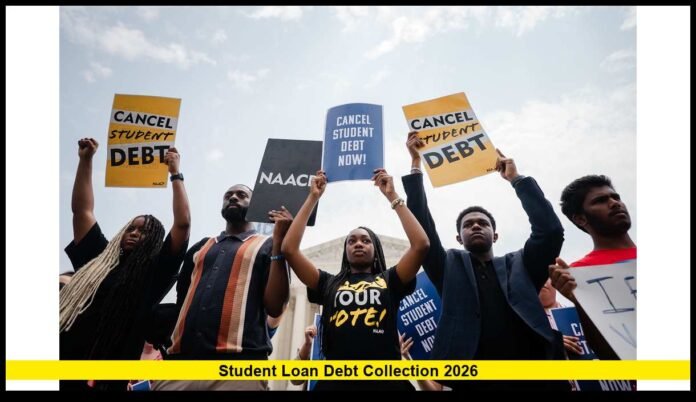

In 2026, student loan debt collection has fully resumed under the U.S. Department of Education. Borrowers in default may face wage garnishment, tax refund offsets, or Treasury withholdings. Programs like Fresh Start and the SAVE Plan help borrowers return to good standing, restore credit, and avoid collection actions while offering more manageable income-based repayment options.
Student loan debt collection 2026 has become a major focus for millions of borrowers as the U.S. Department of Education resumes full-scale enforcement on defaulted loans. After years of paused payments and policy reform, 2026 marks a return to normal repayment operations—but with stronger protections and clearer options for borrowers who are struggling to keep up.
Where Student Loan Debt Collection Stands in 2026
By early 2026, federal student loan collections have fully resumed. The Department of Education and the Office of Federal Student Aid (FSA) are now actively recovering overdue balances from borrowers who defaulted during or after the pandemic pause.
The nationwide payment freeze officially ended in October 2023, followed by a gradual transition period throughout 2024 and 2025. During that time, the government restructured repayment systems and introduced new programs like the SAVE Plan to make repayment more manageable.
Now that this transition is complete, federal collection activities such as wage garnishment, tax refund offsets, and Treasury withholdings are once again being implemented for defaulted accounts. The Department has emphasized that while enforcement has returned, support options are stronger than ever before.
How Federal Student Loan Collections Work
When a borrower fails to make payments on a federal student loan for 270 days or more, the loan is officially classified as in default. Defaulting triggers a series of collection actions by the U.S. Department of Education’s Default Resolution Group or one of its contracted private collection agencies (PCAs).
Once the loan enters default, the borrower loses access to deferment, forbearance, and most repayment benefits. The government then begins recovery efforts to collect the balance, which includes the principal, accrued interest, and potential collection costs.
Here’s a closer look at what happens during federal student loan collection:
1. Wage Garnishment
The government has the authority to collect directly from a borrower’s paycheck through a process called administrative wage garnishment. Up to 15% of disposable income can be automatically deducted without needing a court order. This continues until the debt is paid off or the borrower rehabilitates the loan.
2. Tax Refund Interception
Through the Treasury Offset Program, the Internal Revenue Service (IRS) can withhold part or all of a federal tax refund to cover defaulted student loan balances. If a joint return is filed, a non-defaulted spouse can later file an “injured spouse” claim to recover their portion of the refund.
3. Federal Benefit Offsets
In certain cases, the government can reduce or withhold portions of federal benefits, such as Social Security or federal retirement payments, to recover defaulted loan debt. While this step is generally used as a last resort, it highlights how persistent federal collections can be once a loan defaults.
4. Collection Fees and Costs
When a loan moves into default, borrowers may incur collection costs that increase the overall balance. These fees can cover administrative expenses, legal costs, and contractor commissions. The total amount added varies depending on the duration of the default and the specific actions taken to recover the debt.
5. Loss of Eligibility and Other Consequences
Beyond direct collections, defaulted borrowers lose eligibility for federal financial aid, income-driven repayment plans, and certain federal employment opportunities that require good credit standing. The default also appears on credit reports, significantly lowering credit scores and affecting future loan approvals.
Borrower Rights During the Collection Process
Before any collection action takes place, borrowers are given written advance notice explaining the debt, the intended recovery actions, and available options to resolve the situation. During this notice period, borrowers have important legal rights, including:
- The right to dispute the debt if they believe it’s inaccurate or already resolved.
- The right to request a hearing to challenge the amount or the garnishment terms.
- The right to enter repayment or apply for loan rehabilitation to stop collections entirely.
Borrowers can also contact the Default Resolution Group directly to negotiate repayment or discuss hardship options. The Department of Education encourages communication before garnishment begins, as proactive engagement can often prevent forced collection.
How to Stop Federal Collection Actions
Even after collection begins, borrowers still have paths to regain control. The most common solutions include:
- Loan Rehabilitation: Making nine on-time, voluntary payments within ten months removes the loan from default and halts garnishment.
- Loan Consolidation: Combining multiple loans into a new Direct Consolidation Loan can instantly end default status and restore eligibility for repayment plans.
- Enrollment in Fresh Start: For a limited time, borrowers can reenter good standing through the federal Fresh Start program, avoiding further collection and removing the default record from credit reports.
Taking quick action not only stops wage or tax offsets but also restores access to the full range of repayment and forgiveness programs available under federal law.
The Bottom Line
Federal student loan collections are powerful but not permanent. Borrowers have rights and options to resolve their default, rebuild credit, and reestablish good standing. Acting early—before wage garnishment or tax refund interception occurs—makes the process far easier and helps protect long-term financial health.
The Fresh Start Program — A Final Opportunity in 2026
A key federal policy shaping student loan debt collection in 2026 is the Fresh Start initiative. Created in 2022 and active through mid-2026, this one-time program allows defaulted borrowers to restore their loans to good standing without penalty.
Through Fresh Start, borrowers can:
- Return to regular repayment with affordable terms.
- Remove default status from their credit history.
- Regain eligibility for deferment, forbearance, and new federal aid.
- Avoid wage garnishment and Treasury offsets while enrolled.
Enrolling is simple—borrowers contact their loan servicer or log into studentaid.gov to opt in. Once Fresh Start ends later in 2026, those who haven’t taken action will once again be subject to standard collection enforcement.
Private Collection Agencies and Borrower Rights
The Department of Education works with carefully vetted private collection agencies to handle defaulted federal loans. These agencies operate under strict federal regulations that protect borrowers from harassment and deceptive practices.
Borrowers have the right to:
- Request written verification of any debt being collected.
- Communicate only in writing if preferred.
- File complaints about misconduct directly with the Department of Education.
If a borrower is uncertain whether a collection agency is legitimate, they can verify it by visiting the official Federal Student Aid website or calling the Default Resolution Group for confirmation.
Avoiding Default Through Income-Driven Repayment
One of the most effective ways to stay out of default and prevent student loan debt collection in 2026 is to enroll in an income-driven repayment (IDR) plan. These plans are designed to make monthly payments affordable based on a borrower’s income rather than the total loan amount owed.
The Department of Education’s SAVE Plan (Saving on a Valuable Education)—introduced in 2024—remains the centerpiece of these repayment options in 2026. It has quickly become the most widely used and affordable plan available to federal student loan borrowers.
Here’s how the SAVE Plan works:
- Payments are income-based: Instead of fixed payments, borrowers pay a percentage of their discretionary income, making the plan flexible and fair.
- $0 payments for low-income earners: Individuals earning around $33,000 per year or less (or roughly 225% of the federal poverty line) qualify for no monthly payment.
- Capped payment amounts: Borrowers typically pay 5% to 10% of discretionary income, depending on loan type and household income level.
- No interest accumulation: As long as borrowers make their required monthly payments—even if that amount is $0—unpaid interest will not build up. This stops balances from growing over time.
- Loan forgiveness after consistent payments: Any remaining loan balance is forgiven after 10 to 25 years of qualifying payments, depending on the loan and repayment terms.
This structure means that even borrowers with high debt and modest incomes can maintain their loans in good standing without falling behind.
Why the SAVE Plan Matters in 2026
The SAVE Plan has provided much-needed relief to millions of borrowers since its rollout. It’s especially important for those reentering repayment after the multi-year pause that ended in late 2023. By linking payments directly to income, the plan removes the risk of overwhelming monthly bills that could lead to delinquency or default.
Borrowers who previously defaulted can also use the Fresh Start program to restore their loans and then enroll in the SAVE Plan immediately. This combination gives them a clean financial restart and a sustainable repayment strategy.
Practical Benefits for Borrowers
- Payments automatically adjust each year based on updated income information.
- Borrowers can recertify income easily through the studentaid.gov portal.
- Married borrowers filing taxes separately can base payments on individual income rather than combined household income.
- Borrowers in public service jobs can combine SAVE payments with Public Service Loan Forgiveness (PSLF) for faster debt cancellation.
The SAVE Plan represents a long-term shift toward more manageable repayment and fairer outcomes. Instead of focusing on collection and penalties, the system now prioritizes stability, helping borrowers stay on track without financial strain.
In short: enrolling in an income-driven repayment plan like SAVE is the simplest and most effective way to avoid default in 2026. With affordable monthly payments, no interest buildup, and eventual forgiveness, it provides a clear path to financial recovery and long-term debt relief.
How to Get Out of Default in 2026
For those already in default, there are two primary paths to recovery: loan rehabilitation and loan consolidation.
1. Loan Rehabilitation
Borrowers make nine on-time, voluntary payments within ten consecutive months. Once completed, the loan returns to good standing, the default mark is removed from the credit report, and collection stops.
2. Loan Consolidation
Borrowers combine their defaulted loans into a new Direct Consolidation Loan. This process immediately brings the loan current and allows enrollment in repayment plans like SAVE.
Rehabilitation can be used only once per loan, while consolidation can be used anytime. Both options restore eligibility for deferment, forbearance, and future aid.
Wage Garnishment and Federal Offsets in 2026
After several years of suspension, wage garnishment and federal offsets have fully resumed. Employers are required to comply with garnishment orders from the Department of Education, deducting payments directly from wages until the balance is resolved or the borrower exits default.
The government may also withhold tax refunds or apply Treasury offsets to collect from borrowers who have not entered repayment. Borrowers facing these actions can request a financial hardship hearing or stop collections by enrolling in rehabilitation or Fresh Start.
These enforcement tools are designed as last resorts—borrowers always have the opportunity to resolve their debt voluntarily before garnishment begins.
Read Also:- Student Loan Repayment Changes: Full Breakdown of the 2025 Reforms and What Borrowers Should Expect
Impact of Default on Credit and Financial Stability
Falling into default on federal student loans can have far-reaching financial consequences. Beyond missed payments, default damages a borrower’s credit score, limits access to new loans, and can even affect housing and job opportunities. The longer the loan remains in default, the harder it becomes to regain financial footing.
How Default Affects Credit
When a borrower defaults, the loan is reported to all three major credit bureaus. This can cause a credit score to drop significantly—sometimes by more than 100 points. A lower score makes it difficult to qualify for credit cards, mortgages, or car loans. Even if approval is possible, borrowers often face higher interest rates and less favorable terms.
Barriers Beyond Borrowing
Default doesn’t just impact lending. Many employers and landlords run credit checks as part of their screening process. A defaulted student loan can raise red flags during background reviews, potentially influencing hiring decisions or apartment approvals. Additionally, those seeking to start a business or refinance existing loans may struggle to secure financing while in default.
Rebuilding Credit Through Federal Programs
The good news is that the damage caused by default isn’t permanent. Federal programs like loan rehabilitation and the Fresh Start initiative give borrowers a second chance to restore their accounts and remove the default mark from credit reports.
- Loan Rehabilitation: Borrowers make nine voluntary, on-time payments within ten months. Once completed, the loan returns to good standing, and the default record is deleted from credit reports.
- Fresh Start: This one-time federal program automatically restores eligibility for federal aid and removes default status when borrowers reenter repayment. It also prevents new negative credit reporting during participation.
After reestablishing good standing, consistent, on-time payments on student loans and other accounts can help rebuild credit gradually. Over time, many borrowers see significant score improvement and stronger financial profiles.
Benefits of Restoring Credit
Repairing credit after default opens doors to long-term financial stability. Once loans are current, borrowers regain access to:
- Federal financial aid, making it possible to return to college or pursue advanced degrees.
- Mortgage and auto loans with lower interest rates and better terms.
- Government employment and positions that require security clearance or financial responsibility.
In addition, a higher credit score reduces insurance premiums and improves eligibility for rental housing, further easing the burden of recovery.
Why Acting Quickly Matters
The sooner a borrower takes action, the easier it is to stop collection activity and begin rebuilding credit. Each month in default adds interest, fees, and additional damage to a credit record. Acting early—by enrolling in rehabilitation, Fresh Start, or a repayment plan—can prevent wage garnishment, tax refund offsets, and long-term financial strain.
Ultimately, resolving default is not just about eliminating debt—it’s about regaining control of your financial future. With the right steps and consistent effort, borrowers can repair their credit, restore stability, and move forward with confidence.
Forgiveness Programs Helping Borrowers in 2026
Even as collection activity resumes, several federal forgiveness initiatives continue reducing long-term borrower burdens.
- Public Service Loan Forgiveness (PSLF): Forgives balances after 10 years (120 qualifying payments) for those working in government or nonprofit jobs.
- Income-Driven Repayment Forgiveness: Cancels remaining debt after 20–25 years of consistent payments.
- Borrower Defense to Repayment: Offers discharge for borrowers misled by their schools.
- Total and Permanent Disability Discharge: Eliminates debt for borrowers unable to work due to disability.
These programs, combined with Fresh Start and SAVE, are part of a broader federal strategy to reduce defaults and improve repayment outcomes nationwide.
Fair Collection and Borrower Protections
Federal Student Aid has placed a renewed emphasis on fair collection practices in 2026. The agency continues to audit private collection agencies and enforce strict communication standards.
Enhancements include:
- Mandatory training for collectors on ethical communication.
- Plain-language repayment notices in multiple languages.
- Simplified online access to debt resolution options.
- Public education campaigns warning against scams and false “debt relief” services.
These updates aim to make the collection process less confusing and more transparent for borrowers.
Economic Impact of Student Loan Collections
Student loan debt continues to shape the U.S. economy in major ways. As of early 2026, more than 40 million borrowers are in active repayment, while roughly 5 million remain in default.
Collection on these accounts helps recover federal funds, but it also highlights the importance of sustainable repayment systems. Default often delays home purchases, car loans, and family investments.
By expanding affordable plans like SAVE, the Department of Education hopes to reduce long-term defaults and strengthen borrower financial health.
What Borrowers Should Do Now
If you’re concerned about student loan debt collection in 2026, taking immediate action can protect your finances and stop enforcement.
Here are the most important steps:
- Check your loan status at studentaid.gov.
- Enroll in the Fresh Start program before it expires.
- Contact your loan servicer to explore repayment options.
- Join the SAVE Plan for affordable payments.
- Avoid third-party “debt relief” companies that charge unnecessary fees.
- Keep contact information updated with your servicer to receive official notices.
Acting now prevents garnishment, offsets, and long-term credit damage.
The 2026 Outlook for Borrowers
Federal officials describe 2026 as a transition year—moving from emergency relief toward long-term repayment stability. With the Fresh Start program nearing its end, collection agencies and loan servicers are focusing on helping borrowers avoid slipping back into default.
The SAVE Plan, along with continued forgiveness initiatives, offers new ways for Americans to manage debt sustainably. For many, these tools mean the difference between rebuilding credit and facing years of collection.
The Department of Education has made one message clear: repayment enforcement is back, but so is support for those willing to engage. Borrowers who communicate with their servicers and use legitimate federal programs have every opportunity to succeed in 2026.
Frequently Asked Questions
1. How long does a student loan default stay on my credit report?
A federal student loan default can stay on your credit report for up to seven years from the date of default. However, borrowers who complete loan rehabilitation or enroll in Fresh Start can have the default record removed earlier, helping rebuild credit faster.
2. Can I qualify for new loans after fixing a defaulted student loan?
Yes. Once your loan is brought back to good standing, you can qualify for federal student aid, mortgages, and auto loans again. Lenders view borrowers more favorably after rehabilitation or consolidation, especially when consistent, on-time payments continue afterward.
By staying informed, proactive, and connected to official repayment options, borrowers can avoid collection, rebuild their credit, and secure long-term financial stability in 2026 and beyond.