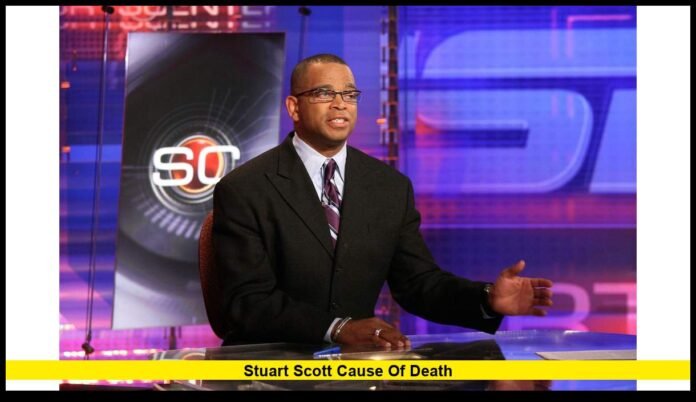

The Stuart Scott cause of death continues to resonate deeply with sports fans, broadcasters, and colleagues who admired his unmatched passion, charisma, and courage. The legendary ESPN anchor passed away on January 4, 2015, after a long battle with a rare form of appendiceal cancer, a disease that affects the appendix and is among the most uncommon types of cancer.
Ten years later, his story remains one of perseverance, love, and inspiration — not defined by illness, but by the extraordinary life he lived and the impact he made on sports media and culture.
From Chicago Roots to ESPN Fame
Stuart Orlando Scott was born on July 19, 1965, in Chicago, Illinois, and raised in Winston-Salem, North Carolina. Growing up, he displayed an early love for sports and communication. After graduating from Mount Tabor High School, Scott attended the University of North Carolina at Chapel Hill, where he studied speech communication and worked at the campus radio station, honing the energetic style that would later make him famous.
Scott began his professional career at local TV stations in South Carolina and Florida before landing his big break at ESPN in 1993. It didn’t take long for him to stand out. With his confident presence, quick wit, and signature voice, Scott quickly became one of the network’s most recognizable anchors.
By the mid-1990s, Scott was a central figure on SportsCenter, delivering highlights with energy and authenticity. His catchphrases — “Booyah!” and “As cool as the other side of the pillow” — became part of pop culture, and his bold style transformed how sports news was presented.
Redefining Sports Broadcasting
Before Stuart Scott, sports broadcasting followed a formula: formal delivery, neutral tone, and minimal personality. Scott shattered that mold. He brought rhythm, soul, and cultural references that resonated with younger audiences, particularly Black viewers who saw themselves represented in his voice for the first time on national sports television.
He combined professional credibility with relatability, using expressions from hip-hop and street culture that made highlights feel alive. His influence extended beyond words — he showed future broadcasters they could bring their full identity to the job without compromise.
Scott’s impact wasn’t limited to the screen. He hosted major events, including the NBA Finals, Super Bowls, and Monday Night Countdown, and interviewed global superstars like Michael Jordan, LeBron James, Tiger Woods, and Kobe Bryant. Many athletes said they trusted Scott because he understood them — not just as players, but as people.
His presence helped make ESPN a cultural powerhouse in the 1990s and 2000s. Colleagues admired his professionalism and humor, describing him as a relentless worker who demanded excellence from himself and everyone around him.
The Diagnosis That Changed Everything
In 2007, while training at a gym, Scott felt abdominal pain that led doctors to discover a malignant tumor in his appendix. He was diagnosed with appendiceal cancer, a rare and aggressive form of the disease.
After surgery to remove the tumor, he underwent chemotherapy and returned to work within months. His determination to continue doing what he loved — anchoring SportsCenter, interviewing athletes, and covering major sports events — became an inspiration to fans worldwide.
Over the next several years, Scott faced multiple recurrences of cancer. He underwent numerous surgeries and rounds of chemotherapy but never allowed the illness to define his identity or career. He continued to work full-time at ESPN, even filming segments from hospitals or treatment centers when necessary.
Strength in the Face of Adversity
What set Stuart Scott apart was not just his talent, but the strength he showed while battling cancer. He rarely complained publicly and always emphasized positivity. He often said he wasn’t “fighting cancer” — he was living his life despite it.
Friends and colleagues recalled how he kept exercising and training, even during chemotherapy. A dedicated martial artist and fitness enthusiast, he would post videos of himself shadowboxing or running to motivate others.
Behind the scenes, Scott was also a devoted father to his two daughters, Taelor and Sydni. They were his greatest source of strength. He frequently spoke about them during interviews, saying his biggest goal was to be present for their lives and accomplishments.
The 2014 ESPYS Speech: A Moment of Immortality
One of the defining moments of Stuart Scott’s legacy came during the 2014 ESPY Awards, when he was honored with the Jimmy V Award for Perseverance. The award recognized his courage and determination to continue working and inspiring others despite his illness.
When Scott took the stage, his body was weak, but his words were powerful. He delivered one of the most memorable speeches in sports history, speaking not about death, but about living with purpose.
He told the audience:
“When you die, it does not mean that you lose to cancer. You beat cancer by how you live, why you live, and the manner in which you live.”
The emotional moment brought the audience to tears and earned a standing ovation. Scott’s daughters joined him on stage, symbolizing the love and legacy he was fighting for. That night, his message transcended sports, resonating with anyone facing struggle or hardship.
The Final Months and Passing
After the ESPYS, Scott’s health continued to decline, but he remained determined to live life fully. Friends described him as upbeat and grateful even during his hospital stays. He continued to spend time with his daughters, workout when he could, and stay connected to colleagues and fans.
On January 4, 2015, Stuart Scott passed away at the age of 49 in Raleigh, North Carolina. The news sent shockwaves across the sports world. Tributes poured in from athletes, fans, and fellow journalists who remembered him not only as a great broadcaster but as an even greater person.
ESPN dedicated multiple broadcasts to honoring his memory, and his co-anchors tearfully reflected on his friendship and influence. The sports community mourned not just the loss of a journalist, but of a cultural icon who made sports coverage more human, emotional, and alive.
Remembering the Stuart Scott Cause of Death
The official Stuart Scott cause of death was complications from appendiceal cancer. This rare form of cancer affects fewer than one person per 100,000 annually in the United States, making it particularly difficult to detect early.
Despite the challenges of his diagnosis, Scott lived for eight years after his first detection — far longer than many patients with similar conditions. His resilience became a symbol of hope for others facing rare and aggressive cancers.
In the wake of his passing, medical experts highlighted the need for greater awareness and research into rare cancers. His journey drew attention to the emotional and physical struggles faced by patients, caregivers, and families dealing with chronic illness.
The Stuart Scott Memorial Cancer Research Fund
To honor his fight and legacy, the V Foundation for Cancer Research established the Stuart Scott Memorial Cancer Research Fund in 2015. The fund focuses on supporting groundbreaking research for cancers that disproportionately affect minority communities, continuing Scott’s lifelong commitment to equality and representation.
The fund has raised millions of dollars and continues to support researchers working to improve detection, treatment, and survival rates for rare cancers. Each year during the ESPYS, ESPN highlights the fund’s achievements, reminding the world of Stuart Scott’s ongoing impact.
His Lasting Legacy
Even a decade after his death, Stuart Scott’s influence on sports broadcasting remains visible. His storytelling style — conversational, rhythmic, and authentic — reshaped how anchors communicate with audiences. Today’s younger broadcasters, from ESPN to regional networks, cite Scott as a major influence.
He opened doors for diversity in sports media, showing that authenticity and cultural identity could coexist with professionalism. His confidence encouraged future generations of journalists of color to bring their voices, language, and heritage into mainstream media.
His famous catchphrases are still echoed by fans and broadcasters alike. Terms like “Booyah!” and “As cool as the other side of the pillow” remain synonymous with his personality and flair. Beyond his words, his life story continues to serve as a masterclass in perseverance, courage, and authenticity.
The Family He Loved Most
For Stuart Scott, nothing mattered more than his family. His daughters, Taelor and Sydni, were at the heart of everything he did. In interviews, he spoke of them with immense pride, calling them his “reason for fighting.”
Since his passing, his daughters have continued to honor his legacy, occasionally sharing memories of their father’s humor and encouragement. They have grown into young women who carry his wisdom and kindness forward, inspiring others just as he did.
Those close to Scott recall how his joy and compassion touched everyone around him. Whether mentoring younger broadcasters, interviewing athletes, or spending time with loved ones, he made everyone feel valued and seen.
The Enduring Message
Stuart Scott’s story is not just one of death, but of how to live. His courage in battling cancer while maintaining his identity as a father, journalist, and role model left a permanent mark on the world.
He showed millions that adversity doesn’t define a person — how they respond to it does. His words at the 2014 ESPYS continue to echo across time, reminding people to live with gratitude and passion no matter their struggles.
Ten years after his passing, Stuart Scott’s influence remains everywhere: in the rhythm of a highlight reel, the energy of a new broadcaster, and the determination of anyone who refuses to give up.
Stuart Scott may have lost his battle with appendiceal cancer, but in every meaningful way, he won — by living boldly, loving deeply, and inspiring the world to do the same. His voice, his style, and his spirit remain unforgettable.