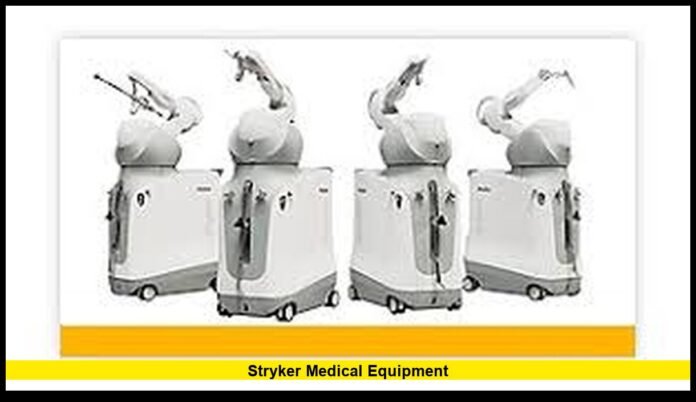

Stryker medical equipment remains a critical part of modern healthcare across the United States, supporting hospitals, surgical teams, and emergency responders with advanced medical technology. From robotic-assisted surgery systems to smart hospital beds and neurovascular treatment devices, the company’s products play a major role in improving patient care and surgical precision. As healthcare systems continue adopting digital tools and minimally invasive procedures, Stryker’s expanding portfolio of medical technologies has become increasingly important in operating rooms, trauma centers, and rehabilitation facilities nationwide.
Founded in Michigan and now recognized as one of the world’s leading medical technology companies, Stryker continues to introduce devices designed to enhance clinical outcomes, improve hospital efficiency, and support healthcare professionals in high-pressure medical environments.
The Company Behind the Technology
Stryker Corporation is headquartered in Kalamazoo, Michigan, and has grown into a global leader in medical technology. The company began in 1941 when orthopedic surgeon Dr. Homer Stryker started designing medical tools that improved surgical procedures and patient mobility.
His early innovations included a turning frame that helped immobilize patients with spinal injuries and a specialized hospital bed that made patient care easier for nurses.
Over the decades, the company expanded into several major medical fields. Today, Stryker designs and manufactures devices used in:
- Orthopedic surgery
- Neurosurgery
- Emergency medicine
- Operating room technology
- Hospital infrastructure
- Neurovascular treatment
Hospitals throughout the United States rely on these systems every day. The company employs tens of thousands of people worldwide and operates manufacturing and research facilities across multiple U.S. states.
Robotic-Assisted Surgery Transforming Orthopedic Care
Robotic-assisted surgery has become one of the most important developments in orthopedic medicine. Stryker’s Mako SmartRobotics platform is widely used for joint replacement procedures.
The system helps surgeons plan and perform operations with greater accuracy. It combines three key elements:
- 3D imaging technology
- Robotic arm assistance
- Personalized surgical planning software
Before surgery begins, doctors create a detailed digital model of the patient’s joint using CT imaging. This model allows surgeons to plan implant placement with extreme precision.
During the procedure, the robotic arm guides surgical instruments while the surgeon remains fully in control.
Common procedures performed with the system include:
- Total knee replacement
- Partial knee replacement
- Total hip replacement
Hospitals across the United States continue expanding robotic surgery programs. Patients increasingly seek facilities that offer robotic joint replacement because the technology can support more accurate implant placement and potentially smoother recovery experiences.
Advanced Operating Room Technology
Operating rooms require highly specialized equipment to support complex procedures. Stryker develops many of the tools surgeons depend on during both open and minimally invasive operations.
Key technologies include:
- High-definition endoscopic cameras
- Surgical visualization systems
- Operating room lights
- Surgical power tools
- Integrated operating room platforms
Visualization systems allow surgeons to see internal structures with exceptional clarity. High-resolution imaging helps guide delicate procedures involving joints, nerves, and soft tissue.
Integrated operating room platforms also improve efficiency. Surgeons can control lighting, video feeds, and imaging systems through centralized digital interfaces.
This type of technology reduces distractions during surgery and allows medical teams to focus entirely on patient care.
Smart Hospital Beds and Patient Safety Systems
Hospital infrastructure is another major area of innovation for the company. Modern hospitals rely on advanced beds and patient monitoring systems to improve safety and workflow.
Smart hospital beds include built-in sensors that track patient movement and provide alerts when someone attempts to leave the bed without assistance.
Key features often include:
- Bed exit detection
- Integrated patient scales
- Wireless connectivity with hospital networks
- Adjustable bed positioning
- Low bed height to help prevent falls
Patient falls remain a major safety concern in hospitals across the United States. Smart bed technology helps medical staff respond quickly when a patient attempts to move without assistance.
The ProCuity bed system is one example of connected hospital equipment designed to integrate with digital healthcare platforms.
These systems help nurses monitor patients more effectively while reducing manual documentation tasks.
Emergency and Transport Equipment Used by First Responders
Emergency medical services require equipment that performs reliably in demanding conditions. Stryker produces stretchers and transport devices widely used by paramedics and ambulance crews.
One of the most recognized products in this category is the Power-PRO powered ambulance stretcher.
Unlike traditional stretchers, this model uses an electric lift system that helps raise and lower patients with minimal physical strain.
Key benefits include:
- Reduced lifting injuries for paramedics
- Faster patient loading into ambulances
- Improved safety during patient transport
- Enhanced stability for critical patients
Emergency responders often work in unpredictable environments, including accident scenes and disaster areas. Durable transport equipment helps medical teams deliver care more efficiently while protecting healthcare workers from injury.
Hospitals also use specialized stretchers designed for trauma centers and emergency departments.
Neurovascular Technology for Stroke and Brain Aneurysm Treatment
Stroke remains one of the leading causes of disability and death in the United States. Medical technology has improved dramatically in recent years, allowing doctors to remove dangerous blood clots from the brain.
Stryker develops neurovascular devices used during these life-saving procedures.
Important tools include:
- Stent retrievers used to remove clots
- Aspiration catheters that suction blockages from arteries
- Flow diversion devices for treating aneurysms
- Specialized coils used to stabilize weakened blood vessels
Mechanical thrombectomy procedures have become a standard treatment for severe ischemic strokes. Doctors insert small catheters into arteries and guide them to the brain to remove the clot.
These procedures must happen quickly. Rapid treatment helps restore blood flow and prevents long-term brain damage.
Advanced neurovascular technology plays a vital role in improving survival rates and reducing stroke-related disability.
Orthopedic Implants and Joint Replacement Devices
Joint replacement surgery remains one of the most common orthopedic procedures in the United States. Millions of Americans experience joint pain caused by arthritis, injury, or aging.
Stryker manufactures implants designed to restore mobility and reduce pain.
Common implant systems include:
- Hip replacement implants
- Knee replacement systems
- Shoulder replacement devices
- Trauma fixation plates and screws
These implants are engineered to mimic natural joint movement while providing long-term durability.
Advances in materials science have improved implant performance. Many devices now use specialized metals and polymers designed to reduce wear and extend the life of the joint.
Surgeons often combine these implants with robotic assistance to improve placement accuracy.
This combination of robotics and implant design represents a major step forward in orthopedic surgery.
Connected Healthcare Technology in Modern Hospitals
Digital connectivity has become a central focus in modern healthcare. Hospitals increasingly depend on systems that allow medical devices to communicate with electronic health records and hospital networks.
This shift has encouraged the development of connected medical platforms.
Communication technology integrated into clinical environments helps healthcare teams:
- Receive device alerts in real time
- Coordinate patient care across departments
- Track patient movement within hospitals
- Improve response times for critical situations
Hospitals aim to reduce delays and improve patient outcomes through better communication between doctors, nurses, and support staff.
Digital platforms also help hospitals analyze data related to patient care and workflow efficiency.
These systems support smarter decision-making and more efficient hospital operations.
Strategic Growth Through Medical Technology Acquisitions
Large medical technology companies often expand through acquisitions that add specialized expertise or innovative products.
Stryker has completed several major acquisitions that broaden its technology capabilities.
Recent acquisitions have strengthened areas such as:
- Clinical communication platforms
- Neurovascular treatment devices
- Orthopedic implant technology
- Digital healthcare solutions
These strategic moves allow the company to combine hardware, software, and data systems into integrated healthcare solutions.
The healthcare industry increasingly favors companies that provide complete technology ecosystems rather than isolated medical devices.
Integrated systems simplify hospital operations and support better coordination among medical teams.
Manufacturing, Research, and U.S. Innovation
Medical device innovation requires extensive research, testing, and regulatory approval. Stryker operates multiple research and manufacturing facilities across the United States.
These facilities focus on:
- Surgical robotics development
- Implant design and testing
- Medical imaging technology
- Biomedical engineering research
Engineers and clinicians work together to refine devices before they reach hospitals.
Products must pass strict safety and performance evaluations before approval for medical use.
Clinical testing also ensures that devices meet the needs of surgeons and healthcare professionals.
Investment in research helps maintain a steady pipeline of new technology.
Future Trends in Surgical and Hospital Technology
Healthcare technology continues evolving as hospitals adopt more digital tools and advanced surgical systems.
Several major trends are shaping the future of medical equipment:
- Growth of robotic surgery programs
- Expansion of minimally invasive procedures
- Greater integration of artificial intelligence in healthcare tools
- Increased use of connected hospital infrastructure
Robotics may eventually support additional surgical specialties beyond orthopedics.
Artificial intelligence may also help analyze surgical data and improve planning before procedures begin.
As healthcare systems focus on efficiency and patient safety, stryker medical equipment will likely remain an important part of hospital technology strategies across the United States.
The combination of robotics, connected devices, and advanced medical engineering continues to redefine how healthcare providers diagnose, treat, and monitor patients.
What do you think about the role of advanced medical technology in today’s hospitals? Share your thoughts or keep following for more updates on innovations shaping modern healthcare.