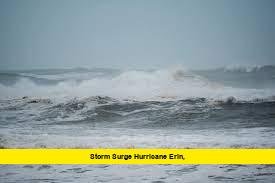

Storm surge hurricane Erin has quickly become one of the most powerful and closely monitored storms of the season. Forming in the Atlantic and gaining strength over warm ocean waters, the hurricane surged from a Category 2 storm to a Category 5 monster in less than 24 hours before weakening slightly to Category 3. Despite its downgrade, the system continues to present significant threats of storm surge, coastal flooding, and dangerous surf conditions for areas in its path.
Communities across the Caribbean, Bermuda, and the eastern seaboard of the United States remain on alert as forecasts indicate the possibility of severe coastal impacts. While the storm is not currently on a direct collision course with the U.S. mainland, the potential for high waves, rip currents, and erosion makes Erin a storm that cannot be ignored.
The Power of Storm Surge Hurricane Erin
Hurricane Erin’s defining threat is not just its wind speeds but the storm surge it generates. At its peak, Erin produced waves towering more than 50 feet offshore, creating treacherous marine conditions. Coastal experts warn that even if the storm stays out to sea, the combination of surge and wave action could cause flooding in low-lying areas and erosion along vulnerable beaches.
Storm surge hurricane Erin demonstrates why surge is often the most dangerous aspect of any major hurricane. When strong winds push ocean water toward land, communities can be inundated within hours, leaving little time for evacuation. Emergency planners are urging coastal residents to stay informed and prepare for possible impacts later this week.
Rapid Intensification Caught Forecasters’ Attention
One of the most alarming features of Erin has been its explosive intensification. Within a single day, the storm transformed from a relatively moderate hurricane to a Category 5 system packing winds of 160 mph. Meteorologists note that such rapid intensification is fueled by unusually warm sea surface temperatures and favorable atmospheric conditions.
Though Erin has since weakened to a Category 3, the storm’s broad wind field and large eye make it especially dangerous. Even without landfall, its impacts extend for hundreds of miles. Swells are already reaching the Caribbean islands, and the outer bands are forecast to push closer to Bermuda in the coming days.
Forecast Path and Potential Impacts
Current projections suggest Erin will curve northward, threading the corridor between Bermuda and the U.S. East Coast. However, minor shifts in its track could drastically alter the outcome. If Erin drifts farther west, coastal areas from North Carolina to New England could experience stronger winds, coastal flooding, and surge-driven damage.
Key risks include:
- Storm Surge: Low-lying coastal towns face flooding if tides and surge align.
- High Surf and Rip Currents: Swimmers and boaters are strongly advised to stay out of the water.
- Coastal Erosion: Prolonged pounding waves can damage dunes and infrastructure.
- Rainfall: Even without direct landfall, outer rain bands could bring localized flooding.
Officials in vulnerable regions are monitoring developments closely. Emergency services are preparing for possible evacuations, while residents are urged to review hurricane safety plans now rather than waiting until the last minute.
Rare Glimpse Inside Erin’s Eye
Hurricane specialists monitoring Erin have highlighted a rare phenomenon inside its structure: the “stadium effect.” This occurs when towering eyewall clouds create the illusion of a domed, stadium-like opening at the center of the storm. Such formations are typically seen only in the most powerful hurricanes and are a sign of a well-organized system.
The stadium effect observed in storm surge hurricane Erin underscores just how intense and structurally sound the hurricane became during its peak. Scientists are studying this storm closely to better understand the dynamics of rapid intensification and its relationship to changing climate patterns.
Preparing for What’s Ahead
While forecasts suggest Erin may veer away from a direct U.S. impact, its storm surge and ripple effects are unavoidable. From Florida to Atlantic Canada, beaches and coastal towns are bracing for large waves, erosion, and hazardous seas. Bermuda is expected to feel the closest brush, with gale-force winds and heavy rainfall possible if Erin tracks closer.
Authorities stress the importance of preparation:
- Stay updated with official advisories.
- Avoid entering the ocean during surge and rip current warnings.
- Secure outdoor property and review evacuation routes if you live near the coast.
Storm surge hurricane Erin serves as a stark reminder that not all hurricane damage comes from direct landfall. Even a storm passing offshore can bring widespread disruption to coastal life and infrastructure.
Closing Thoughts
As storm surge hurricane Erin continues its journey through the Atlantic, its legacy will likely be remembered for both its breathtaking power and its potential danger to millions. Coastal residents from the Caribbean to North America remain watchful as the storm’s path unfolds.
Hurricanes remind us of nature’s raw strength, and Erin is proving to be no exception. Share your thoughts and experiences in the comments below—how are you preparing, and what do you think about the growing risks of these powerful storms?