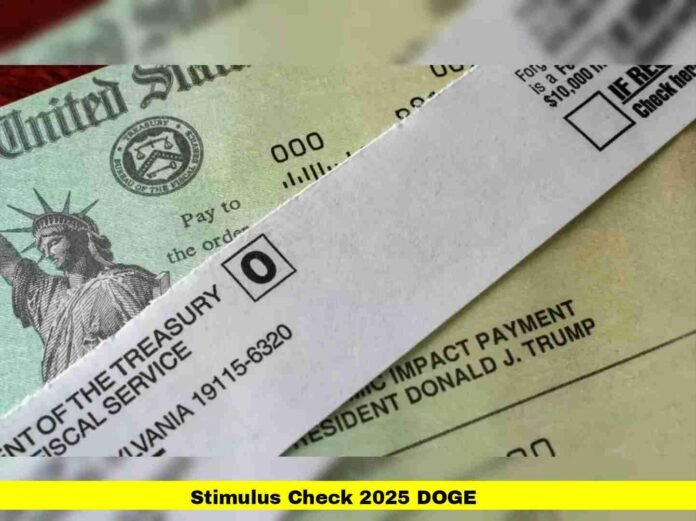

The term stimulus check 2025 DOGE has recently gained attention across social media and news platforms as discussions intensify about potential rebate payments connected to the Department of Government Efficiency (DOGE). While no official payments have been confirmed, the idea has sparked widespread debate about how the federal government could redirect its cost savings to benefit taxpayers.
What Is the Stimulus Check 2025 DOGE?
The “stimulus check 2025 DOGE” refers to a proposed rebate initiative linked to the Department of Government Efficiency (DOGE). The idea behind it is that savings generated from eliminating wasteful federal spending could be distributed back to American taxpayers in the form of one-time payments. The concept has been publicly supported by leaders and advisers within the government who believe citizens should directly benefit from efficient governance.
According to the proposal, the rebates could range from $1,000 to $5,000 per eligible taxpayer, depending on how much money DOGE claims to save from canceled contracts, reduced administrative costs, and streamlined operations. Though no formal program exists yet, this concept has created strong anticipation and speculation among the public.
The Origins of the DOGE Initiative
The Department of Government Efficiency (DOGE) was designed to find and eliminate redundant federal expenditures. Established as a part of broader efforts to make government operations leaner and more transparent, the department focuses on saving taxpayer money through technology upgrades, automation, and contract renegotiations.
Over time, DOGE has reported identifying billions of dollars in potential savings. Supporters of the 2025 stimulus proposal believe that sharing a portion of these savings with citizens would increase public trust in the government and encourage fiscal accountability.
The link between DOGE and a potential stimulus check began when political leaders suggested that at least 20% of verified DOGE savings could be distributed as rebates to taxpayers. This idea resonated with many Americans who are still coping with inflation, high living costs, and post-pandemic economic challenges.
Why There Are No Stimulus Checks Yet
Despite growing discussions, no official federal stimulus checks have been approved for 2025. The Internal Revenue Service (IRS) has clarified that there are no current or scheduled rebate programs for this year. Previous pandemic-era stimulus programs were emergency measures authorized by Congress, and any new payments would require similar legislative approval.
Many false claims have circulated online, including misleading advertisements promising new checks tied to DOGE or “$1,390 payments.” These are scams and not related to any official government initiative. Americans are urged to stay cautious and verify information through legitimate government announcements before sharing financial or personal details online.
What the Proposed Plan Could Include
If the DOGE-based rebate proposal were to move forward, several key components would shape how it works:
- Funding Source: The payments would rely on confirmed DOGE savings from reducing wasteful spending and improving government efficiency.
- Rebate Amounts: Proposed payments range from $1,000 to $5,000, depending on the scale of savings achieved.
- Eligibility: Potentially, only taxpayers who contribute to federal income taxes may qualify, ensuring the rebates reward active participants in the economy.
- Distribution Mechanism: Payments would likely be distributed through the IRS, similar to previous Economic Impact Payments.
- Legislative Approval: Congress must authorize any federal payments, meaning that even if DOGE produces savings, those funds cannot be released without legal approval.
Economic Challenges to the Plan
The U.S. government faces several financial challenges that could affect any new stimulus plan. The federal debt surpassed $38 trillion by late 2025, putting pressure on any proposal that involves additional spending—even if it’s derived from savings.
Inflation also remains a major concern. Economists warn that distributing large sums of cash could increase consumer spending faster than supply can adjust, leading to price hikes. Additionally, any accounting inaccuracies in DOGE’s reported savings could result in budget shortfalls, making the program financially risky.
Without transparent audits and verifiable financial data, it would be difficult for Congress to approve such a plan. Lawmakers will likely demand detailed reports proving that DOGE’s efficiency measures actually free up real, available funds before they consider authorizing payments.
Public and Political Reactions
The public reaction to the stimulus check 2025 DOGE idea has been mixed. Many Americans support the proposal, viewing it as a reward for responsible government savings and a way to boost the economy. These supporters believe that if the government can operate more efficiently, taxpayers should directly share in those benefits.
However, critics argue that the proposal oversimplifies government budgeting and could create false hopes. They emphasize that savings from canceled projects or administrative cuts do not always translate into immediate, spendable cash. Some political analysts also caution that linking stimulus checks to government savings may set unrealistic expectations for future administrations.
Politically, the idea is popular because it resonates with voters who have faced high living costs and wage stagnation. However, opponents question whether the government can sustain such rebates without impacting essential services or increasing the national deficit.
Potential Benefits of the DOGE Rebate Proposal
If implemented effectively, the DOGE rebate program could have several potential benefits for the U.S. economy and its citizens.
First, it could serve as a short-term economic stimulus, encouraging consumer spending and helping small businesses recover from ongoing inflationary pressures. A one-time rebate could give households some breathing room to pay bills, cover healthcare expenses, or invest in savings.
Second, it would promote government accountability by demonstrating that efficiency efforts have real, measurable benefits for taxpayers. If citizens see tangible rewards from reduced spending, it could increase confidence in federal programs and policies.
Finally, such a rebate could help improve financial morale, especially among middle- and lower-income households who have been disproportionately affected by rising prices and limited wage growth.
Risks and Criticisms of the Proposal
Despite its potential advantages, the stimulus check 2025 DOGE concept carries notable risks. The biggest concern is inflation. If a large number of Americans receive extra cash without corresponding increases in production, prices for goods and services could rise further, undermining the benefits of the rebate.
Another issue is legislative feasibility. Without clear bipartisan support in Congress, the proposal might struggle to pass. Lawmakers would need to ensure that payments do not add to the national deficit and that DOGE’s claimed savings are legitimate and sustainable.
Additionally, there is concern over distribution fairness. Critics argue that limiting eligibility to taxpayers might exclude low-income individuals or retirees who could benefit most from financial relief. Crafting equitable criteria would be essential to avoid controversy.
Comparison to Previous Stimulus Programs
Previous stimulus checks, such as those issued during the COVID-19 pandemic, were designed to provide emergency relief during a global crisis. The stimulus check 2025 DOGE proposal, on the other hand, is framed as a reward for governmental efficiency rather than crisis response.
Where earlier payments were financed through congressional appropriations, the DOGE checks would theoretically come from internal savings. This makes it a fundamentally different program in both purpose and funding structure.
The potential rebate would also likely be smaller in scale and scope, as it depends entirely on verifiable savings rather than deficit spending. That makes it more sustainable in theory, but also less guaranteed.
Steps Needed for Implementation
To move from concept to reality, several steps must take place:
- Official Audit of DOGE Savings: Independent auditors must verify the department’s claimed savings.
- Legislative Approval: Congress must pass a bill authorizing rebate payments based on these verified savings.
- Funding Allocation: The Treasury must ensure sufficient funds are available without disrupting other budgetary obligations.
- IRS Preparation: The IRS must develop a secure payment system to distribute checks efficiently and prevent fraud.
- Public Communication: Clear, transparent updates must be shared with citizens to avoid misinformation or scams.
Until these steps occur, the stimulus check 2025 DOGE remains a proposal rather than an active government program.
What Taxpayers Should Know Right Now
For now, Americans should remain cautious and avoid falling for online scams claiming to offer “early access” to DOGE checks or requiring personal information. Any legitimate government payment will be publicly announced through official channels such as the IRS or the Department of the Treasury.
Individuals can prepare by ensuring their tax information is current and by monitoring government updates. Even if no DOGE checks are approved, taxpayers may still benefit from other credits or rebates that become available in future budget cycles.
Conclusion
The concept of a stimulus check 2025 DOGE represents a new way of thinking about fiscal efficiency and citizen benefits. Instead of relying on emergency stimulus measures, this approach connects government savings directly to public rewards.
While the idea holds promise, it also faces significant financial, legal, and political challenges. Until verifiable savings are confirmed and Congress passes authorizing legislation, no official payments will be issued.
Still, the proposal underscores a growing demand for accountability in government spending and a renewed hope that efficiency might one day translate into direct financial relief for Americans.
If implemented responsibly, the DOGE rebate could mark a new era in taxpayer relations—one where smart governance and fiscal discipline genuinely pay off.