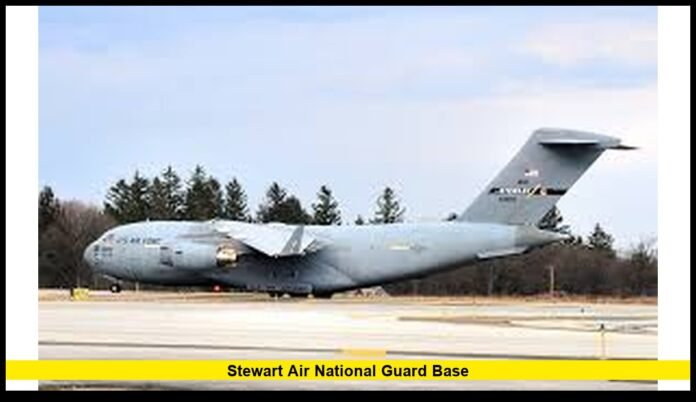

Stewart Air National Guard Base is a New York Air National Guard installation in the Hudson Valley that supports global airlift, homeland security, and emergency response missions. It is home to the 105th Airlift Wing, operating C-17 aircraft for military, federal, and humanitarian operations.
Stewart Air National Guard Base stands at the center of several recent, confirmed developments that have brought renewed attention to its role in the modern U.S. security environment. Located in New York’s Hudson Valley, the installation continues to operate as a highly capable military hub supporting national defense, federal operations, and emergency response missions with precision and reliability.
While the base has long served as a cornerstone of air mobility, its importance today reflects a broader evolution in how the United States manages rapid response, homeland security, and strategic airlift needs. From high-visibility federal operations to daily readiness training, Stewart remains a quiet but critical component of national infrastructure.
A Strategic Military Installation in the Northeast
The base is positioned roughly 60 miles north of New York City, offering a balance of proximity to major population centers and operational separation from dense urban congestion. This location allows military aircraft to operate efficiently while maintaining heightened security protocols when necessary.
Shared runways with a civilian airport add flexibility, enabling large transport aircraft to arrive and depart without disrupting regional travel. This dual-use setup has proven valuable during times when rapid coordination between military and civilian authorities is required.
Its geographic placement also allows fast access to the northeastern corridor, making it an ideal staging point for missions that demand speed and discretion.
Operational Mission and Daily Readiness
At its core, the installation supports air mobility operations that move personnel, equipment, and supplies across the country and around the world. These missions are carried out under both federal and state authority, allowing the base to shift seamlessly between overseas deployments and domestic support operations.
Air mobility missions include:
- Strategic transport of military assets
- Emergency relocation of personnel
- Humanitarian assistance delivery
- Support for homeland defense requirements
The base operates year-round, with personnel maintaining readiness regardless of global conditions or domestic emergencies.
The 105th Airlift Wing and Global Reach
The 105th Airlift Wing serves as the backbone of operations. Equipped with C-17 Globemaster III aircraft, the wing provides unmatched flexibility for long-range transport missions.
These aircraft allow crews to:
- Carry heavy equipment and vehicles
- Operate from short or unimproved runways
- Fly intercontinental routes without refueling
- Support combat, relief, and evacuation missions
Aircrews train constantly to meet demanding mission standards, often operating in challenging environments that simulate real-world conditions.
Training That Reflects Modern Threats
Training at the base is designed to address current and emerging security challenges rather than rely on static or predictable scenarios. Airmen regularly participate in dynamic exercises that test aircraft operations, maintenance reliability, and mission execution under real-world pressure. These training events are structured to mirror the pace and complexity of modern missions, ensuring personnel are prepared for rapidly changing conditions.
Maintenance teams focus on sustaining aircraft readiness with minimal downtime, emphasizing rapid diagnostics, efficient repair procedures, and coordinated support across multiple specialties. These efforts ensure the airlift fleet remains mission-capable even during extended operational periods. At the same time, flight crews rehearse complex airlift operations that involve multiple agencies, time-sensitive cargo, and compressed turnaround schedules, reinforcing precision and teamwork.
Emergency response training is also a core component of readiness. Exercises integrate medical teams, security forces, and logistics units to simulate large-scale contingencies such as mass evacuations, humanitarian relief missions, or domestic emergency support. These coordinated drills strengthen communication and decision-making across units, allowing the base to respond quickly and effectively when real-world situations demand immediate action.
Joint and Multi-Agency Coordination
One of the defining characteristics of operations at the base is its integration with other branches of the military and civilian agencies. Joint exercises regularly bring together Army, Air Force, Marine, and National Guard units.
These drills strengthen interoperability in areas such as:
- Medical evacuation operations
- Base defense coordination
- Logistics support under crisis conditions
- Command and control communication
This approach ensures that when real-world missions arise, coordination happens seamlessly rather than reactively.
Role in National Security Operations
The installation’s infrastructure and security posture make it suitable for sensitive federal missions that require strict control and rapid execution. Recent confirmed operations demonstrated how the base can function as a secure military gateway for high-level government actions.
Such missions rely on:
- Controlled access points
- Secure aircraft handling procedures
- Coordinated federal and military oversight
- Minimal disruption to surrounding communities
These capabilities position the base as a trusted asset for complex security-related operations.
Emergency Response and Disaster Support
Beyond defense missions, the base plays a vital role in disaster response across the northeastern United States. When natural disasters strike, airlift resources are often among the first assets mobilized.
The base supports:
- Delivery of emergency supplies
- Transportation of response teams
- Evacuation assistance
- Medical logistics support
Its location allows rapid deployment into affected areas while maintaining a stable operational environment.
Homeland Defense and Base Protection
Homeland defense readiness remains a core responsibility. Security forces conduct regular drills designed to protect personnel, aircraft, and infrastructure.
Training emphasizes:
- Perimeter defense
- Threat response coordination
- Tactical movement under stress
- Infrastructure protection
These efforts ensure the installation can remain operational even during elevated threat conditions.
Personnel and Workforce Strength
The base employs a diverse mix of full-time Air National Guard members, part-time reservists, and highly trained civilian specialists, forming a skilled and adaptable workforce capable of sustaining high-tempo operations. This integrated personnel structure allows Stewart Air National Guard Base to maintain continuous readiness while remaining flexible enough to scale operations during emergencies, deployments, or surge mission requirements. Each group plays a critical role, from flight operations and aircraft maintenance to logistics, security, communications, and command support.
Many personnel balance military service with civilian careers, bringing valuable technical expertise, leadership experience, and real-world problem-solving skills into their military roles. This dual-career background strengthens operational effectiveness by blending military discipline with industry knowledge in fields such as aviation, engineering, healthcare, information technology, and emergency management. The result is a workforce that adapts quickly to evolving mission demands without sacrificing performance or reliability.
This blended workforce model also strengthens ties between the military and surrounding communities. Service members often live and work locally, contributing to the regional economy and civic life while serving in uniform. Their presence reinforces mutual understanding between the base and the public, ensuring Stewart Air National Guard Base remains both a strong military installation and a trusted community partner.
Economic Impact on the Hudson Valley
The installation contributes significantly to the Hudson Valley’s economy through sustained employment, government contracting, and continued infrastructure investment. Stewart Air National Guard Base supports a large workforce that includes Air National Guard members, full-time technicians, civilian employees, and private-sector contractors. Their presence fuels consistent economic activity across housing, retail, transportation, healthcare, and professional services, benefiting communities throughout Orange County and neighboring areas.
The economic influence of the base extends well beyond payroll. Aviation- and logistics-related infrastructure improvements associated with base operations have strengthened regional transportation capacity and supported long-term growth tied to the surrounding airport complex. Investments in runways, maintenance facilities, security systems, and support services contribute to a more resilient regional aviation and logistics network that benefits both military and civilian users.
Local communities also gain from the stability the base provides. Long-term employment opportunities help anchor families in the region, supporting schools, municipal services, and local tax bases. Contractors and suppliers tied to base operations create additional layers of economic activity, reinforcing the Hudson Valley’s role as an important logistics and transportation hub. The continued operation of Stewart Air National Guard Base remains a reliable source of economic strength and sustained investment for the region.
Community Engagement and Public Trust
Strong relationships with surrounding towns remain a priority for Stewart Air National Guard Base, and these partnerships continue to strengthen through consistent engagement and cooperation. Base leadership regularly works with local government officials, law enforcement, emergency responders, and civic organizations to ensure that military operations align with community interests and regional planning efforts. Open communication helps address concerns related to security, traffic, and aviation activity while reinforcing the base’s role as a responsible neighbor.
Public engagement initiatives play an important role in building understanding and trust. Community briefings, educational outreach programs, and opportunities for residents to interact with service members help demystify the base’s mission and daily operations. These efforts foster transparency and encourage public confidence in the installation’s activities.
Emergency preparedness coordination with local and county authorities further enhances regional safety. Joint planning exercises and response drills ensure that military and civilian agencies can work together effectively during natural disasters, public emergencies, or other critical incidents. This coordination improves response times and strengthens overall resilience across the Hudson Valley.
Service members also contribute to the community through active participation in charitable events, education outreach, and veteran support initiatives. From supporting local schools and nonprofit organizations to assisting fellow veterans and their families, these efforts strengthen social connections beyond the installation and reinforce the base’s commitment to service both on and off duty.
Infrastructure and Modern Capability
Facilities at Stewart Air National Guard Base are designed to support a wide range of operational demands, including aircraft maintenance, logistics coordination, training activities, and command and control functions. The base features specialized hangars capable of accommodating large transport aircraft, secure cargo handling areas, and modern support buildings that allow personnel to sustain high-tempo operations. Continued investment in infrastructure ensures the installation remains capable of supporting modern aircraft while adapting to evolving mission requirements tied to national defense and emergency response.
The base operates alongside a civilian airport, utilizing shared aviation facilities that increase efficiency and operational flexibility. This arrangement allows military aircraft to deploy rapidly while maintaining strict separation between civilian and military activities when mission sensitivity or security requirements demand it. Controlled access points, coordinated airspace management, and secure ground operations ensure safety for both military and civilian users.
This infrastructure-driven adaptability allows the base to scale operations quickly without compromising safety or readiness. Whether supporting routine airlift missions, surge operations during emergencies, or sensitive federal activities, Stewart Air National Guard Base maintains the capability to expand or adjust operations with precision and reliability.
Adapting to a Changing Security Environment
Security challenges facing the United States continue to evolve, placing increased demand on military installations that can respond rapidly while operating with discretion and precision. Stewart Air National Guard Base is well aligned with these requirements due to its strategic location, advanced airlift capabilities, and sustained readiness posture. The base is positioned to support missions that range from overseas deployment and deterrence operations to homeland defense and federal response efforts, all while maintaining a controlled and secure operational environment.
From global airlift missions to domestic crisis response, the installation has consistently demonstrated an ability to adapt without compromising operational standards. Personnel train to meet shifting mission profiles, whether supporting large-scale logistics movements, emergency evacuations, or time-sensitive federal operations. Infrastructure and command systems allow the base to scale activity quickly in response to emerging threats or national needs.
This adaptability ensures relevance not just today, but well into the future. As defense priorities shift toward flexibility, speed, and coordination, Stewart Air National Guard Base remains a dependable asset capable of meeting complex challenges while supporting both national security objectives and domestic stability.
Why Stewart Air National Guard Base Remains Essential
The continued operational use of Stewart Air National Guard Base reflects its growing value within modern U.S. defense planning. The base has demonstrated its ability to support missions that require speed, coordination, and reliability, particularly in situations involving national security, emergency response, and sensitive federal operations. Its proven capacity to handle high-security aircraft movements, rapid deployment timelines, and complex interagency coordination reinforces its standing as a trusted military installation. At the same time, the base maintains strong relationships with surrounding communities, balancing mission execution with public safety and regional stability.
As national priorities shift and new challenges emerge, Stewart Air National Guard Base remains prepared to support operations that demand precision and trust. Its modern airlift capabilities, trained personnel, and strategic location allow it to respond quickly to evolving threats, humanitarian crises, and domestic emergencies. Whether supporting defense readiness, emergency logistics, or federal security operations, the base continues to operate as a reliable cornerstone of U.S. military and homeland security infrastructure.
Stewart Air National Guard Base continues to operate at the intersection of readiness, security, and service—what role do you think installations like this will play in shaping the nation’s future defense strategy? Share your thoughts and stay connected.