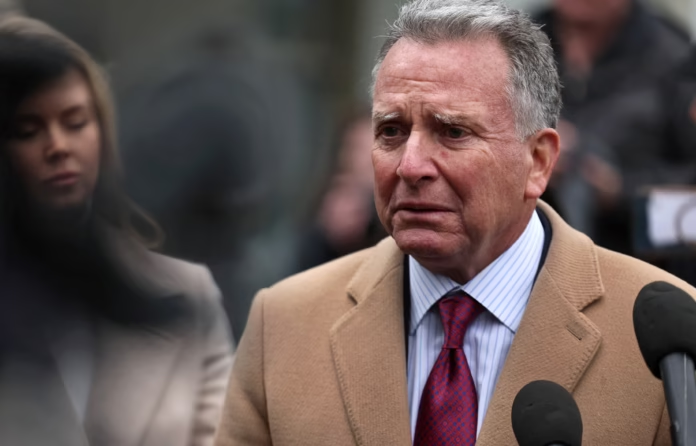

Many people have recently become curious about Steve Witkoff religious beliefs, as his profile in both business and international diplomacy has grown significantly. Witkoff is a prominent real estate developer and currently serves as a U.S. special envoy to the Middle East. His business success, political connections, and diplomatic involvement have made him a figure of public interest.
While Witkoff’s professional life is well documented, his personal faith and religious identity are less discussed. Yet, for many observers—especially in the United States and Israel—understanding his background helps provide deeper insight into his personal identity and how he is perceived in diplomatic circles.
Who Is Steve Witkoff?
Before exploring Steve Witkoff religious beliefs, it’s important to understand who he is. Steve Witkoff built his reputation as one of America’s most ambitious and influential real estate developers. He founded the Witkoff Group, a development and investment firm that became known for acquiring and redeveloping major commercial properties, particularly in New York City.
Witkoff’s career spans decades of involvement in high-value real estate projects, including hotels, office towers, and luxury residential developments. His business strategy often focused on recognizing potential in undervalued properties and transforming them into high-demand assets.
Over time, his influence expanded beyond real estate. Witkoff became increasingly engaged in politics, philanthropy, and diplomacy, leading to his appointment as a U.S. envoy to the Middle East. This role elevated his visibility and placed him in contexts where his identity—religious, cultural, and political—gained new relevance on the world stage.
Jewish Heritage as a Defining Element
The central fact about Steve Witkoff religious beliefs is that he comes from a Jewish background. He was born into a Jewish family in New York and has maintained cultural ties to Judaism throughout his life. His heritage is part of his personal identity, and this background often surfaces in discussions about his career and diplomatic activities.
Unlike some public figures who make their faith a central part of their public image, Witkoff tends to keep his religious practice private. He does not speak openly about his theological views, religious rituals, or personal spirituality. However, his Jewish identity is well known in business, political, and cultural circles, and it often influences how he is perceived—both in the U.S. and abroad.
Jewish heritage plays a unique role in the lives of many American public figures. For some, it is a matter of active religious practice; for others, it is primarily cultural, ethnic, or communal. Witkoff appears to fall into the latter category, where identity is significant but personal beliefs remain private.
Religious Identity in Public Life
Although Witkoff does not discuss his faith in speeches or interviews, his Jewish background often indirectly intersects with his public roles. This is especially visible in three areas:
1. Business Networks
Witkoff’s heritage connects him to a broad network of Jewish business and philanthropic circles in the United States. These networks often include leaders in finance, real estate, and politics, where shared cultural heritage can foster strong professional relationships.
2. Political and Diplomatic Context
As a U.S. envoy to the Middle East, his Jewish identity has symbolic importance, particularly in diplomatic interactions involving Israel. His background gives him cultural familiarity with Jewish and Israeli contexts, which can be perceived as both an asset and a factor of interest in negotiations.
3. Community Perception
In the Jewish American community, Witkoff is often viewed as a prominent figure who has achieved success while maintaining ties to his heritage. Even if he doesn’t publicly highlight religion, his identity is recognized and acknowledged within these circles.
Despite these intersections, it’s clear that Witkoff’s public persona is secular and pragmatic. He focuses on business strategy, political negotiation, and diplomacy rather than religious discourse.
Personal Faith and Privacy
One of the most striking aspects of discussions around Steve Witkoff religious beliefs is the lack of public statements or detailed information. He has not positioned himself as a religious figure, nor has he shared personal reflections on faith in public forums.
This deliberate privacy is not unusual for high-profile figures. Many choose to separate their personal spiritual life from their professional identity, preferring to let their work speak for itself. In Witkoff’s case, this choice aligns with his image as a businessman and diplomat who relies on strategy, connections, and influence rather than religious messaging.
His approach can be interpreted in several ways:
- He may view faith as a personal matter, not to be mixed with public responsibilities.
- His connection to Judaism may be more cultural than religious, reflecting a broader trend among secular or moderately observant Jewish Americans.
- He may simply prefer not to make personal beliefs a subject of public scrutiny.
Whatever the reason, this distinction between private belief and public role is a defining feature of Witkoff’s public life.
Faith and Diplomatic Perception
Witkoff’s appointment as a U.S. special envoy to the Middle East naturally drew attention to his background. In diplomacy, perception can matter as much as policy. While there is no evidence that his religious beliefs shape his diplomatic strategies, his Jewish identity carries symbolic weight in several ways:
- In Israel, his heritage can foster cultural understanding and rapport with Israeli counterparts.
- Among Jewish American communities, it can enhance his credibility and represent shared values.
- In broader Middle Eastern contexts, his background may be viewed strategically, with different political actors interpreting it through their own lenses.
Importantly, Witkoff’s diplomatic approach remains secular. He focuses on negotiations, policy frameworks, and political strategy. His religious background does not appear to influence his decision-making in any overt way.
The Broader Trend: Leaders Who Keep Faith Private
Witkoff’s discretion about his beliefs fits into a larger trend among modern public figures. Many leaders in business, politics, and diplomacy:
- Acknowledge their cultural or religious heritage.
- Refrain from discussing personal faith in public forums.
- Maintain a professional image focused on results rather than religious identity.
This approach reflects the reality of operating in diverse, pluralistic, and politically complex environments, where overt religious statements can have unintended consequences.
Witkoff’s silence on personal religious matters is therefore not unusual—it’s a strategic and personal choice that aligns with his career trajectory.
Cultural vs. Religious Identity
For many Jewish Americans, there is a distinction between cultural identity and religious practice. Cultural Judaism may involve community life, values, history, and shared heritage, while religious observance involves theological belief and ritual practice.
Witkoff embodies this distinction. His Jewish heritage is acknowledged and visible, but his religious practice remains private. This nuanced identity reflects a broader pattern within the American Jewish community, particularly among those in high-profile leadership positions.
Key Insights About Steve Witkoff Religious Beliefs
To summarize what can reasonably be said about Steve Witkoff religious beliefs:
- He was born into a Jewish family and identifies with his Jewish heritage.
- He does not publicly discuss or emphasize religious observance.
- His public persona is secular, focusing on business and diplomacy.
- His religious background carries symbolic meaning in certain political and cultural contexts, especially in Middle Eastern diplomacy.
- His approach mirrors many contemporary leaders who separate personal faith from public roles.
Final Thoughts
So, what do we really know about Steve Witkoff religious beliefs? In essence, Steve Witkoff identifies with his Jewish heritage but keeps his personal faith private. His background plays a role in how he is perceived—particularly in diplomatic and cultural contexts—but it does not define his professional identity or public image.
His approach reflects a modern model of leadership: one that respects personal heritage while maintaining a clear separation between private belief and public duty.
How do you think personal faith should influence public roles? Share your thoughts below.