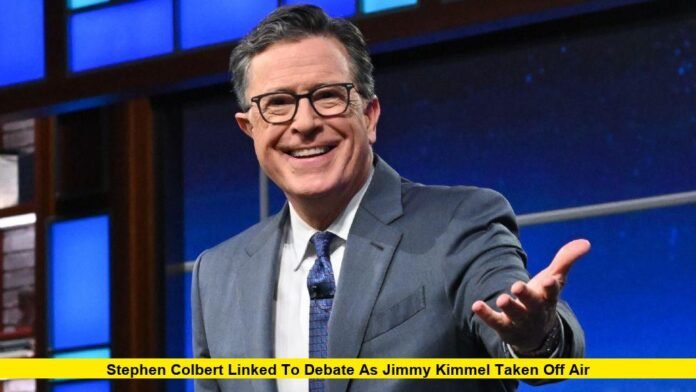

Stephen Colbert has long been one of the most influential voices in late-night television, but this week’s headlines were dominated by another host. Jimmy Kimmel, one of Colbert’s contemporaries, saw his program pulled from the air after controversial remarks about Charlie Kirk. The moment has reignited debates about the future of political comedy, the role of networks in regulating speech, and the lasting influence of Colbert’s own style of commentary.
Jimmy Kimmel Faces Immediate Suspension
The news broke quickly: ABC suspended Jimmy Kimmel Live! after the host’s pointed comments about Charlie Kirk’s recent assassination. Kimmel accused conservative groups of exploiting the tragedy for political advantage, a stance that immediately drew outrage from some viewers and affiliates. Within hours, several major broadcasting groups removed the show from their schedules, pushing ABC to make the suspension official.
For Kimmel, the development represents the most serious professional setback of his career. He has faced criticism before for political jokes, but never on this scale. Unlike routine backlash, this incident resulted in affiliates and advertisers taking swift, coordinated action. For audiences who grew used to his candid style, the absence of Kimmel’s show created an unexpected void in the late-night lineup.
Where Stephen Colbert Fits In
Whenever controversy surrounds a late-night host, comparisons to Stephen Colbert are inevitable. Colbert’s Late Show has been defined by its unapologetic focus on politics, especially his critiques of conservative figures. While Colbert has courted controversy in the past, his network, CBS, has historically supported him, even through intense public criticism.
Colbert’s ability to navigate backlash without facing suspension underscores how unique Kimmel’s situation is. It also raises the question: if Colbert were still in the early stages of his career today, would he have survived under the same climate? Networks appear far more cautious now than when Colbert built his brand, and Kimmel’s suspension suggests the tolerance for politically charged comedy may be narrowing.
The Rise of Political Commentary in Late-Night
To understand why this story resonates, it helps to revisit the broader history of late-night comedy. In earlier eras, late-night shows leaned heavily on celebrity interviews and light humor. That shifted dramatically during the early 2000s, when Jon Stewart and Stephen Colbert redefined the genre with shows that blended satire, commentary, and politics.
- Colbert’s Influence: Through The Colbert Report and later The Late Show, Colbert demonstrated that comedy could tackle politics head-on without losing mainstream appeal.
- Jimmy Kimmel’s Evolution: Kimmel started with a more traditional late-night format but gradually leaned into commentary, particularly during the Trump presidency.
By the mid-2010s, political comedy wasn’t just a niche—it was central to late-night identity. That transformation explains why Kimmel’s suspension feels so significant. It challenges the very formula Colbert helped create.
Why the Kirk Comments Sparked a Firestorm
Charlie Kirk was a polarizing public figure, and his assassination shocked both supporters and critics. Any commentary about his death was bound to draw strong reactions. Kimmel’s decision to frame the event as a political talking point for conservatives struck many as insensitive.
What set this apart from typical backlash was the speed of institutional response. Affiliates refused to air the program before ABC even issued its statement. Advertisers hesitated to associate with the show. Pressure mounted so quickly that suspension became the only option left for the network.
This escalation suggests that in today’s environment, a single monologue can create financial and reputational risks that networks cannot ignore.
Comparing Network Responses: Colbert vs. Kimmel
Stephen Colbert has delivered numerous monologues that provoked outrage among conservative audiences. He often mocked political figures directly, sometimes using biting language. Despite this, CBS stood by him.
Jimmy Kimmel, however, did not receive the same protection. The difference may come down to timing. When Colbert faced his most heated criticism, networks were less worried about immediate social media blowback or advertiser revolts. Now, the environment is faster, harsher, and more unforgiving.
This comparison illustrates how much has changed in just a few years. What was once tolerated as edgy comedy can now threaten a show’s existence overnight.
Public Reaction to the Suspension
The public response has been sharply divided:
- Supporters of ABC’s Decision argue that Kimmel crossed a line and that networks must prioritize respect for victims and their families.
- Defenders of Kimmel claim the suspension represents censorship, stifling a comedian’s ability to comment on major political stories.
- Observers of Colbert point out that if Kimmel is punished for his remarks, it sets a precedent that could affect Colbert and others who engage in similar satire.
On social platforms, debates have raged over whether late-night shows should continue tackling politics or return to safer, celebrity-driven content.
The Larger Question: Has Political Comedy Peaked?
The dual stories of Colbert’s upcoming departure and Kimmel’s sudden suspension suggest that political comedy may be facing its biggest test yet. Networks seem increasingly reluctant to stand behind hosts when commentary provokes controversy. That hesitancy could push future shows to adopt lighter formats.
If that happens, the era defined by Stephen Colbert may come to a close. Colbert himself will leave The Late Show in 2026, marking the end of a chapter in late-night history. Whether audiences want a return to lighthearted entertainment or continue craving sharp satire remains to be seen.
Potential Path Forward for Jimmy Kimmel
For Kimmel, the road ahead is uncertain. Options include:
- Issuing a Public Apology: This could smooth tensions with affiliates and advertisers.
- Doubling Down: Standing by his comments might resonate with loyal fans but risks permanent cancellation.
- Reinvention: Kimmel could return with a slightly altered format, reducing political content while keeping his comedic identity intact.
Each path carries risk, but the decision will define not only his career but also how networks handle similar controversies in the future.
What Stephen Colbert Represents
Stephen Colbert embodies the high-water mark of political comedy in late-night television. His fearless approach influenced an entire generation of hosts, including Kimmel. Yet the current climate suggests that model may no longer be sustainable.
Colbert’s scheduled departure gives him the chance to exit on his own terms, a privilege Kimmel may not enjoy. That contrast speaks volumes about the precarious state of the genre today.
Conclusion
The suspension of Jimmy Kimmel Live! following comments about Charlie Kirk has shaken late-night television. The comparisons to Stephen Colbert highlight both how much the