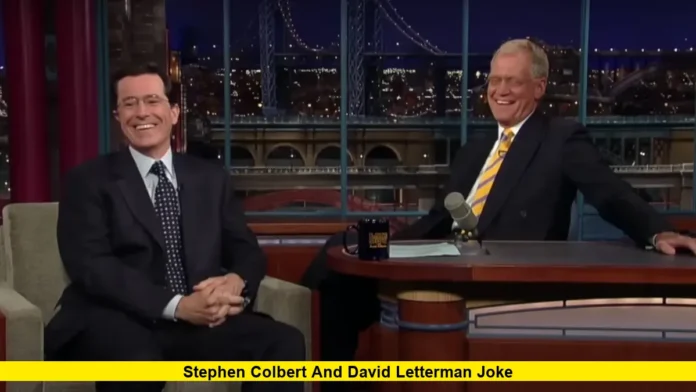

Television audiences witnessed a rare late-night spectacle after the Stephen Colbert and David Letterman joke about being “fired again” spiraled into a chaotic comedy stunt that quickly dominated online conversation. The unexpected reunion between the two iconic hosts blended sharp satire, old-school television humor, and pure unpredictability inside and outside the historic Ed Sullivan Theater.
What started as a simple guest appearance transformed into one of the most talked-about entertainment moments of the week.
During the broadcast, Letterman arrived with his trademark deadpan humor and immediately began mocking the television business. Colbert joined in, turning the conversation into a stream of sarcastic commentary about network executives, ratings pressure, and the uncertain future of traditional late-night programming.
The audience sensed instantly that this would not be a normal interview.
Minutes later, the segment escalated dramatically when furniture connected to the CBS set was hauled onto the theater rooftop and launched into the air as part of a wild comedic sequence that stunned viewers.
Videos from the stunt exploded across social media platforms within hours.
Fans shared clips, reaction posts, memes, and commentary as millions watched chairs, props, and tables crash below while the hosts laughed through the chaos.
The moment carried a strange mix of nostalgia and rebellion.
For longtime viewers, it felt like a return to a more fearless era of late-night television.
For younger audiences, it became an introduction to the unpredictable comedy style that once defined the genre.
An Unscripted Feeling That Captured Attention
One major reason the segment resonated so strongly was its loose, authentic energy.
Modern television often appears heavily polished and carefully managed, but the Colbert-Letterman reunion felt messy in an entertaining way. Their jokes seemed spontaneous rather than rehearsed. The timing felt natural. Even the destruction carried an intentionally reckless charm.
Viewers responded immediately to that atmosphere.
Many social media users described the segment as refreshing because it broke away from the safe structure common in many current talk shows.
Instead of relying only on celebrity interviews or political commentary, the two comedians created a genuine event.
The unpredictability became part of the appeal.
Audiences did not know what would happen next, which is increasingly rare in today’s entertainment environment.
Letterman Returns to the Stage That Defined His Career
The appearance also carried emotional significance because of Letterman’s deep connection to the Ed Sullivan Theater.
The legendary host spent decades shaping modern late-night television from that stage after making his move to CBS in the 1990s. His influence transformed the network’s late-night identity and helped create countless unforgettable television moments over the years.
Returning to the building alongside Colbert gave the reunion extra weight.
Rather than focusing entirely on sentimentality, however, Letterman leaned directly into comedy that mocked the entertainment industry itself.
His repeated jokes about being dismissed from television again drew huge reactions from the audience.
Colbert matched the tone perfectly, firing back with sarcastic remarks about media executives and shifting television economics.
The chemistry between the two hosts became one of the segment’s biggest strengths.
Their conversation never felt forced.
Instead, it unfolded like two comedians enjoying complete freedom to say exactly what they wanted.
Furniture Tossing Sequence Revives Classic Comedy Traditions
The rooftop stunt quickly became the centerpiece of online discussion.
As furniture pieces flew off the building, viewers compared the moment to classic comedy segments from television’s earlier decades. The visual chaos reminded fans of an era when late-night hosts frequently experimented with absurd stunts and physical humor.
Letterman built much of his reputation on that style.
Throughout his career, he became known for turning simple ideas into unpredictable television moments. Whether dropping objects from rooftops or creating bizarre street segments, his comedy often rejected polished entertainment formulas.
The CBS furniture-smashing sequence revived that spirit.
Fans online praised the stunt for embracing silliness without trying too hard to appear sophisticated or overly produced.
That balance helped the clip spread rapidly across digital platforms.
People were not just laughing at the destruction itself.
They were reacting to the feeling behind it — frustration, freedom, nostalgia, and comedy colliding at once.
Stephen Colbert Steps Outside Traditional Late-Night Format
The segment also highlighted a different side of Stephen Colbert.
Over recent years, Colbert has become closely associated with political satire and cultural commentary. His monologues frequently dominate headlines because of their focus on national events and political debates.
This appearance shifted attention back toward performance-driven comedy.
Alongside Letterman, Colbert embraced pure entertainment chaos rather than structured political humor.
Viewers noticed how comfortable he appeared operating within that unpredictable environment.
The exchange reminded audiences that Colbert’s comedic background extends far beyond political monologues.
His improvisation, timing, and willingness to escalate absurdity helped the segment maintain energy throughout the broadcast.
For many fans, the reunion demonstrated why Colbert remains one of television’s strongest late-night personalities despite major changes within the entertainment industry.
Social Media Fuels Massive Audience Reaction
Within minutes of airing, clips from the broadcast dominated entertainment discussions online.
Users across TikTok, X, Instagram, Reddit, and YouTube reposted footage from the rooftop stunt while debating whether the moment represented frustration with network television or simply a brilliantly executed comedy routine.
The answer may have been both.
Entertainment personalities, comedians, and media commentators also weighed in, praising the reunion for generating authentic excitement at a time when viral television moments have become increasingly difficult to create.
Several viewers compared the energy of the segment to classic live television events from past decades.
Others pointed out how unusual it felt to see mainstream network programming take creative risks in real time.
The massive online engagement showed that traditional television can still dominate cultural conversation when a moment feels genuinely original.
Changing Television Industry Adds Extra Meaning
The timing of the stunt added another layer to the public reaction.
The late-night television industry continues facing major pressure from changing audience habits, streaming competition, declining ad revenue, and shifting production strategies.
Network talk shows no longer command the same nightly attention they once enjoyed.
Instead, audiences now consume entertainment through podcasts, social video clips, streaming platforms, and independent creators.
Against that backdrop, the Colbert-Letterman segment felt almost rebellious.
Rather than pretending television remains unchanged, the comedy openly acknowledged instability inside the industry.
The jokes about firings and corporate decisions connected with viewers because they reflected real conversations happening throughout media and entertainment circles.
Still, the segment avoided becoming overly serious.
Instead of delivering speeches about industry decline, the hosts turned uncertainty into comedy.
That decision helped keep the atmosphere entertaining while still carrying emotional depth underneath the humor.
A Viral Television Moment That Broke Through the Noise
In today’s media environment, viral moments disappear quickly.
Audiences scroll endlessly through content, often forgetting clips only hours after watching them.
The Colbert-Letterman reunion managed to stand out because it felt different from the endless stream of manufactured internet moments.
The segment carried personality.
It carried risk.
Most importantly, it carried spontaneity.
People were not simply watching furniture crash from a rooftop.
They were watching two generations of late-night television refusing to play things safe.
That energy turned a comedy bit into a genuine cultural event.
As reactions continue spreading online, many entertainment fans are already calling the reunion one of the defining late-night television moments of the year.
Whether viewed as satire, nostalgia, rebellion, or pure comedy chaos, the broadcast succeeded in something increasingly rare in modern entertainment: it surprised people.
And for one unforgettable night, that surprise brought millions of viewers back into the late-night conversation.