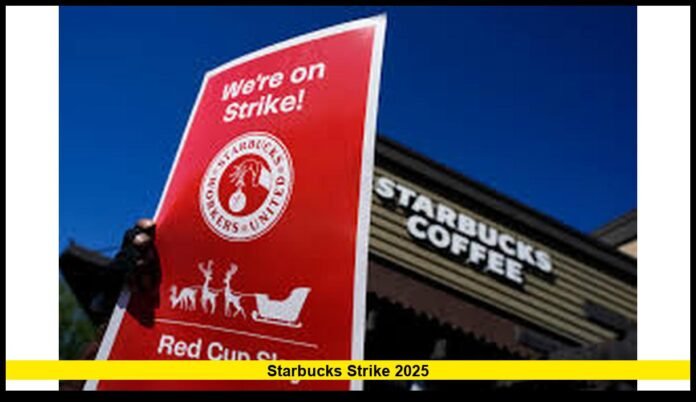

In a major labor development, the Starbucks strike 2025 has reached a crucial turning point as unionized workers across the U.S. prepare for potential walkouts ahead of the company’s popular Red Cup Day promotion. Thousands of Starbucks employees have voted overwhelmingly to authorize a nationwide strike, intensifying pressure on the company to finalize a long-awaited contract with its baristas.
What’s Happening Now
On November 5, 2025, Starbucks Workers United (SWU) announced that members at hundreds of stores voted in favor of a strike authorization. The decision came after months of stalled negotiations between the company and the union, which represents thousands of baristas nationwide.
The union stated that strike action could begin as early as November 13, 2025—the same day Starbucks holds its annual Red Cup Day event. Known for drawing long lines of customers eager to collect limited-edition reusable holiday cups, Red Cup Day has become one of the busiest sales days of the year for the coffee giant.
This year, the event may instead be marked by picket lines, chants, and signs calling for fair pay and improved working conditions. The labor action is being referred to as the “Red Cup Rebellion.”
Why Workers Are Striking
The Starbucks strike 2025 stems from ongoing frustration among employees over what they describe as slow, inconsistent contract negotiations. Union representatives say that after nearly two years of organizing and bargaining, progress has been limited.
Key worker demands include:
- Higher base pay and wage transparency.
- Guaranteed weekly hours for part-time employees.
- Improved benefits eligibility.
- Protections against unfair scheduling practices.
- Clearer procedures for workplace safety and grievances.
Baristas have voiced concerns that reduced hours prevent them from qualifying for healthcare benefits and financial stability. They argue that Starbucks has delayed reaching agreements and failed to bargain in good faith.
Starbucks, however, maintains that it has made multiple proposals, emphasizing that its average hourly compensation—factoring in pay and benefits—remains among the highest in the industry. The company says it wants consistent bargaining structures that allow both sides to progress efficiently.
Timeline of Key Events
| Date | Event |
|---|---|
| April 2024 | Negotiations begin between Starbucks and Starbucks Workers United. |
| December 2024 | Talks stall; both sides enter mediation. |
| February 2025 | Mediation efforts collapse without a final deal. |
| November 5, 2025 | Union votes to authorize a nationwide strike. |
| November 13, 2025 | Potential start date for the strike—coinciding with Red Cup Day. |
Scope and Potential Impact
Starbucks Workers United represents approximately 9,000 employees across more than 550 stores nationwide. Starbucks operates over 10,000 company-owned stores in the U.S., meaning the vast majority are not unionized.
Even so, the strike could significantly disrupt operations in major markets such as New York, Chicago, Los Angeles, and Seattle—particularly if support grows among nonunion stores in solidarity.
The timing adds pressure: Red Cup Day traditionally marks the unofficial start of Starbucks’ holiday season, a critical revenue period. A strike could hurt customer traffic, delay mobile orders, and generate viral attention across social media platforms like TikTok, X, and Instagram.
What Starbucks Is Saying
In a company-wide statement, Starbucks reiterated its commitment to reaching fair agreements through collective bargaining. The company said it had extended more than two dozen proposals and accused union leaders of walking away from scheduled meetings.
Starbucks also emphasized its “partners first” philosophy, stating that it remains focused on supporting baristas through competitive pay, benefits, and wellness programs. It reassured customers that most stores would remain open even if some employees participate in the strike.
What Workers Are Saying
Union leaders and baristas have countered that Starbucks’ offers fall short of addressing chronic workplace issues. They argue that meaningful change will only come when the company signs a comprehensive national contract that guarantees fair wages, consistent hours, and better protections.
Workers in several states have already begun preparing for picket lines and local rallies, printing signs that read “Red Cup Rebellion” and “No Contract, No Coffee.” The movement aims to draw national attention to what organizers describe as unfair labor practices and delayed negotiations.
Consumer Reaction and Public Support
Public support for the Starbucks strike 2025 appears to be growing online. The hashtags #RedCupRebellion, #StarbucksStrike, and #SolidarityWithBaristas have been trending on social media platforms since the vote was announced.
Many customers say they plan to skip Red Cup Day in solidarity with workers, while others have pledged to support unionized locations or tip baristas extra during the strike period.
However, not all consumers are supportive. Some argue that the strike could inconvenience customers and hurt store performance during the crucial holiday season. Starbucks’ loyal fan base remains divided, reflecting broader tensions between corporate leadership and worker advocacy movements.
Economic and Industry Implications
The Starbucks strike 2025 is one of the largest and most visible labor actions in the U.S. retail and service sector this year. It comes amid a broader wave of worker activism, following strikes by auto workers, teachers, and health care employees in 2025.
Experts note that even if the strike doesn’t cripple Starbucks’ operations, it could shape future negotiations in the food and beverage industry. Companies across the sector are watching closely to see how Starbucks balances union demands with maintaining profitability.
Investors, meanwhile, are monitoring whether prolonged labor unrest could affect the company’s holiday quarter performance. Historically, Starbucks’ Red Cup Day promotions drive a surge in sales, but a visible strike could dampen enthusiasm and impact customer turnout.
What Happens Next
As of early November 2025, both sides remain at an impasse. Starbucks Workers United has signaled that if no contract progress is made by November 13, strikes will begin at select stores across the country, with potential expansion depending on the company’s response.
Starbucks has indicated that it remains open to further discussions and hopes to avoid disruptions for both customers and employees. Still, tensions are high, and both sides face mounting public scrutiny ahead of one of the busiest retail weekends of the year.
If the strike proceeds, it could become a defining moment for organized labor within the coffee giant—testing the strength of worker solidarity and the company’s resolve to maintain operations during a critical sales period.
Bottom Line
The Starbucks strike 2025 represents more than a labor dispute—it’s a symbolic battle over fairness, corporate accountability, and worker power in modern America. With the countdown to Red Cup Day underway, all eyes are on Starbucks and its unionized baristas to see whether negotiations or picket lines will dominate the headlines this holiday season.
Bold closing line:
Share your thoughts in the comments—do you stand with Starbucks baristas or believe the company’s offers are fair? Join the conversation below.