
The space shuttle columbia disaster has returned to the national spotlight, drawing renewed attention across the United States as conversations around space exploration intensify. More than two decades after the tragedy, Americans are once again reflecting on the mission, the lives lost, and the lasting impact on NASA and global space programs.
The renewed focus is not случай. With new missions to the Moon, private spaceflight expansion, and increased public interest in astronauts and space safety, Columbia’s story has re-emerged as a powerful reminder of both human ambition and the risks that come with it.
If you’ve seen this story trending across platforms, you’re witnessing a moment where history and the future of space exploration intersect—keep reading to understand why it matters more than ever.
Why the Columbia Story Is Trending Again
The Columbia tragedy is resurfacing as discussions about modern space missions grow louder. NASA’s ongoing Artemis program, private launches, and global competition in space have sparked comparisons between past and present.
Anniversary reflections continue to play a role as well. Each year, Americans revisit the story, but recent online engagement has surged more than usual. Social media users are sharing archival footage, crew photos, and personal memories, bringing the story to younger audiences who may not have lived through it.
Streaming platforms and documentaries have also contributed to the renewed attention. High-quality visual retellings allow viewers to revisit the timeline in detail, making the event feel immediate and emotionally powerful even today.
A Mission That Began Like Any Other
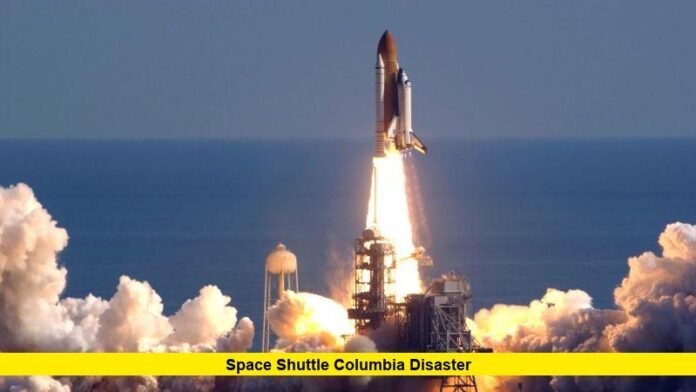
On January 16, 2003, Space Shuttle Columbia launched from Kennedy Space Center on mission STS-107. The crew of seven astronauts embarked on a 16-day scientific mission focused on microgravity experiments.
The launch appeared routine. Engineers and mission control observed nothing out of the ordinary that would suggest the mission would end in tragedy.
However, during liftoff, a piece of foam insulation broke off from the external fuel tank and struck the left wing of the shuttle. At the time, the incident did not trigger immediate alarm, as similar foam strikes had occurred in previous missions without catastrophic consequences.
This seemingly minor event would later prove critical.
The Final Moments That Shocked the Nation
On February 1, 2003, Columbia began its return to Earth. Re-entry is one of the most dangerous phases of any space mission, as the shuttle must endure extreme heat while traveling at high speeds.
As Columbia descended over the United States, something went terribly wrong.
Sensors began reporting unusual temperature readings in the left wing. Shortly after, communication with the shuttle was lost. Within minutes, the spacecraft broke apart in the sky over Texas.
All seven astronauts on board lost their lives.
The event unfolded live, leaving viewers across the country stunned. What started as a routine landing turned into one of the most devastating moments in space history.
The Crew Behind the Mission
The Columbia crew represented a diverse and highly accomplished group of astronauts, scientists, and engineers.
They included:
- Commander Rick Husband
- Pilot William McCool
- Payload Commander Michael Anderson
- Mission Specialists Kalpana Chawla, David Brown, and Laurel Clark
- Payload Specialist Ilan Ramon
Each crew member brought years of experience, dedication, and passion for exploration. Their work during the mission contributed valuable scientific data, even as the mission ended in tragedy.
Kalpana Chawla, in particular, remains an inspiring figure globally, especially in India and the United States, symbolizing determination and achievement in science and space.
What Investigators Discovered
In the months following the disaster, an extensive investigation revealed the cause of the accident.
The foam strike during launch had damaged the thermal protection system on the shuttle’s left wing. This system is designed to shield the spacecraft from the intense heat of re-entry.
As Columbia re-entered Earth’s atmosphere, superheated gases penetrated the damaged area. The internal structure of the wing weakened rapidly, leading to the shuttle’s breakup.
The investigation also highlighted organizational and communication issues within NASA. Engineers had raised concerns about potential damage during the mission, but those concerns did not lead to further action.
This combination of physical damage and decision-making failures played a critical role in the outcome.
How NASA Changed After Columbia
The space shuttle columbia disaster forced NASA to rethink its approach to safety and risk management.
Key changes included:
- Improved inspection procedures for spacecraft before and after launch
- Enhanced imaging capabilities to detect damage in orbit
- New repair techniques for thermal protection systems
- Stronger communication channels between engineers and leadership
- A greater emphasis on safety culture and decision accountability
The space shuttle program itself was eventually retired in 2011, partly influenced by the risks highlighted by both the Columbia and Challenger disasters.
These changes continue to shape how missions are planned and executed today.
The Emotional Impact That Never Faded
For many Americans, the Columbia disaster is not just a historical event—it’s a deeply personal memory.
People remember where they were when they heard the news. Schools paused. News channels switched to continuous coverage. Families gathered around televisions in shock.
The emotional weight of that day remains strong, which is why the story continues to resonate.
Online discussions today reflect that same emotion. Users share memories, tributes, and reflections, creating a collective space for remembrance.
Why Younger Generations Are Paying Attention Now
A new generation is discovering Columbia through digital platforms.
Short-form videos, documentaries, and educational content are introducing the story to audiences who were not alive in 2003. For them, the tragedy is both shocking and eye-opening.
It highlights the reality that space exploration, while inspiring, involves real risks.
As interest in space careers grows among younger audiences, stories like Columbia serve as powerful lessons about responsibility, innovation, and resilience.
The Connection to Today’s Space Missions
Modern space missions operate in a very different environment compared to 2003.
Advanced technology allows for better monitoring, improved materials, and more precise engineering. Private companies have also entered the space industry, bringing new approaches and competition.
Despite these advancements, Columbia’s legacy remains central.
Every mission today builds on lessons learned from past tragedies. Safety protocols, design improvements, and mission planning all reflect changes made after 2003.
The story serves as a reminder that progress in space exploration is often shaped by experience.
Why This Story Keeps Going Viral
Certain events never fade from public consciousness, and Columbia is one of them.
It combines several elements that make it highly shareable:
- Emotional human stories
- Dramatic visual moments
- Historical significance
- Ongoing relevance to current events
As new developments in space exploration emerge, the story naturally resurfaces.
Social media amplifies this effect, allowing users to rediscover and share the story repeatedly.
What the Future Holds for Space Exploration
NASA and private space companies are now focused on ambitious goals, including returning humans to the Moon and eventually reaching Mars.
These missions rely heavily on the lessons learned from past experiences.
Safety remains a top priority, and technological advancements continue to reduce risks. However, the challenges of space travel remain significant.
Columbia’s legacy ensures that those challenges are approached with caution, respect, and continuous improvement.
A Legacy That Continues to Inspire
The Columbia crew’s dedication and courage continue to inspire people around the world.
Their mission represents the spirit of exploration—the desire to push boundaries and expand human knowledge.
While the tragedy was devastating, it also led to meaningful changes that have made space travel safer.
Their legacy lives on in every mission that follows.
The story of Columbia continues to unite people across generations—share your thoughts and stay connected as this conversation grows.