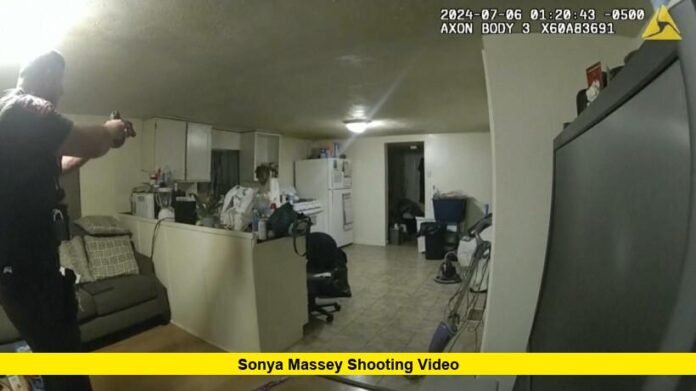

The sonya massey shooting video remains one of the most discussed pieces of body camera footage in recent American law enforcement history, and the case surrounding it has reached a dramatic new chapter. Sonya Massey, a 36-year-old Black woman from Springfield, Illinois, was fatally shot inside her own home in July 2024 by a Sangamon County sheriff’s deputy who had responded to her 911 call about a possible prowler. More than two years later, the footage of that encounter continues to shape public conversation about police accountability, and news broke this week that the former deputy convicted in her killing has died while serving his prison sentence.
Who Is Sonya Massey
Sonya Massey was a mother of two who lived in Springfield, Illinois, and was known to family and friends as warm, spiritual, and deeply devoted to her children. She had called 911 on the night of July 6, 2024, after hearing noises outside her home that she believed might have been an intruder. Like many people who dial emergency services, Massey expected help to arrive and resolve the situation safely. Instead, the responding deputies’ visit ended in her death inside her own kitchen, an outcome that shocked her community and drew national attention once video of the incident became public.
Massey’s family has described her as someone who was navigating a difficult period in her life but who did not deserve the outcome she received. Her mother, Donna Massey, had reportedly called authorities the night before the shooting because her daughter appeared to be experiencing a mental health episode. That earlier encounter, captured on a separate body camera recording, showed officers speaking calmly with Massey and reassuring her that people cared about her wellbeing. The contrast between that interaction and the fatal one just hours later became a central point of public outrage once both videos surfaced.
Sonya Massey Story: What Happened on July 6, 2024
According to court testimony and the released body camera footage, Sangamon County Sheriff’s Deputy Sean Grayson and a fellow officer responded to Massey’s home after her 911 call. The deputies searched the property but found no sign of an intruder before speaking with Massey at her front door. She let them inside, and the interaction initially appeared calm, with Massey searching for identification at the officers’ request.
The situation escalated when Grayson noticed a pot of water on Massey’s stove and asked her to move it away from the burner, reportedly saying he did not want a fire while they were inside. As Massey went to remove the pot, she said, “I rebuke you in the name of Jesus,” a phrase that Grayson later claimed made him fear she intended to throw the boiling water at him. He drew his weapon and threatened to shoot her in the face. Massey apologized and ducked behind a kitchen counter, appearing to comply, before Grayson fired three shots. One round struck her in the face, and she later died from her injuries. Her final words, according to the footage, were an apology.
Body camera video also captured the aftermath, showing Grayson discouraging his partner from retrieving a medical kit to treat Massey’s wounds. He was heard making disparaging remarks about her while she lay on the floor. That portion of the footage became especially significant during the criminal trial, as prosecutors argued it demonstrated a lack of urgency and compassion in the moments after the shooting.
The Body Camera Footage and Public Reaction
When Illinois State Police released the body camera footage publicly in late July 2024, it triggered an immediate wave of protests, vigils, and calls for reform across Illinois and beyond. Civil rights attorney Ben Crump, who represented Massey’s family, described the footage as deeply disturbing and said it exposed an unjustified use of deadly force against an unarmed woman who had called police for help.
The footage showed Massey telling the deputies “please, don’t hurt me” when she first opened her door, a detail that added to public concern about how the encounter unfolded. Grayson had responded that he did not want to hurt her since she was the one who called for assistance. Within minutes, that same interaction turned fatal. The release of the video prompted the Sangamon County Sheriff’s Office to fire Grayson, and the U.S. Department of Justice opened its own investigation into the shooting shortly afterward.
Because of intense local media coverage, Grayson’s defense argued that finding an impartial jury in Sangamon County would be difficult. A judge agreed, and the trial was ultimately moved to Peoria County, where proceedings began in October 2025.
The Murder Trial and Conviction
Grayson faced three counts of first-degree murder, along with aggravated battery with a firearm and official misconduct charges. He pleaded not guilty and maintained throughout the trial that he believed Massey intended to throw boiling water at him, which he argued justified his use of force. His defense team told jurors that Massey had lifted the pot above her head in a threatening manner moments before he fired.
Prosecutors presented a different account, emphasizing that Massey had already begun to comply and duck for cover before Grayson opened fire. A key witness for the prosecution was Grayson’s own partner, Deputy Dawson Farley, who testified that Massey never appeared to pose a genuine threat during the encounter. Farley said he wanted to “do right” by Massey through his testimony.
During the trial, jurors watched the graphic body camera footage in court, an experience that visibly affected several members of the panel. Some jurors were seen covering their eyes or becoming emotional as the video played. In October 2025, the jury found Grayson guilty of second-degree murder, a lesser charge than first-degree murder but still a significant conviction. Massey’s family described the verdict as “partial justice,” acknowledging accountability while noting that no conviction could bring Sonya back.
Sentencing and Grayson’s Death in Custody
Grayson was sentenced on January 29, 2026, to 20 years in prison, to be followed by two years of mandatory supervised release. His attorneys had sought leniency, citing his stage 3 colon cancer diagnosis from 2023, but the sentence proceeded as recommended by prosecutors.
In the months that followed, Grayson’s health reportedly declined, with his cancer progressing to stage 4. His legal team petitioned the Illinois Prisoner Review Board for a medical release, arguing that continued imprisonment endangered his health. Massey’s family testified against the request, and the board denied it in July 2026, ordering Grayson to remain in custody.
According to multiple news reports published this week, Sean Grayson died on Sunday, August 23, 2026, roughly six months into his prison sentence. His attorney, Daniel Fultz, confirmed the death, though an official cause has not yet been released by the Illinois Department of Corrections. Grayson was 32 years old at the time of his death.
Attorneys representing Massey’s family, including Ben Crump and Antonio Romanucci, released a statement following the news, saying Massey’s death was unjustifiable and that Grayson’s passing does not bring her back. Family members reportedly reacted to the news publicly, with relatives telling local outlets that they felt justice had ultimately been served, even amid the complicated emotions surrounding a person’s death from illness.
Public Interest and Lasting Impact
The sonya massey shooting video sparked broader conversations about policing practices, background check standards for law enforcement hiring, and how officers are trained to de-escalate encounters involving individuals who may be experiencing a mental health crisis. Illinois lawmakers, including State Senator Doris Turner of Springfield, pushed for legislation mandating stricter background checks for prospective police hires, citing Massey’s case directly as motivation for reform.
The case remains a frequently referenced example in national discussions about police use of force, particularly involving Black women and individuals experiencing mental health episodes. Massey’s story continues to resonate with advocacy groups pushing for greater law enforcement accountability, and the footage itself is often cited in training and policy discussions across the country.
Final Thoughts
The sonya massey shooting video captured a tragedy that unfolded within minutes inside a home where Sonya Massey should have found help, not harm. Her story, from the 911 call to the courtroom conviction and now the death of the man responsible, has become a defining case in ongoing national debates about police accountability. While Sean Grayson’s death closes one chapter of this story, the legacy of Sonya Massey’s case continues through policy changes, public awareness, and the memory her family and community continue to honor.
Stay tuned for continued coverage as more details emerge, and share your thoughts in the comments below.