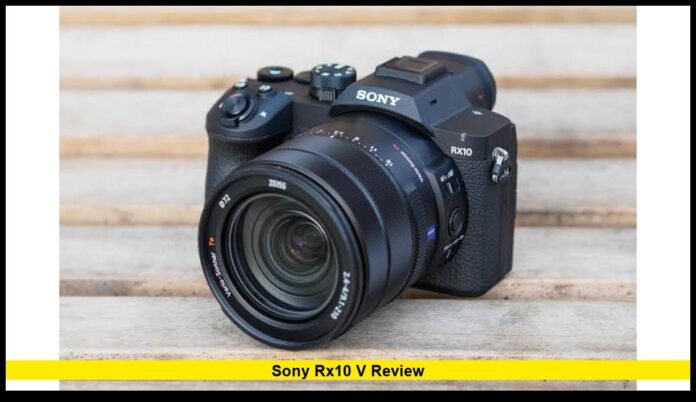

Sony has officially unveiled the sony rx10 v, bringing a fresh chapter to its premium bridge camera lineup after years of anticipation from photography enthusiasts. The new model builds on the strengths that made the RX10 series popular while introducing meaningful improvements in autofocus, shooting speed, video capabilities, battery life, and overall performance. Designed for photographers and content creators who want the flexibility of an all-in-one camera without changing lenses, the latest addition aims to deliver professional-level features in a compact, travel-friendly package.
The RX10 series has long occupied a unique place in the camera market. While mirrorless systems continue to dominate headlines, many photographers still value a premium bridge camera that combines an extensive zoom range with excellent image quality. Sony has clearly listened to that audience, refining nearly every aspect of the camera while preserving the formula that made previous generations successful.
A Long-Awaited Return
The arrival of the latest RX10 model comes after an unusually long gap since its predecessor. During that time, camera technology evolved rapidly, particularly in autofocus, image processing, artificial intelligence, and video production. Rather than simply refreshing specifications, Sony has incorporated many of the technologies developed for its latest Alpha mirrorless cameras.
This approach allows the RX10 lineup to remain competitive while continuing to appeal to photographers who prefer the convenience of a fixed-lens system. Instead of investing in multiple lenses, users receive an extremely versatile zoom range in a single weather-resistant camera body.
For travel photographers, wildlife enthusiasts, sports shooters, aviation fans, journalists, and outdoor creators, that convenience remains one of the biggest attractions of the RX10 family.
Familiar Lens, Proven Versatility
One of the defining features of the camera is its integrated Zeiss Vario-Sonnar T* lens covering an equivalent focal range of 24mm to 600mm.
This impressive 25x optical zoom allows users to capture a wide variety of subjects without carrying additional equipment. At the widest setting, the camera is capable of photographing landscapes, architecture, and group portraits. Moving through the zoom range provides flexibility for street photography, travel scenes, portraits, sporting events, wildlife, aircraft, and distant subjects.
The maximum aperture ranges from f/2.4 at the wide end to f/4 at full telephoto. While not as bright as professional super-telephoto lenses, it offers a strong balance between portability, image quality, and zoom reach.
Optical image stabilization continues to play a major role in helping photographers capture sharp handheld images, particularly when working near the 600mm focal length where camera shake becomes much more noticeable.
For many users, the ability to move instantly from wide-angle landscapes to distant wildlife without changing lenses remains one of the strongest selling points of the camera.
New Sensor Improves Overall Performance
Although Sony has retained a 20.1-megapixel resolution, the sensor itself has received significant upgrades.
The camera now uses a modern stacked 1-inch Exmor RS CMOS sensor paired with Sony’s latest image processing engine. This combination allows much faster data readout than previous generations, producing noticeable improvements across multiple shooting situations.
The faster sensor reduces rolling shutter distortion when photographing fast-moving subjects or recording video. It also enables quicker burst shooting, faster autofocus calculations, smoother live view performance, and improved responsiveness throughout the camera.
Rather than chasing higher megapixel numbers, Sony has focused on enhancing speed and usability, decisions that many wildlife and sports photographers are likely to appreciate.
Artificial Intelligence Strengthens Autofocus
Perhaps the most important improvement is the autofocus system.
Sony has introduced AI-assisted subject recognition technology that dramatically improves tracking performance across a wide range of shooting conditions.
The camera can recognize and follow several subject types, including:
- People
- Birds
- Mammals
- Vehicles
- Motorcycles
- Aircraft
The autofocus system analyzes subject position, movement, and orientation while continuously adjusting focus as subjects move throughout the frame.
Photographers covering birds in flight, racing events, wildlife, or children’s sports often struggle with rapidly changing movement. The upgraded autofocus helps maintain accurate focus even when subjects briefly disappear behind obstacles or change direction unexpectedly.
Eye detection for both humans and animals has also been refined, improving portrait photography and wildlife imaging.
Combined with extensive phase-detection coverage across most of the frame, autofocus acquisition is both faster and more reliable than earlier generations.
Burst Shooting Designed for Action
Continuous shooting performance has also received a significant boost.
The camera can now capture bursts at up to 30 frames per second while maintaining autofocus and exposure tracking. This makes it easier to capture decisive moments during fast-moving action.
Whether photographing birds taking flight, motorsports, football matches, surfing competitions, or aircraft displays, photographers can record long image sequences with a greater chance of capturing the perfect frame.
Sony has also improved buffer management, allowing longer continuous bursts before the camera slows down.
For action photographers, these upgrades represent one of the biggest practical improvements over older models.
Better Image Quality in Challenging Conditions
Although the resolution remains unchanged, image quality benefits from improvements in processing technology.
The latest image processor delivers:
- Lower image noise at higher ISO settings
- Improved color accuracy
- Better tonal transitions
- Enhanced dynamic range
- Faster image rendering
JPEG output has been refined to produce more natural skin tones and richer colors, while RAW files retain extensive editing flexibility for photographers who prefer post-processing.
Landscape photographers will appreciate improved highlight recovery, while wildlife photographers working during sunrise or sunset may notice cleaner images at elevated ISO values.
Video Features Move Closer to Professional Standards
Video recording has become increasingly important for photographers who also create online content.
Sony has upgraded the RX10 series with several features borrowed from its mirrorless cinema-focused cameras.
Among the biggest additions are:
- 4K recording at up to 60 frames per second
- Cropped 4K recording at 120 frames per second
- 10-bit internal recording
- Support for advanced color profiles
- S-Log3 recording
- User LUT compatibility
- Improved heat management
- USB streaming support
These upgrades allow creators to record smoother footage, produce cinematic slow-motion sequences, and achieve greater flexibility during color grading.
Travel vloggers can film detailed landscapes, while wildlife videographers gain additional slow-motion options for birds and animals.
The camera’s extensive zoom range is especially valuable for documentary-style productions where changing lenses may not be practical.
Improved Battery Endurance
Battery life has become increasingly important as cameras take on more video responsibilities.
Sony has equipped the latest RX10 with the larger NP-FZ100 battery, replacing the smaller battery found in previous generations.
This change delivers noticeably longer shooting sessions while reducing the number of spare batteries photographers need to carry during travel or field work.
Users recording extended video projects or spending full days photographing wildlife will particularly appreciate the increased endurance.
The larger battery also aligns the camera with many of Sony’s current Alpha models, simplifying battery management for photographers who own multiple Sony cameras.
Refined Design Without Losing Familiarity
Although the overall appearance remains recognizable, Sony has introduced numerous ergonomic improvements.
The redesigned grip offers better comfort during extended shooting sessions, especially when working at longer focal lengths.
Additional refinements include:
- Updated control layout
- Improved joystick positioning
- Enhanced electronic viewfinder
- Higher-resolution rear display
- USB-C connectivity
- Faster menu navigation
- Improved touchscreen responsiveness
These changes help modernize the camera while maintaining the handling characteristics that longtime RX10 users already know.
Weather sealing continues to provide protection against dust and moisture, making the camera suitable for outdoor photography in a variety of environments.
Connectivity for Modern Workflows
Today’s photographers expect seamless connectivity between cameras and mobile devices.
The latest RX10 supports faster wireless transfers, USB-C connectivity, webcam functionality, and remote shooting capabilities.
Creators can quickly move images to smartphones for social media publishing or connect directly to computers for live streaming and virtual presentations.
These additions reflect the growing demand for hybrid cameras capable of serving both photography and online content creation.
Who Is This Camera Built For?
Unlike interchangeable-lens systems that often require significant investment in multiple lenses, the RX10 is designed for photographers seeking maximum versatility with minimal equipment.
The camera is particularly well suited for:
- Wildlife photographers
- Bird photographers
- Aviation enthusiasts
- Sports photographers
- Travel creators
- Outdoor adventurers
- Documentary filmmakers
- Journalists
- Nature enthusiasts
- Hybrid photo and video creators
Its combination of portability, long zoom reach, weather resistance, and advanced autofocus makes it especially attractive for users who frequently work in changing environments.
Advantages Over Previous Generations
While earlier RX10 models established an excellent reputation, the newest version introduces improvements in nearly every important area.
Major upgrades include:
- Faster stacked image sensor
- AI-powered autofocus
- Improved subject recognition
- Higher burst shooting speed
- Better video specifications
- Longer battery life
- Updated processor
- USB-C connectivity
- Enhanced menu system
- Improved user interface
These changes collectively create a camera that feels substantially more modern while preserving the versatility that made the series successful.
Competition in the Premium Bridge Camera Market
Although the bridge camera segment has become smaller in recent years, there remains strong demand among photographers who prioritize convenience over interchangeable lenses.
Many competing models offer long zoom ranges, but few combine premium optics, advanced autofocus, stacked sensor technology, professional video features, and weather-resistant construction in a single package.
Sony continues to position the RX10 series as a premium solution for enthusiasts who want professional-level performance without assembling an extensive camera kit.
Is It Worth Upgrading?
For photographers using older RX10 models, the improvements extend far beyond simple specification increases.
The combination of AI autofocus, faster shooting speeds, improved battery life, enhanced processing, stronger video capabilities, and updated connectivity creates a noticeably different shooting experience.
Those who frequently photograph wildlife, birds, sports, aviation, or fast-moving subjects are likely to benefit the most from the new autofocus system.
Likewise, creators who produce both still images and video will appreciate the expanded recording options and improved workflow features.
Final Thoughts
Sony has successfully modernized one of the most respected bridge camera series on the market without losing the qualities that originally made it popular. By combining a proven 24-600mm Zeiss zoom lens with a faster stacked sensor, advanced artificial intelligence, improved burst performance, stronger video capabilities, and significantly longer battery life, the company has created a highly capable all-in-one camera for photographers who value versatility.
Whether capturing wildlife in remote locations, documenting sporting events, filming travel adventures, or recording everyday moments, the sony rx10 v delivers an impressive balance of reach, speed, image quality, and convenience. For users seeking premium performance without carrying multiple lenses, it stands as one of the most compelling bridge cameras available today