
The somali daycare minnesota controversy has become one of the most closely watched childcare funding stories in the United States, drawing attention from lawmakers, families, and policy experts alike. What began as a local concern involving a licensed childcare facility has evolved into a far-reaching discussion about government oversight, public accountability, and the challenges of managing large-scale social service programs in a diverse state.
As investigations continue and reforms are debated, the situation is reshaping how childcare assistance programs are viewed, not only in Minnesota but across the country.
How the Controversy Came Into Public View
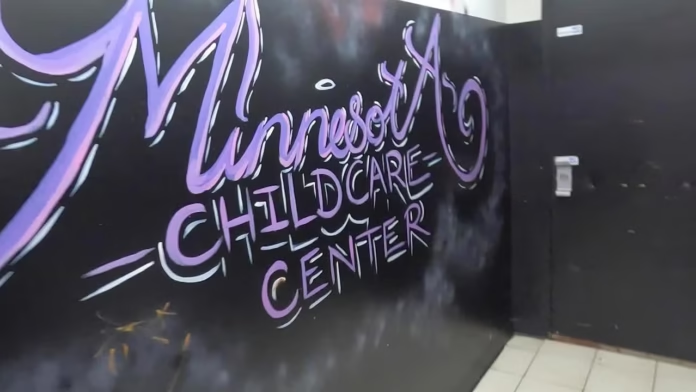
The issue entered the public conversation after footage circulated online showing a licensed daycare facility that appeared inactive despite being approved to serve a large number of children. The visuals raised immediate questions about how childcare centers are monitored and how public funds are distributed.
For many observers, the disconnect between the approved capacity of the facility and the apparent lack of activity was alarming. The images quickly spread across digital platforms, prompting reactions from elected officials, advocacy groups, and taxpayers who demanded clarity about how such a situation could occur.
What followed was an intense spotlight on Minnesota’s childcare reimbursement system and the processes used to verify attendance and operational status.
Why Childcare Funding Matters So Much
Childcare assistance programs play a critical role in supporting working families. For parents balancing employment, education, and family responsibilities, access to affordable and reliable childcare is often the difference between stability and hardship.
Minnesota, like many states, invests heavily in childcare subsidies to ensure that low-income families can participate in the workforce. These programs are designed to reimburse licensed providers based on enrollment and attendance, helping cover staffing, facilities, and educational resources.
When questions arise about misuse of these funds, the concern extends beyond financial loss. Public trust in essential social services can erode, putting legitimate providers and families at risk of losing support.
Political Reaction and Growing Pressure
The daycare controversy quickly reached the state’s political leadership. Lawmakers across the spectrum began calling for reviews of childcare licensing practices, payment systems, and enforcement mechanisms.
Some officials argued that the situation exposed long-standing weaknesses in oversight, including outdated verification methods and limited staffing for inspections. Others cautioned against generalizations, emphasizing the need to allow investigators to complete their work before drawing conclusions.
Despite differing viewpoints, there was widespread agreement that the state needed to demonstrate transparency and take visible steps to restore confidence in childcare programs.
Federal Involvement Raises the Stakes
As scrutiny intensified, federal authorities became involved in examining whether public funds had been improperly claimed or misused. The involvement of federal investigators signaled that the issue could have broader implications beyond a single facility.
The focus of these inquiries includes payment records, licensing documentation, and compliance with program requirements. While the investigation centers on specific cases, it has prompted a broader review of how childcare funds are tracked and audited.
For Minnesota, federal attention has underscored the seriousness of the matter and accelerated conversations about reform.
A Pattern of Oversight Challenges
The current controversy has renewed discussion about previous cases in which public assistance programs faced allegations of fraud or mismanagement. Over the years, Minnesota has confronted multiple situations where weaknesses in oversight allowed funds to be improperly claimed.
These cases have highlighted common vulnerabilities, such as reliance on self-reported data, delayed audits, and limited coordination between agencies. Childcare programs, which often involve numerous small providers and high transaction volumes, can be particularly complex to monitor.
Policy analysts note that without modernized systems and sufficient enforcement resources, even well-intentioned programs can be exploited.
Community Impact and Sensitivity
Minnesota’s Somali-American community, one of the largest in the nation, has found itself at the center of public discussion as the daycare issue unfolds. Many Somali families rely on childcare assistance, and many Somali-owned childcare businesses operate legally and provide vital services.
Community leaders have stressed the importance of avoiding broad assumptions. They point out that allegations involving specific providers should not define an entire community or undermine trust in culturally rooted childcare services.
At the same time, heightened media attention has created anxiety among families and providers who fear increased scrutiny or stigma, even when they are fully compliant with regulations.
Childcare Providers Face Uncertainty
For legitimate childcare operators, the controversy has introduced uncertainty. Providers worry that tighter controls, delayed reimbursements, or abrupt policy changes could disrupt their ability to serve families.
Running a daycare involves thin margins, staffing challenges, and strict safety requirements. Any interruption in funding can quickly affect operations. Providers emphasize that while accountability is essential, reforms must be implemented carefully to avoid unintended consequences.
Many are calling for clearer guidance, improved communication from state agencies, and fair processes that distinguish between compliance issues and intentional wrongdoing.
State Actions and System Reviews
In response to the situation, Minnesota officials have begun reviewing childcare licensing and reimbursement systems. Measures under consideration include increased inspections, enhanced data verification, and improved coordination between state departments.
Officials have also discussed upgrading technology used to track attendance and payments, aiming to reduce reliance on manual reporting. These steps are intended to improve accuracy while making it easier to identify irregularities early.
State leaders say their goal is to protect public funds while ensuring that families continue to receive the childcare support they need.
Policy Questions Shaping the Debate
The controversy has raised fundamental policy questions that extend beyond Minnesota:
- How can states ensure accurate reporting without creating excessive administrative burdens?
- What level of oversight is necessary to prevent fraud while maintaining access?
- How should states support providers who serve immigrant and low-income communities?
- What role should federal agencies play in monitoring state-administered programs?
These questions are now part of national discussions about the future of childcare assistance and social service funding.
The Balance Between Trust and Enforcement
One of the most challenging aspects of reform is striking the right balance between trust and enforcement. Childcare programs depend on cooperation between families, providers, and government agencies. Excessive suspicion can discourage participation, while weak oversight invites abuse.
Experts advocate for risk-based monitoring systems that focus resources where irregularities are most likely, rather than applying blanket restrictions. Education and support for providers are also seen as critical components of effective oversight.
Building systems that are both firm and fair remains a central challenge.
Why This Story Resonates Nationally
The attention surrounding the daycare issue reflects broader concerns about how public programs are managed in an era of rising costs and limited resources. With childcare affordability already a major issue for American families, any disruption to assistance programs draws strong reactions.
The story resonates because it touches on everyday realities: parents needing reliable care, workers depending on stable jobs, and communities striving for trust and fairness. It also highlights the complexity of administering programs that serve millions of people with diverse needs.
Looking Forward
As investigations continue and policy changes are debated, the focus remains on strengthening systems without harming families who rely on them. The outcomes of this case may influence how childcare assistance is structured and monitored in other states.
For Minnesota, the path forward involves accountability, transparency, and collaboration with communities and providers. The lessons learned could shape childcare policy for years to come, ensuring that support reaches children while safeguarding public resources.
The somali daycare minnesota issue is no longer just a local controversy. It has become a national reference point in the ongoing effort to build childcare systems that are fair, effective, and worthy of public trust.