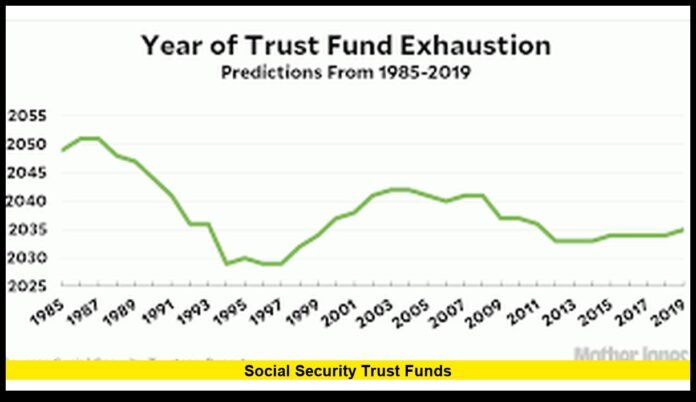

The future of the social security trust fund has once again become a major topic of discussion across the United States following the release of updated federal projections. The latest figures show that the nation’s primary retirement program continues to face long-term financial pressures as demographic shifts, rising benefit costs, and changing workforce trends reshape the system’s outlook.
Millions of Americans depend on Social Security every month, making the program one of the most important pillars of retirement security in the country. While benefits continue to be paid in full, the newest financial estimates have renewed debate over how lawmakers will address funding challenges in the years ahead.
For current retirees, workers approaching retirement, and younger generations planning decades into the future, understanding the latest developments is essential. The financial health of Social Security affects household budgets, retirement strategies, and broader economic stability across the nation.
Why Social Security Remains So Important
Social Security serves as a foundation of income for tens of millions of Americans. The program provides monthly benefits to retired workers, surviving family members, and individuals with qualifying disabilities.
Since its creation in 1935, Social Security has become one of the most widely relied-upon federal programs. Many retirees depend on their monthly checks to pay for housing, groceries, healthcare expenses, transportation, and other necessities.
For some households, Social Security represents only part of retirement income. For others, it serves as the primary source of financial support. Because of this widespread dependence, even small changes to the program attract significant public attention.
As Americans continue to live longer and retirement patterns evolve, the role of Social Security has become increasingly important in helping older adults maintain financial stability.
Updated Projections Draw Attention
The newest financial outlook shows that the retirement portion of Social Security is expected to face reserve depletion within the next decade unless changes are made.
This projection does not mean the program is running out of money or that benefits will suddenly disappear. Payroll taxes collected from current workers will continue flowing into the system and will still support ongoing benefit payments.
However, reserve funds that help cover the difference between annual revenue and benefit obligations are projected to decline over time. Once those reserves are exhausted, incoming revenue alone would not be sufficient to pay full scheduled benefits under current law.
The updated timeline has increased pressure on policymakers to consider long-term solutions before automatic reductions become a possibility.
Understanding How the Trust Fund Works
Many Americans hear about Social Security trust funds but are unfamiliar with how they operate.
Social Security is primarily funded through payroll taxes paid by workers and employers. These taxes are collected throughout a worker’s career and help fund benefits for current recipients.
When annual revenue exceeds benefit payments, surplus funds are added to trust fund reserves. When annual costs exceed revenue, the program draws from those reserves to continue paying scheduled benefits.
Over the past several years, Social Security has increasingly relied on trust fund reserves because benefit costs have risen faster than incoming payroll tax revenue.
As reserves decline, the focus shifts toward how long they can continue supporting full benefits.
Demographic Changes Are Reshaping the Program
One of the biggest drivers behind Social Security’s financial challenges is the changing makeup of the American population.
The retirement of the Baby Boomer generation has significantly increased the number of beneficiaries receiving monthly payments. At the same time, birth rates have declined compared with earlier decades.
This means fewer workers are supporting a growing number of retirees.
In previous generations, there were substantially more workers contributing payroll taxes for every beneficiary receiving payments. That ratio has steadily fallen over time.
As a result, the financial structure that supported Social Security for decades is facing greater strain.
Longer life expectancy also plays a role. Americans are generally living longer than past generations, which means benefits are often paid for more years after retirement.
While longer lifespans represent a positive public health achievement, they also increase overall program costs.
The Impact of Workforce Trends
Workforce participation remains another important factor influencing Social Security finances.
Payroll tax collections depend on the number of workers earning wages and paying into the system. Economic growth, employment levels, wage gains, and labor force participation all affect program revenue.
Periods of strong job growth can improve payroll tax collections, while slower labor force growth can limit revenue gains.
Immigration patterns also influence workforce expansion. Additional workers entering the labor market contribute payroll taxes that help support future benefit payments.
Because Social Security relies heavily on worker contributions, long-term workforce trends remain a central component of future projections.
What Happens If Reserves Are Exhausted?
One of the most common misconceptions is that Social Security would stop sending checks if trust fund reserves are depleted.
That is not how the program operates.
Even if reserves reach zero, payroll taxes would continue generating revenue. Benefits would still be paid, but the program would only be able to distribute amounts supported by incoming revenue.
Current projections suggest that incoming taxes would cover a substantial majority of scheduled benefits.
The exact percentage depends on future economic conditions and demographic trends, but the system would continue functioning.
The challenge is that beneficiaries could receive less than what is currently scheduled under existing law unless Congress adopts changes before that point.
Retirees Continue Receiving Benefits Normally
Current retirees should understand that monthly benefits continue without interruption.
There have been no changes to scheduled payments, eligibility rules, or benefit distribution resulting from the latest financial projections.
The Social Security Administration continues to process retirement, survivor, and disability benefits as usual.
Historically, Congress has addressed Social Security financing concerns before reserves reached depletion levels.
Many policy analysts believe lawmakers will face increasing pressure to act as projected deadlines move closer.
For now, beneficiaries continue receiving payments under existing law.
Potential Solutions Under Discussion
Lawmakers have several options available to strengthen Social Security finances.
One frequently discussed approach involves increasing payroll tax revenue. This could occur through changes to taxable earnings limits or adjustments to payroll tax rates.
Another possibility involves modifying future benefit formulas.
Some proposals focus on gradually adjusting retirement ages to reflect longer life expectancy. Others emphasize preserving current eligibility structures while increasing revenue.
There are also proposals that combine multiple approaches, balancing revenue increases with gradual benefit changes.
Because Social Security affects nearly every American family, discussions surrounding reforms often generate significant political debate.
Finding a solution that attracts broad support remains one of the largest challenges facing policymakers.
Why Younger Workers Are Paying Attention
Although retirees often receive the most attention in discussions about Social Security, younger workers have a major stake in the program’s future.
Workers in their twenties, thirties, and forties will contribute payroll taxes for decades before reaching retirement age.
Many want reassurance that benefits will remain available when they eventually retire.
The latest projections reinforce the importance of long-term planning. Younger workers are increasingly following discussions about Social Security reform because future policy decisions could shape retirement outcomes for generations.
At the same time, many financial experts encourage workers to diversify retirement planning through personal savings, employer-sponsored retirement accounts, and other investments.
Social Security remains an important component of retirement security, but many Americans view it as one piece of a broader financial strategy.
Economic Effects Extend Beyond Retirees
The influence of Social Security extends well beyond individual beneficiaries.
Monthly payments support spending in communities throughout the United States. Beneficiaries use those funds to purchase goods and services, pay medical bills, cover housing expenses, and support local businesses.
Because of the program’s enormous scale, Social Security contributes significantly to economic activity.
The program also plays a major role in reducing poverty among older Americans. Many retirees would face far greater financial hardship without access to monthly benefits.
These broader economic impacts help explain why policymakers closely monitor the program’s financial outlook.
Disability and Survivor Benefits Remain Essential
While retirement benefits receive most public attention, Social Security also provides support through disability and survivor programs.
Disability benefits help workers who can no longer maintain substantial employment due to qualifying medical conditions.
Survivor benefits provide financial assistance to spouses, children, and other eligible family members after the death of a worker.
These programs serve millions of Americans and represent a critical safety net for families facing unexpected challenges.
Any future discussions involving Social Security finances typically consider the needs of these beneficiaries as well.
Growing Focus on Long-Term Stability
The latest outlook has intensified conversations about ensuring the long-term sustainability of the program.
Financial experts, policymakers, advocacy groups, and retirement organizations continue analyzing various proposals designed to strengthen Social Security for future generations.
The goal is not only to maintain benefits for current retirees but also to provide confidence for younger workers who will depend on the system in the future.
Because projected financial pressures develop gradually over many years, policymakers have opportunities to address challenges before they become more severe.
However, delays can make future solutions more difficult and potentially require larger adjustments.
What Americans Should Watch Going Forward
The next several years will likely bring continued debate over Social Security financing.
Future annual reports will provide updated projections based on economic conditions, employment trends, demographic changes, and benefit costs.
Lawmakers will continue evaluating potential reforms while balancing concerns from retirees, workers, employers, and taxpayers.
The long-term future of the social security trust fund remains one of the most significant financial policy issues facing the United States.
While benefits continue to be paid in full today, the latest outlook underscores the importance of addressing funding challenges before reserve levels decline further.
For millions of Americans, Social Security remains a cornerstone of retirement security, making every development surrounding the program closely watched both in Washington and across the country.
What changes, if any, do you think should be made to strengthen Social Security for future generations? Share your thoughts and stay informed as this important national conversation continues.