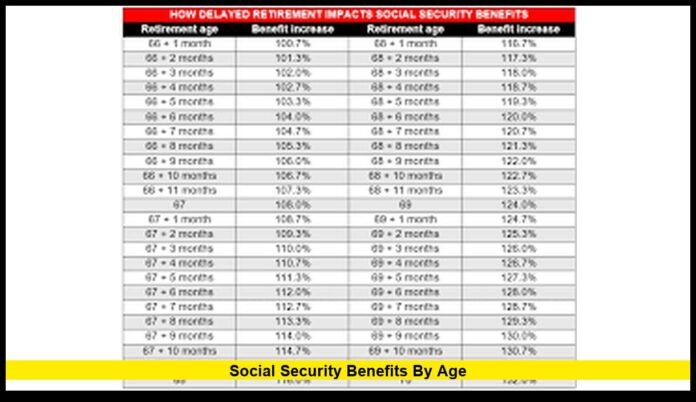

Social Security benefits by age play a critical role in retirement planning in 2026, as updated payment levels, eligibility rules, and cost-of-living adjustments continue to impact millions of Americans. With benefits rising due to recent inflation adjustments, choosing the right age to claim has become more important than ever.
The Social Security system still allows retirees to begin collecting as early as age 62, but monthly payments increase significantly the longer you wait. In 2026, many Americans are rethinking their claiming strategies to take advantage of higher benefits tied to delayed retirement.
Understanding How Age Affects Social Security Benefits
The age at which you claim Social Security directly determines how much you receive each month. While eligibility begins at 62, full benefits are only available at your designated Full Retirement Age (FRA).
Age 62: Early Access With Reduced Payments
Starting benefits at age 62 remains the earliest option. However, monthly payments are reduced permanently.
- Reduction ranges from 25% to 30%
- Lower lifetime monthly income
- Suitable for those needing immediate financial support
Many retirees choose this option due to job loss, health concerns, or limited savings.
Full Retirement Age (66–67): Standard Benefit Level
Your FRA depends on your birth year. For most current retirees, it is 67.
- You receive 100% of your earned benefit
- No penalties for earning additional income
- A balanced choice for many households
This age represents the benchmark for calculating all Social Security benefits.
Age 70: Maximum Monthly Benefit
Delaying benefits beyond FRA increases your monthly payments through delayed retirement credits.
- Benefits grow by about 8% per year after FRA
- Maximum payments reached at age 70
- No advantage in waiting beyond 70
This option is becoming more popular among Americans aiming for higher guaranteed income later in life.
Average Monthly Benefits in 2026
With the latest cost-of-living adjustment applied, Social Security payments have increased in 2026. While exact amounts vary, averages provide a useful guide.
| Claiming Age | Estimated Monthly Benefit |
|---|---|
| 62 | Around $1,800–$2,000 |
| 67 | Around $2,300–$2,500 |
| 70 | $2,800–$3,200+ |
Higher earners may receive significantly more, especially if they delay benefits until age 70.
Recent 2026 Updates Impacting Benefits
Several confirmed updates are shaping how Social Security works this year:
Cost-of-Living Adjustment (COLA) Increase
Benefits rose again in 2026 following inflation trends. This adjustment ensures that payments keep pace with rising living costs.
Higher Taxable Earnings Cap
Workers are contributing on a larger portion of their income due to an increased wage base. This change can lead to higher future benefits.
Stable Retirement Age Rules
The FRA remains unchanged at 67 for those born in 1960 or later, providing consistency for retirement planning.
Key Factors That Determine Your Benefit
Although age is the most visible factor, several other elements affect your final Social Security payment:
- Earnings History: Benefits are based on your highest 35 years of earnings
- Work Credits: At least 40 credits are required to qualify
- Spousal Benefits: Married individuals may receive additional income options
- Taxes on Benefits: Depending on income, a portion of benefits may be taxable
Understanding these factors helps you estimate your expected income more accurately.
Early vs. Late Claiming: What Works Best?
Choosing when to claim benefits depends on personal financial goals and life circumstances.
Advantages of Claiming Early
- Immediate access to income
- Helpful during financial hardship
- Shorter break-even period
Advantages of Waiting Until FRA
- Full monthly benefit
- Flexibility to work without reductions
- Balanced income strategy
Advantages of Delaying to Age 70
- Highest possible monthly payment
- Greater long-term financial security
- Larger survivor benefits for spouses
Each option has trade-offs, so careful evaluation is essential.
Earnings Limits and Working While Receiving Benefits
If you claim benefits before reaching FRA and continue working, earnings limits apply.
- Benefits may be temporarily reduced if income exceeds annual thresholds
- Once you reach FRA, reductions stop
- Adjustments are recalculated, increasing future payments
This rule is especially important for those planning a phased retirement.
Smart Strategies Americans Are Using in 2026
More retirees are taking a strategic approach to Social Security:
- Delaying Benefits for Larger Checks: Especially among higher-income earners
- Using Savings First: Drawing from retirement accounts before claiming Social Security
- Coordinating Spousal Claims: Maximizing total household benefits
- Planning Around Longevity: Delaying benefits for long-term stability
These strategies reflect a growing awareness of how timing affects retirement income.
Mistakes That Can Reduce Your Benefits
Avoiding common errors can protect your financial future:
- Claiming too early without evaluating long-term impact
- Overlooking spousal or survivor benefits
- Ignoring taxes on Social Security income
- Failing to plan for healthcare and inflation
Making informed decisions ensures you get the most out of your benefits.
Why Timing Matters More Than Ever
In 2026, rising costs and longer life expectancy have made Social Security planning more critical. Even a few years’ difference in claiming age can result in tens of thousands of dollars gained or lost over a lifetime.
Careful planning allows retirees to align their benefits with their financial goals, health status, and expected longevity.
Looking Ahead for Future Retirees
Social Security remains a foundational income source for millions of Americans. While the system continues to operate reliably, individuals must take responsibility for optimizing their benefits.
Reviewing your earnings record, understanding your FRA, and evaluating your financial needs can help you make the best decision.
Final Thoughts
Social Security remains one of the most powerful tools for retirement security, but timing is everything. The age you choose to claim can shape your income for decades.
What’s your plan for claiming Social Security benefits? Share your thoughts and stay informed as new updates emerge.