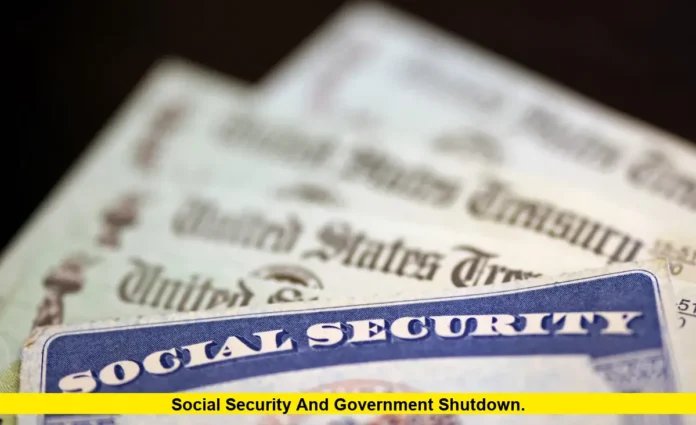

As of October 20, 2025, the situation surrounding social security and government shutdown remains one of the most closely followed issues in the United States. With a partial government shutdown still in effect, millions of Americans have been left wondering whether their Social Security benefits are safe. The most recent verified updates confirm that while certain government services are affected, Social Security payments continue without interruption.
Current Status of the Government Shutdown
The federal government entered a partial shutdown on October 1, 2025, after lawmakers in Congress failed to pass the necessary funding bills before the fiscal deadline. This marks another major funding impasse in Washington, halting non-essential services and furloughing hundreds of thousands of federal workers.
While some departments have reduced operations, essential services continue to operate. Social Security, Medicare, and other critical benefit programs are classified as mandatory spending, meaning their funding is not dependent on the annual appropriations process.
That classification ensures that even during a shutdown, checks and direct deposits for Social Security beneficiaries will still be processed and sent on time.
Impact of the Shutdown on Social Security Services
Even though payments are continuing, the shutdown still affects how the Social Security Administration (SSA) operates day-to-day. Here’s what Americans need to know:
- Payments will not stop: Retirees, disability recipients, and Supplemental Security Income (SSI) beneficiaries will continue to receive their monthly payments on schedule.
- Local offices remain open with limited staff: Field offices are open for essential services such as handling benefit payments and processing urgent requests, but non-essential tasks may face delays.
- Service delays are expected: Claims processing, replacement of Social Security cards, and verification requests are taking longer due to limited staffing.
- Hearings and appeals may be postponed: Administrative hearings on disability claims are being delayed, with new dates to be determined after normal government operations resume.
While the SSA is not directly funded through the same process as other agencies, it still relies on appropriations for some administrative operations. That means Americans should expect slower response times and fewer available appointments until the shutdown ends.
Will Social Security Checks Be Affected?
No, Social Security payments are continuing. The SSA’s trust funds—one for retirement and survivors benefits and another for disability benefits—operate independently of congressional appropriations. These trust funds draw from payroll taxes collected under the Federal Insurance Contributions Act (FICA), which keeps the payment stream insulated from government shutdowns.
In other words, even though many parts of the federal government are temporarily closed, Social Security beneficiaries will still receive their benefits on time. Direct deposits and mailed checks are being processed as usual.
Effect on the Cost-of-Living Adjustment (COLA) Announcement
Each October, the SSA announces the upcoming year’s Cost-of-Living Adjustment (COLA)—an increase in benefits based on inflation. This year, that announcement was temporarily delayed due to the shutdown’s impact on economic data reporting. The data used to calculate COLA comes from the Consumer Price Index (CPI), which is compiled by federal agencies that were initially affected by funding lapses.
The expected COLA for 2026 is projected to be around 2.7%, based on current inflation trends. The official announcement is anticipated later in October once data collection resumes.
Although this delay has caused some uncertainty for retirees who depend on those adjustments, the COLA increase will still be applied retroactively once officially confirmed.
Other Federal Programs Linked to the Shutdown
While Social Security remains stable, some related federal programs are partially affected:
- Medicare and Medicaid: These continue operating because they, too, are mandatory spending programs. However, customer service lines may have reduced support during the shutdown.
- Veterans’ Benefits: Payments continue, though processing of new claims and assistance programs may experience temporary delays.
- Supplemental Nutrition Assistance Program (SNAP): Short-term funding has kept benefits flowing, but a prolonged shutdown could impact future disbursements.
These examples show that while Social Security is protected, the wider network of support programs can experience disruptions when the federal government is partially closed.
How the Shutdown Could Affect Future Social Security Operations
If the government shutdown continues for an extended period, its effects on Social Security could gradually deepen:
- New claims backlogs: Applications for retirement, disability, and survivor benefits may pile up.
- Delayed appeals: Claimants awaiting hearings or reconsiderations might experience extended wait times.
- Administrative strain: Reduced staffing levels can slow down the processing of updates to benefit records, direct deposit changes, and other account modifications.
- Public confusion: With limited communication and fewer in-person services, many beneficiaries may struggle to get timely information or assistance.
Still, it’s important to note that the core payment system—the one that delivers monthly benefits to over 70 million Americans—remains fully operational.
What Beneficiaries Should Do Now
To minimize disruptions and stay informed:
- Use online services: The SSA website remains accessible for checking benefit statements, filing for retirement, or updating account details.
- Avoid unnecessary office visits: With limited staffing, in-person wait times may be long.
- Monitor payment dates: Continue checking your account or direct deposit notifications to confirm payment arrivals.
- Stay informed: Monitor official SSA updates for any changes related to benefit processing or COLA announcements.
These steps help ensure beneficiaries stay prepared, even if the shutdown continues for several more weeks.
The Broader Picture: Social Security and the Federal Budget
The ongoing discussion around social security and government shutdown also highlights a deeper issue—how entitlement programs interact with the federal budget process. Because Social Security is funded by dedicated payroll taxes, it doesn’t directly depend on yearly appropriations from Congress.
However, its administrative costs—like running offices, hiring staff, and maintaining IT systems—do come from annual budgets. When those budgets aren’t approved, the SSA must limit operations, leading to the service delays now being experienced nationwide.
Economists note that while Social Security payments are safe, prolonged shutdowns can still erode public trust in government reliability, especially among retirees and people with disabilities who depend on consistent communication and support.
Final Outlook
For now, Social Security beneficiaries can rest assured that their monthly payments will continue. The federal shutdown has slowed certain administrative processes, but it has not disrupted the flow of benefits. The focus now turns to when Congress will reach an agreement to reopen the government fully and restore normal operations at agencies like the SSA.
As October progresses, beneficiaries should watch for the official COLA announcement and stay updated on the government’s funding situation. While the shutdown remains a serious issue, Social Security remains one of the few pillars of federal stability during this uncertain time.
Stay informed, stay calm, and share your experience—how is the government shutdown affecting your access to Social Security services? Let’s keep the conversation going below.