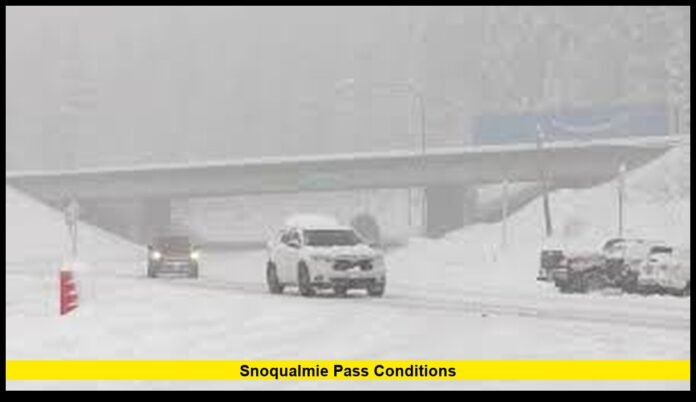

Snoqualmie Pass conditions continue to play a major role in travel safety across Washington State as Interstate 90 carries thousands of vehicles through the Cascade Mountains each day. Located roughly 50 miles east of Seattle, Snoqualmie Pass serves as the primary east–west mountain crossing in the state. Weather patterns in early 2026 still bring periods of snow, rain, fog, and freezing temperatures to the region, making real-time road conditions critical for drivers planning trips across the Cascades.
The mountain pass sits at an elevation of about 3,022 feet and connects western Washington with central and eastern parts of the state. Interstate 90 runs directly over the pass, linking large population centers on the west side with agricultural regions, freight corridors, and smaller communities east of the mountains. Because of its importance to commerce, tourism, and daily commuting, highway crews monitor the roadway around the clock to keep traffic moving safely.
Where Snoqualmie Pass Is Located
Snoqualmie Pass lies within the Cascade Range in central Washington and forms one of the most accessible crossings through the mountain chain. Interstate 90 passes through the summit area, providing a direct connection between the Seattle metropolitan region and cities farther east such as Ellensburg, Moses Lake, and Spokane.
Several communities sit near the pass and rely heavily on the interstate corridor.
| Location | Distance from Pass | Key Role |
|---|---|---|
| North Bend | About 30 miles west | Main gateway from Seattle |
| Hyak | At the summit | Recreation and ski access |
| Easton | About 15 miles east | Small community near forest areas |
| Cle Elum | About 25 miles east | Regional town and travel stop |
The pass also lies within the Okanogan–Wenatchee National Forest, surrounded by dense forests and steep mountain terrain.
Why Interstate 90 Through the Pass Is So Important
Interstate 90 is the longest interstate highway in the United States, stretching from Seattle to Boston. In Washington, the highway serves as the most direct transportation route across the Cascades.
This corridor supports a wide range of travel needs.
Key uses of the route include:
- Daily commuting between western and central Washington
- Freight movement across the state and along the West Coast
- Access to mountain recreation areas
- Tourism travel to ski resorts and outdoor destinations
Because few alternate highways cross the Cascades in this region, Snoqualmie Pass often carries heavy traffic volumes throughout the year.
Weather Patterns That Affect the Pass
Mountain weather in the Cascades can change quickly. Conditions at Snoqualmie Pass frequently differ from nearby cities such as Seattle or Bellevue.
Rain may fall in the lowlands while heavy snow hits the summit.
Typical weather factors include:
- Pacific storm systems bringing snow and wind
- Rapid temperature changes during winter months
- Fog that reduces visibility along the interstate
- Ice formation during overnight freezes
Snowfall totals during the winter season can reach several hundred inches in the surrounding mountains. Even during early spring, winter storms sometimes move through the pass and create challenging driving conditions.
Seasonal Road Conditions
Road conditions at Snoqualmie Pass vary widely depending on the season.
Winter
Winter presents the most difficult driving environment. Snowstorms, icy pavement, and strong winds often slow traffic along Interstate 90.
Maintenance crews plow snow frequently during active storms. Drivers may encounter traction requirements or temporary delays during severe weather.
Spring
Spring brings a mix of snow and rain. Daytime temperatures often rise above freezing, which causes snow to melt and create wet or slushy pavement.
Weather patterns remain unpredictable during this season.
Summer
Summer generally offers the easiest travel conditions. Clear skies and dry pavement allow smoother travel across the pass.
Construction projects sometimes occur during this time because the weather allows extended road work.
Fall
Temperatures begin to drop again in autumn. Early snowstorms occasionally arrive in October or November, reminding drivers that winter travel will soon return.
Snow Removal and Maintenance Operations
Maintaining safe travel through the Cascades requires constant work from highway maintenance teams. Snow removal operations begin as soon as winter storms reach the region.
Maintenance crews use specialized equipment to keep lanes open.
Common equipment includes:
- Heavy snowplows
- Sanding and de-icing trucks
- Road graders for deep snow
- Anti-icing liquid application systems
Crews operate day and night during major storms to prevent dangerous buildup of snow and ice.
Highway workers also monitor avalanche-prone slopes near the interstate.
Avalanche Control in the Cascade Mountains
The steep mountain terrain surrounding Snoqualmie Pass creates avalanche risk during periods of heavy snowfall. When snow accumulates on unstable slopes, it can slide down toward the highway.
To reduce this risk, transportation crews conduct avalanche control work in specific areas.
These safety measures may involve:
- Monitoring snowpack stability
- Closing lanes briefly for safety checks
- Triggering controlled avalanches in remote areas
- Clearing snow debris near roadways
Short traffic holds sometimes occur while crews complete this work. These procedures help prevent large natural avalanches from reaching the interstate.
Traction and Chain Requirements
During severe winter weather, authorities may require certain vehicles to use tire chains or traction devices when crossing the pass.
These requirements help vehicles maintain grip on steep grades and snowy pavement.
Typical winter rules include:
- Passenger vehicles should carry chains when traveling through mountain passes.
- Large trucks may be required to install chains during storms.
- Vehicles without proper traction tires may face restrictions during severe weather.
Drivers who fail to follow traction requirements risk fines and may cause major traffic disruptions if their vehicles become stuck.
Traffic Patterns Across Snoqualmie Pass
Traffic levels across the pass fluctuate throughout the week and during different seasons.
Some periods bring especially heavy traffic.
Examples include:
- Friday evenings when travelers head east for weekend recreation
- Saturday mornings during ski season
- Sunday afternoons when visitors return to the Seattle area
- Holiday travel periods such as Thanksgiving and Christmas
Freight trucks also travel through the pass daily, transporting goods between the western ports and inland markets.
When storms arrive, slower speeds and chain installation areas can create temporary congestion along Interstate 90.
Outdoor Recreation Near the Pass
Snoqualmie Pass is a major recreation destination in Washington State. Several ski areas operate near the summit, drawing thousands of visitors during winter weekends.
The Summit at Snoqualmie ski area is one of the most popular winter sports destinations near Seattle.
Visitors travel to the pass for activities such as:
- Downhill skiing
- Snowboarding
- Snowshoeing
- Cross-country skiing
- Snowmobiling
During summer, the region transforms into a hiking and mountain biking destination.
Because of these recreational opportunities, traffic often increases significantly during peak outdoor seasons.
Technology Monitoring Mountain Highway Conditions
Modern transportation technology helps officials track road conditions across the pass.
Several systems collect real-time data along Interstate 90.
These monitoring tools track:
- Road surface temperatures
- Snowfall accumulation
- Wind speeds and visibility
- Traffic flow and congestion
Weather stations and roadside cameras allow transportation teams to evaluate conditions quickly.
When conditions deteriorate, crews can respond rapidly by deploying snowplows or implementing traction requirements.
Safety Tips for Drivers Crossing the Pass
Drivers should prepare carefully before traveling through any mountain pass during winter or early spring.
Simple precautions can greatly improve safety.
Important travel tips include:
- Check weather forecasts before leaving
- Carry tire chains when required
- Keep fuel tanks at least half full
- Pack emergency supplies such as blankets and water
- Maintain safe speeds during snowy conditions
Drivers should also allow extra time when storms affect travel through the Cascades.
Economic Importance of the Corridor
The highway corridor through Snoqualmie Pass plays a major role in Washington’s economy.
Freight carriers move agricultural products, manufactured goods, and retail shipments across the state using Interstate 90.
Reliable transportation across the mountains supports:
- Supply chains connecting western ports to inland markets
- Tourism industries throughout the Cascade region
- Travel between urban and rural communities
- Emergency services and essential transportation
Maintaining open travel lanes during winter storms remains a top priority for transportation agencies.
Planning Ahead Before Crossing the Mountains
Preparation remains the most effective way to ensure a safe trip across Snoqualmie Pass.
Drivers should review weather forecasts and roadway information before starting their journey. Conditions may change quickly as storms move through the Cascades.
Even experienced drivers benefit from checking snoqualmie pass conditions before entering the mountain corridor.
Real-time awareness helps travelers avoid severe weather, reduce delays, and make safer decisions while crossing Interstate 90.
Have you driven through the Cascade Mountains recently? Share your travel experience or stay tuned for the latest updates on Snoqualmie Pass.