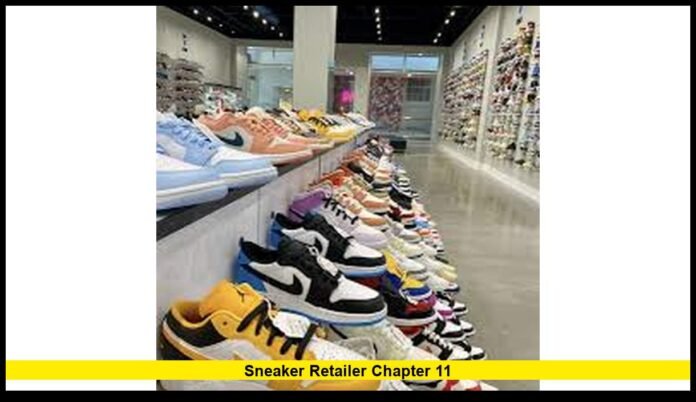

The sneaker retailer chapter 11 filing involving Soleply has become one of the most important retail developments in the United States as the industry faces ongoing transformation. The bankruptcy case highlights how even culturally relevant sneaker stores are struggling to balance rising costs, changing consumer habits, and intense competition in a rapidly evolving marketplace. As 2025 comes to a close, the situation reflects deeper structural challenges reshaping American sneaker retail.
Soleply’s bankruptcy did not happen in isolation. It emerged after years of pressure on brick-and-mortar footwear stores that once relied on strong foot traffic and limited-release hype. The filing has drawn attention across the retail sector because it shows how quickly market conditions can overwhelm established business models when adaptation lags behind consumer behavior.
Understanding Chapter 11 in Retail
Chapter 11 bankruptcy allows a business to continue operating while reorganizing its financial obligations under court supervision. This legal process provides temporary protection from creditors and gives companies time to adjust operations, renegotiate leases, and restructure debt. For retailers, Chapter 11 is often a strategic move rather than an immediate signal of failure.
In the sneaker industry, Chapter 11 has increasingly become a tool used by companies attempting to survive in a highly competitive environment. Physical stores face mounting challenges from online platforms, direct brand sales, and changing shopping preferences. The process offers breathing room, but it also forces difficult decisions that can permanently reshape a retailer’s footprint.
For Soleply, Chapter 11 created an opportunity to reassess store performance, reduce financial strain, and attempt to stabilize the business while remaining open in select locations.
Soleply’s Role in U.S. Sneaker Culture
Soleply built its reputation as a destination for premium sneakers and streetwear, serving customers who valued both product selection and in-store experience. Its stores became gathering points for sneaker enthusiasts, collectors, and younger shoppers influenced by sports and fashion culture.
The retailer positioned itself between large national chains and small independent boutiques. This middle ground allowed Soleply to scale while maintaining a sense of community. Its stores emphasized curated inventory, knowledgeable staff, and a retail atmosphere designed to connect directly with sneaker culture.
However, this reliance on physical retail also exposed the company to risks as consumer behavior shifted more rapidly toward digital channels.
Why Financial Pressure Intensified
Several interconnected factors contributed to the financial strain that ultimately led to bankruptcy protection.
Operating costs rose steadily across the retail sector. Rent increases affected shopping centers and urban storefronts alike, while utilities, insurance, and maintenance expenses continued to climb. These fixed costs became harder to manage as sales softened.
Labor expenses also increased. Retailers faced pressure to raise wages to attract and retain staff, especially employees with specialized product knowledge. While higher wages benefited workers, they further compressed already thin profit margins.
Inventory management added another layer of difficulty. Sneaker retailers must invest significant capital upfront to secure popular products. When demand slowed or shifted online, unsold inventory tied up cash and increased financial risk.
Direct Brand Sales Changed the Landscape
One of the most disruptive changes in the sneaker industry has been the rise of direct brand sales. Major footwear brands increasingly prioritize selling directly to consumers through their own digital platforms. This shift reduced reliance on third-party retailers and altered long-standing distribution relationships.
As brands redirected exclusive products to their own channels, retailers like Soleply lost access to releases that once drove foot traffic and excitement. Without those key launches, stores struggled to maintain consistent customer visits.
Direct sales also allowed brands to control pricing, marketing, and customer data. These advantages placed independent and mid-sized retailers at a disadvantage that proved difficult to overcome.
Store Closures as Part of Restructuring
As part of its restructuring effort, Soleply closed several underperforming locations. These closures were aimed at reducing overhead and focusing resources on stores with stronger sales potential.
Closing stores is one of the most visible consequences of retail bankruptcy. It affects employees, customers, and surrounding communities. Workers lose jobs, shoppers lose local access, and shopping districts lose tenants that once generated foot traffic.
For Soleply, downsizing represented a necessary step to stabilize operations, even though it reduced the company’s overall footprint.
Impact on Employees and Communities
Sneaker stores are more than retail outlets. They often serve as cultural spaces where fashion, sports, and identity intersect. Soleply locations played that role in many communities, making their closure particularly impactful.
Employees with deep product knowledge and customer relationships faced uncertainty during the bankruptcy process. Many retail workers develop specialized skills that do not easily transfer to other industries, increasing the emotional and financial toll of store closures.
Communities also felt the loss. Independent sneaker retailers contribute to local culture and youth engagement. Their absence leaves a gap that online shopping cannot fully replace.
The Broader Retail Environment
Soleply’s bankruptcy reflects broader challenges facing U.S. retail. Specialty stores across apparel and footwear categories have struggled as consumers increasingly favor convenience and price transparency.
Economic uncertainty has also influenced spending habits. When budgets tighten, discretionary purchases like premium sneakers are often delayed or reduced. Even loyal customers become more selective.
At the same time, online marketplaces and resale platforms have expanded rapidly, offering wide selection and competitive pricing without the overhead of physical stores.
Why Demand for Sneakers Remains Strong
Despite retail closures, sneaker demand itself has not disappeared. Sneakers remain central to American fashion, sports, and lifestyle culture. Interest spans generations and income levels.
What has changed is how consumers buy. Many shoppers now prefer digital platforms, brand apps, and resale marketplaces. Physical stores must compete with the convenience and reach of these channels.
The challenge lies not in declining interest, but in outdated retail structures struggling to keep pace with new buying habits.
What the Restructuring Process Involves
During Chapter 11, Soleply must present a plan outlining how it intends to address debts and move forward. Creditors review the proposal, and the court evaluates its feasibility.
This process involves negotiations over leases, repayment terms, and operational changes. While stores may remain open, uncertainty often surrounds long-term outcomes.
For customers, the experience typically remains unchanged in the short term, though policies and store availability can evolve as restructuring continues.
Possible Paths Forward
Several outcomes remain possible as Soleply navigates bankruptcy proceedings.
The company could emerge as a smaller, more focused retailer with fewer stores and tighter cost controls. This path would require disciplined execution and a clear value proposition.
Another option involves a sale of assets or brand rights, allowing another company to continue operations under a different structure.
If restructuring efforts fail, liquidation remains a possibility, though Chapter 11 is designed to avoid that outcome whenever feasible.
What This Means for Other Sneaker Retailers
The sneaker retailer chapter 11 case involving Soleply serves as a warning for similar businesses. Mid-sized retailers face the greatest risk as they compete with both global brands and digital platforms.
Survival increasingly depends on flexibility, strong online integration, and the ability to create experiences that justify physical stores. Retailers that adapt quickly stand a better chance of weathering ongoing disruption.
The industry is moving toward fewer stores, but those that remain must deliver greater value.
Consumer Trust During Bankruptcy
Bankruptcy can strain consumer trust, especially when customers worry about returns or gift cards. Clear communication and consistent service are critical during this period.
Retailers that maintain transparency can preserve loyalty, while those that fail to communicate risk losing customers permanently.
Soleply’s ability to manage customer relationships during restructuring will influence its long-term prospects.
The Future of Sneaker Stores in the U.S.
Brick-and-mortar sneaker stores are not disappearing, but their role is changing. Successful stores will emphasize experience, community, and exclusivity rather than volume sales alone.
Physical locations must complement digital channels rather than compete directly with them. Retailers that find this balance will define the next phase of sneaker retail.
Key Takeaways From the Soleply Case
The Soleply bankruptcy underscores important lessons for the retail industry. Rising costs, shifting consumer behavior, and changing brand strategies require constant adaptation.
Retailers that delay transformation risk facing similar outcomes. Those that evolve early have a better chance of survival.
The Soleply case marks a defining moment for sneaker retail in the United States, and its outcome may shape how and where Americans shop for sneakers in the years ahead—share your thoughts and stay connected as the story continues.