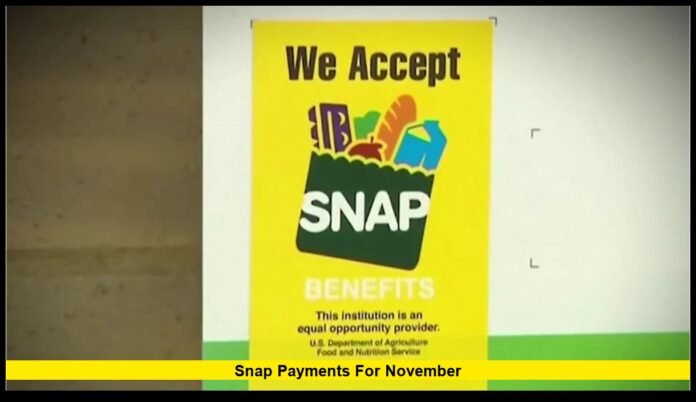

The issue of SNAP payments for November has reached a critical juncture as nationwide households await clarity on food-assistance disbursements. A recent memorandum from the Food and Nutrition Service (FNS) at the United States Department of Agriculture (USDA) dated November 8, 2025, directed states to process partial benefit payments after a federal legal battle. At the same time, a federal court ordered full benefits — and the Supreme Court stepped in with a stay. This article outlines the most current updates on SNAP payments for November, what recipients should expect, and what the legal landscape means for food-assistance access.
What’s Happening with November SNAP Payments?
Partial payment directive
On November 8, the USDA issued a memo stating that states must not transmit full benefit issuance files to EBT processors and must instead load files reflecting a reduction in maximum allotments—specifically a 35 percent reduction in the maximum benefit allotments. This followed earlier guidance pointing to a 65 percent of usual maximum allotment cap.
Legal proceedings and conflicting orders
A federal judge in Rhode Island on November 6 ordered the administration to fully fund SNAP benefits for November, citing irreparable harm to households if only partial payments were made. Shortly thereafter, on November 7, the Supreme Court placed an administrative stay on that district-court order, effectively pausing the full-benefit mandate while the appeals court evaluates the case. This created a confusing dual mandate: states were told to issue full benefits, but also warned not to send full payment files unless authorized.
State-by-state distribution
Some states have already begun issuing benefits under the partial-payment guidance. For example, several state human service departments have announced that recipients could receive up to 65 percent of their normal benefit amount, depending on deductions and income. Other states noted that their systems are adjusting to the “Thrifty Food Plan” change and the 35 percent standard for maximum allotments.
Why the funding shortfall?
The core issue stems from the 2025 federal government shutdown and lack of appropriations for the month of November. The USDA announced that it would not tap other funding sources, which raised the possibility that full benefits could not be disbursed. For now, the USDA’s guidance allows only partial payments unless further direction is issued.
What This Means for Recipients
- Many households receiving SNAP (the Supplemental Nutrition Assistance Program) should anticipate reduced benefits this month. Under current guidance, maximum allotments are capped at 35 percent reduction from typical maximums—meaning benefits may amount to roughly 65 percent of usual maximums, though actual amounts depend on individual circumstances.
- Timing may vary by state: Some states have already processed partial payments, while others are still awaiting system updates or further federal direction.
- If your state attempted to issue full benefits earlier, the USDA memo warns that those full-issuance files were unauthorized and states must immediately undo any steps taken to issue full SNAP benefits for November 2025.
- Recipients should monitor their EBT card balances, check communication from their state agency, and stay aware of possible updates or appeals.
- Food-assistance agencies and food banks may experience increased demand given the uncertainty and potential reductions in SNAP payments.
Key Dates & Timeline
| Date | Event |
|---|---|
| October 24 | USDA announced it will not tap emergency funds for November SNAP. |
| November 3 | USDA indicated partial funding plan for SNAP, warned of possible delays. |
| November 6 | District Court ordered full payment of November SNAP benefits. |
| November 7 | USDA memo updated states to load full benefit files — later clarified to stop full files. |
| November 8 | USDA memo instructed states to issue partial benefit files reducing maximum allotments. |
What to Do If You’re a SNAP Recipient
- Log in to your state’s EBT/food-assistance portal and verify your expected November deposit date and amount.
- If you haven’t heard from your state agency, contact them and ask about how the November change affects your benefit.
- Track your card balance and maintain caution: some states recommend locking your EBT card until funds appear to avoid unauthorized transactions.
- Seek additional food-assistance resources: local food banks, shelters, and community organizations may be under heightened demand and can provide help if your SNAP benefit is delayed or reduced.
- Stay alert to notices from your state agency—there may be further clarification or changes depending on how the legal and political situation evolves.
Looking Ahead
The ongoing legal and funding battle over SNAP payments for November underscores how vulnerable food-assistance programs can become in times of federal budget instability. While the court system, state agencies, and food-aid networks work through the situation, millions of Americans depend on timely benefits to purchase groceries and maintain food security.
At this moment, the SNAP payments for November may be delayed and reduced across many states. Recipients should prepare accordingly, stay informed through their state agency, and consider backup food-assistance options for the month.
For now, stay informed, check your EBT status regularly, and reach out to local support networks if you face a shortfall. Your voice matters—share your experience, ask questions, and stay updated as this situation unfolds.