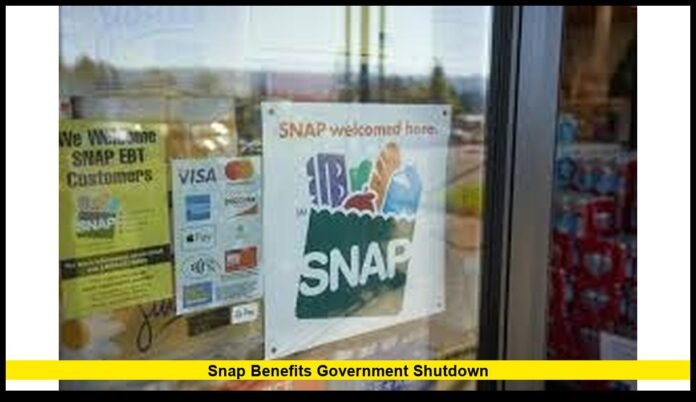

The SNAP benefits government shutdown warning has escalated sharply, as the Supplemental Nutrition Assistance Program faces possible interruption in November unless Congress restores funding. Families across the U.S. who rely on these monthly food-aid payments are bracing for a disruption that could leave millions without access to grocery support.
How We Got Here
The federal government shutdown began on October 1, 2025, when Congress failed to pass a full funding bill or continuing resolution for the fiscal year. Because SNAP relies on annual discretionary appropriations, the funding lapse immediately threatened the program’s smooth operation.
By mid-October, the United States Department of Agriculture (USDA) issued a letter to state SNAP agencies stating there are enough funds to cover benefits through October, but “insufficient funds to pay full November SNAP benefits for approximately 42 million individuals across the Nation” if the shutdown continues.
States were directed to hold their November issuance files and delay transmission to EBT vendors—an operational stop-gap that signals potential delay or reduction in benefits next month.
What This Means for SNAP Recipients
October Status: Safe (For Now)
- SNAP payments for October are still scheduled to go out, as the funding needed for this month was already obligated before the shutdown.
- Recipients should continue using their benefits as normal.
- States will continue processing applications and renewals in preparation for when normal operations resume.
November Status: At High Risk
- If the shutdown persists, many households may experience delayed, reduced, or even suspended benefits in November.
- Some states—including Pennsylvania and Colorado—are already notifying residents that November payments may be “on hold” unless federal funding is restored.
- Food-aid offices, pantries, and community programs are preparing for increased demand as SNAP uncertainty grows.
Household Planning Guide
Recipients and families should:
- Monitor state-specific SNAP and human-services sites for updates.
- Budget carefully with October benefits in mind, given the uncertainty for November.
- Explore local food-pantry and community-support options in advance.
- Submit application renewals and income/household changes now so you stay eligible when funding resumes.
State-by-State Snapshot
- Pennsylvania: Over 1.9 million SNAP recipients informed that their November benefits will be held until federal funds arrive.
- Colorado: Governor Jared Polis warned that the state cannot load benefits for November until USDA funding resumes.
- Kansas and Illinois: State officials confirmed they may not issue November benefits given the funding shortfall; Illinois noted nearly 1.9 million people rely on the program each month.
- Minnesota: Counties expect to pause November issuance and encourage recipients to turn to local food-shelves if needed.
Why SNAP Is Vulnerable During a Shutdown
Unlike programs such as Social Security or Medicaid—which operate under mandatory funding—SNAP depends on discretionary spending that must be renewed each year. Because the shutdown blocks new appropriations, the USDA and states face an abrupt funding gap once reserves are exhausted.
A few key reasons it’s at risk:
- SNAP funding must be appropriated annually; there’s no automatic continuation.
- States cannot legally issue benefits without federal funds or approval, so once funding halts, payments stop.
- The USDA’s administrative instructions—such as pausing issuance files—mean even eligible households may not receive loaded benefits.
Broader Impact: Beyond Individual Recipients
Food-Security Consequences
- When SNAP payments are delayed or uncertain, food-banks and community-pantries face surges in demand—some report increases of 30-40 % already.
- Low-income households may be forced to reduce or shift grocery purchases, affecting nutrition, health and stability.
Local Economic Effects
- Grocery retailers and EBT-vendor chains rely on SNAP transactions; disruption can lead to lost revenue and workforce impact.
- States with high SNAP dependency could see larger economic ripples in local markets when benefits lag.
Administrative and Operational Strain
- States continue processing applications, renewals and eligibility—but may not be able to issue benefits until funding resumes.
- Human-services offices, many operating at reduced capacity due to the shutdown, may struggle to respond to increased demand.
What Could Fix This—And What’s in the Way
Potential Fixes
- Congress passes a short-term continuing resolution funding SNAP and other programs through November.
- A targeted funding bill for food-aid programs is passed ahead of a full budget deal.
- USDA taps contingency reserves or finds alternative funding—but these options are limited and not long-term.
Hurdles
- Political deadlock persists, delaying action that could restore funding.
- Even with a bill, states must still receive authorization, load EBT files and update systems—delays are still possible.
- Some states lack own-funded backup plans; they cannot cover the shortfall without reimbursement.
What to Watch
- Announcement of a legislative funding agreement that includes SNAP.
- State-specific notices of benefit delays or hold-orders for November.
- Increases in community food-aid requests and reports of grocery vendor strain.
- State agency updates on contingency planning for the SNAP issuance process.
Final Thoughts
The looming disruption of the SNAP benefits government shutdown isn’t just a policy headline—it affects real families, real hungry households and real local economies. While October looks secure, the months ahead carry significant risk unless funding is restored.
If you rely on SNAP or know someone who does, what would you like to see from Congress and your state? Share your thoughts below and stay tuned for the latest on this urgent issue.