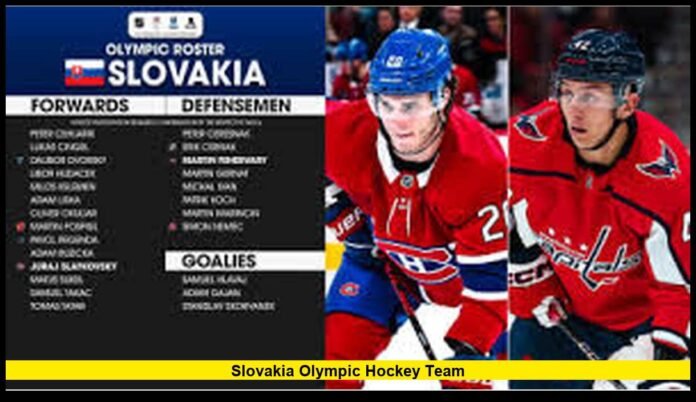

The slovakia olympic hockey team continues to play a significant role in international competition, drawing attention from fans across the United States and Europe as global tournaments approach. Slovakia’s national program has evolved into a respected contender known for disciplined defense, skilled forwards, and a growing pipeline of NHL talent. Recent developments around roster composition, tournament participation, player performances, and federation strategy highlight how the team is positioning itself for upcoming Olympic competition.
Slovakia’s hockey identity has strengthened over the past decade. Strong youth development, success at international events, and the emergence of young stars have helped the country remain competitive against traditional powers such as Canada, the United States, Sweden, and Finland. The latest updates reflect a program focused on continuity, experience, and youth integration.
Recent Roster Direction and Player Pool
The national federation has continued to rely on a mix of NHL players, European league veterans, and standout performers from domestic competitions. Confirmed selections and evaluation camps show a clear emphasis on speed, puck movement, and defensive structure.
Several NHL regulars remain central to Slovakia’s Olympic planning. Established forwards provide scoring consistency, while defensemen with NHL experience contribute stability and transition play. Goaltending remains one of Slovakia’s strongest areas, supported by players competing in top European leagues and North America.
Coaching staff evaluations have prioritized versatility. Players capable of playing multiple roles — penalty killing, power play, and late-game defensive situations — have received increased attention. This reflects a strategic shift toward roster flexibility, which is critical in short international tournaments.
Younger prospects continue to push for roster spots. Slovakia’s development system has produced high-skill forwards and mobile defensemen who are already competing professionally. Their inclusion signals a long-term vision that balances immediate competitiveness with future Olympic cycles.
Performance Trends in International Competition
Slovakia’s recent international results confirm steady competitiveness against elite teams. The national side has consistently reached knockout stages at major tournaments and has produced several high-profile wins against higher-ranked opponents.
Defensive structure remains the team’s foundation. Slovakia often relies on disciplined neutral-zone play and quick counterattacks rather than high-volume offensive pressure. This approach has proven effective in tournament settings where single-game results determine advancement.
Special teams performance has improved. Power-play units increasingly feature puck-moving defensemen and creative forwards, while penalty-killing groups emphasize aggressive pressure rather than passive containment.
Goaltending performances continue to be a defining factor. Slovakia’s ability to rely on strong goaltenders has allowed the team to remain competitive even when outshot by deeper rosters.
Coaching Strategy and Tactical Identity
The coaching approach emphasizes structure, pace, and situational awareness. Tactical trends show Slovakia focusing on:
- Fast defensive zone exits
- Strong backchecking from forwards
- Transition-based offense
- Compact defensive coverage
- High-effort forechecking in key moments
Coaches have also increased video analysis and opponent-specific preparation. This aligns Slovakia with modern international hockey trends, where tactical detail often determines tournament success.
Leadership remains another priority. Veteran players continue to hold key locker-room roles, guiding younger teammates through the pressure of Olympic-level competition.
NHL Influence on the Team’s Evolution
The growing presence of Slovak players in the NHL has had a direct impact on the national team’s style and expectations. Players competing in North America bring faster pace, physicality, and tactical familiarity that translate well to international play.
NHL experience also improves special teams execution. Players accustomed to structured systems adapt quickly to tournament strategies, reducing adjustment time.
Younger Slovak NHL prospects represent one of the most important developments for the program. Their emergence expands roster depth and raises the team’s offensive ceiling. Coaches continue to monitor these players closely as Olympic planning progresses.
Goaltending Depth Remains a Strength
Slovakia’s goaltending pipeline is widely regarded as one of the country’s most reliable assets. Multiple professional goaltenders competing in top leagues provide competition and stability.
Training camps have shown the coaching staff rotating several goaltenders to evaluate performance in different game situations. This competition ensures readiness and creates flexibility when final selections are made.
Goaltenders capable of handling heavy shot volume are particularly valuable. Tournament games often involve defensive pressure against top nations, making consistency in net essential.
Youth Development and Future Olympic Cycles
One of the most important trends is Slovakia’s commitment to youth integration. Junior success at international events has translated into early professional opportunities, accelerating player readiness for Olympic competition.
The development system emphasizes:
- Skating mechanics
- Offensive creativity
- Modern defensive mobility
- International tournament experience
Young players are increasingly exposed to senior national team camps earlier in their careers. This reduces transition challenges and builds familiarity with tactical systems.
This strategy supports continuity across Olympic cycles. Instead of rebuilding between tournaments, Slovakia aims to maintain a consistent core while gradually introducing new talent.
Role of European Leagues
European leagues remain essential to Slovakia’s national team structure. Many key players compete in top leagues in Sweden, Finland, Czechia, Switzerland, and Slovakia’s domestic competition.
These leagues provide high-level game experience and consistent playing time, which can be more valuable than limited NHL roles for some players. Coaches evaluate performance across these leagues when building depth charts.
European-based players often bring strong tactical discipline and familiarity with international ice dimensions, which differ from NHL rinks.
Olympic Preparation and Evaluation Camps
Preparation for Olympic competition involves multiple evaluation camps throughout the season. These camps allow coaches to assess chemistry, line combinations, and special teams units.
Camp priorities include:
- Testing forward line balance
- Evaluating defensive pair chemistry
- Power-play quarterback options
- Penalty-killing rotations
- Leadership group development
Scrimmages and exhibition games provide insight into player decision-making, conditioning, and adaptability.
The coaching staff also monitors injury status and workload management. Olympic tournaments require players to perform in condensed schedules, making durability an important selection factor.
Competition Landscape and Expectations
Slovakia enters Olympic planning as a competitive contender capable of upsetting top teams. While traditional powerhouses maintain deeper talent pools, Slovakia’s structure and goaltending create realistic medal potential in tournament formats.
Recent tournament performances show the team can compete defensively with elite nations. Success often depends on scoring efficiency, special teams execution, and goaltending performance.
Expectations have risen following strong international showings and the emergence of young stars. Fans increasingly view Slovakia as a team that can challenge for podium finishes rather than simply aiming for quarterfinal appearances.
Key Storylines Moving Forward
Several storylines will shape the trajectory of the slovakia olympic hockey team:
Youth vs. experience balance
Roster decisions will determine how many emerging players secure major roles.
Offensive consistency
Generating scoring against elite defensive teams remains a central focus.
Goaltender selection
Finalizing the starting goaltender will be one of the most significant decisions.
NHL participation impact
Availability of NHL players can influence roster depth and expectations.
Special teams performance
Power play efficiency often determines success in short tournaments.
Impact on International Hockey
Slovakia’s rise reflects broader shifts in international hockey competitiveness. Nations with strong development pipelines can challenge traditional powers more frequently than in previous decades.
This increased parity makes Olympic tournaments less predictable and more compelling for global audiences. Slovakia’s structured style and emerging talent contribute to this evolving landscape.
The program’s emphasis on youth development also influences scouting and player movement across professional leagues. Slovak prospects are receiving increased attention from NHL organizations, further strengthening the national team pipeline.
What Fans Should Watch Next
Fans should monitor roster announcements, evaluation camp results, and player performance across NHL and European leagues. These factors will directly influence Olympic selections.
Pre-tournament exhibition games will provide insight into line combinations and tactical adjustments. Goaltending decisions will also become clearer as competition intensifies.
Player health and in-season performance remain critical variables. Olympic rosters often reflect which players peak at the right time rather than long-term reputation alone.
Conclusion
The slovakia olympic hockey team stands at an important moment defined by continuity, emerging talent, and growing international respect. Strong goaltending, disciplined structure, and an expanding NHL presence position Slovakia as a dangerous tournament opponent.
Olympic preparation reflects a clear strategy: blend experience with youth, maintain defensive identity, and improve offensive efficiency. If these elements align, Slovakia has the potential to influence tournament outcomes and challenge established powers.
The coming months will reveal how roster decisions, player development, and tactical adjustments shape the team’s final Olympic outlook.
What do you think about Slovakia’s chances in the next Olympic hockey tournament? Share your thoughts or stay tuned for more updates.