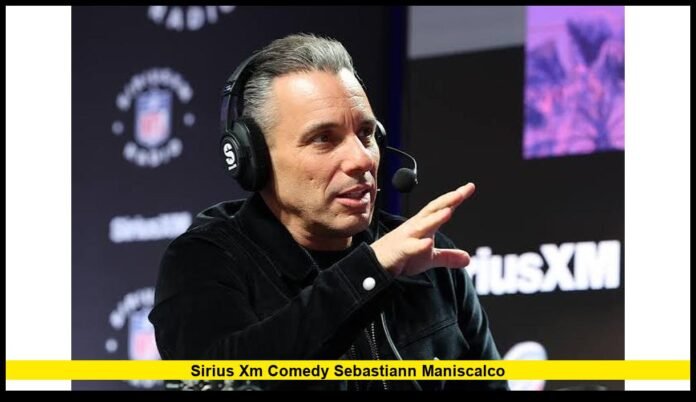

The sirius xm comedy sebastian maniscalco controversy has become one of the biggest recent talking points in the stand-up world, following growing criticism over how SiriusXM’s comedy programming has changed since Sebastian Maniscalco took over the former Raw Comedy channel. What began as a high-profile partnership between one of America’s biggest touring comedians and a major audio platform has now developed into a wider debate about comedian exposure, radio royalties, programming decisions and the role satellite radio plays in supporting working comics.
The channel itself remains active and has moved to Channel 102, where SiriusXM continues to promote Maniscalco-led programming, stand-up comedy and interview content. At the same time, comedians and industry advocates have raised concerns about the shrinking number of performers receiving regular airplay.
Why Sebastian Maniscalco’s SiriusXM Channel Is Making Headlines
SiriusXM introduced Sebastian Maniscalco’s Comedy Radio in April 2026, replacing the previous Raw Comedy channel. The new station was designed as a 24-hour comedy destination built around Maniscalco’s personality, programming choices and stand-up sensibility.
The launch gave Maniscalco a significant new platform outside his traditional stand-up specials, television appearances, podcasts and live touring career.
At the time, the concept offered an obvious attraction for SiriusXM. Maniscalco is an established comedy star with a large audience, a recognizable storytelling style and extensive experience connecting with fans through long-form entertainment.
The channel also provided SiriusXM with another celebrity-led destination at a time when the company has increasingly used major personalities and recognizable brands to differentiate its subscription audio service.
However, the change also meant that Raw Comedy disappeared as a dedicated home for a much broader group of stand-up performers.
That consequence has become the central issue in the current dispute.
From Raw Comedy to a Maniscalco-Branded Channel
Raw Comedy had developed a reputation among comedians as a valuable source of exposure. It was not limited to the biggest names in the business. A large number of professional comedians could have their recorded material played for SiriusXM subscribers.
For performers still building their careers, that exposure could be significant.
A listener who discovered an unfamiliar comedian on SiriusXM might later attend that comedian’s live show, follow a podcast, purchase a special or seek out additional recordings.
The financial component was also important.
Comedians have described SiriusXM radio plays as a source of royalty income that could supplement earnings from touring, comedy albums, streaming platforms and other work.
The transition to Sebastian Maniscalco’s Comedy Radio therefore created a much larger impact than simply changing a channel’s name.
The programming model changed, too.
The Numbers Behind the Current Controversy
The nonprofit Stand Up for Stand Up has been tracking the programming changes and says the number of comedians receiving spins has dropped sharply.
According to its latest published analysis, the active roster fell from 812 comedians in April to 275 in September. That represents a reduction of approximately 66%.
The organization also says the remaining airplay has become much more concentrated.
More than 75% of the spins in its analysis went to the top 50 artists. The data was compiled using SiriusXM play information supplied by XMPlaylist.
Those numbers have become central to the criticism because the overall amount of comedy programming has not disappeared. Instead, the concern is that a smaller group of performers now receives a larger share of the available exposure.
For major comedians, additional radio plays may provide useful visibility but are unlikely to represent the same economic difference that they can make to a middle-tier performer.
For a comedian working toward financial stability, repeated radio plays can contribute both money and audience discovery.
Why Royalties Matter to Working Comedians
Stand-up comedy can be an unpredictable business.
Even comedians who perform regularly may have significant fluctuations in income depending on touring schedules, ticket sales, podcast advertising, television appearances and streaming opportunities.
Radio royalties provide another revenue stream.
Stand Up for Stand Up has estimated that a SiriusXM spin can generate approximately $15 in royalties for the comedian under the relevant arrangements. The exact financial outcome can depend on individual circumstances and rights arrangements.
A single play may not seem significant.
Hundreds of plays can be different.
That is why comedians who previously received regular Raw Comedy exposure have expressed concern about losing access to the channel.
The issue is not only the money. Airplay can also help a comedian reach people who have never seen their live act.
For an emerging or mid-career performer, that discovery can be valuable long after the original radio play.
Comedians Push Back Against the New Programming Direction
The controversy became significantly more visible in early October as comedians began publicly discussing the impact of the programming shift.
Among the performers associated with the criticism are Patton Oswalt, Michelle Wolf, Margaret Cho and Matthew Broussard, along with other comedians.
Their concerns have focused on the reduction in opportunities for working comics and the concentration of airplay among a smaller number of established performers.
The criticism does not necessarily mean that comedians oppose Maniscalco personally.
Instead, the dispute has increasingly centered on the structure of the channel and what SiriusXM’s programming choices mean for the broader comedy ecosystem.
That distinction is important because the debate involves a major corporate audio platform, a high-profile comedy personality and hundreds of performers whose careers may be affected by programming decisions.
SiriusXM Says It Is Taking a New Creative Direction
SiriusXM has defended the change.
The company has said the launch of Sebastian Maniscalco’s Comedy Radio introduced a new creative direction and that the programming mix is expected to evolve.
The company has also emphasized that it continues to invest heavily in comedy and maintains multiple comedy offerings across its platform.
That response suggests SiriusXM does not view the transition as a retreat from stand-up.
Instead, the company appears to view the Maniscalco channel as a different approach to presenting comedy.
The disagreement is therefore largely about distribution.
Critics want broader opportunities for comedians across different levels of the industry, while SiriusXM is defending a format that gives more prominence to established personalities and curated programming.
What Can Listeners Hear on Channel 102?
Despite the controversy, Sebastian Maniscalco’s Comedy Radio remains a functioning SiriusXM destination.
The station is currently listed on Channel 102, following a broader SiriusXM channel reshuffle that moved it from Channel 99.
Listeners can hear stand-up comedy along with programming centered around Maniscalco.
One of the channel’s major programs is The Sebastian Maniscalco Show, which features Maniscalco alongside longtime friend and comedian Pete Correale.
The show mixes comedy, personal stories, conversations about culture and everyday life, along with appearances by guests.
The channel has also become the home of We Got Company, a monthly interview series that brings Maniscalco together with prominent guests.
The series began with Jerry Seinfeld and has also featured or announced conversations involving figures such as Ray Romano and David Chang.
That programming gives the station a broader identity than a traditional stand-up channel.
We Got Company Adds a Different Dimension
The addition of We Got Company has helped SiriusXM position the channel as more than a collection of comedy recordings.
The interview series allows Maniscalco to explore the personal and professional stories behind well-known entertainers and other public figures.
For SiriusXM, this creates additional exclusive programming that can be distributed through the satellite service and app.
For Maniscalco, it creates another avenue for his personality to become the center of a media brand.
The strategy also reflects a larger trend in entertainment, where successful comedians increasingly operate across several formats at once.
A comedian may simultaneously tour arenas, release specials, host podcasts, appear on television and produce subscription-audio content.
SiriusXM is effectively making Maniscalco part of that multi-platform model.
The Channel Move From 99 to 102
Another important detail for listeners is the channel number.
When Sebastian Maniscalco’s Comedy Radio launched, it occupied Channel 99, the same channel associated with the former Raw Comedy service.
SiriusXM later reorganized a number of channel positions to make room for new sports programming and other changes.
As part of that reshuffle, Maniscalco’s comedy station moved to Channel 102.
SiriusXM currently identifies Channel 102 as Sebastian Maniscalco’s Comedy Radio.
That means older references to Channel 99 may now be outdated.
Listeners searching for the station should use Channel 102 or the current SiriusXM app listing.
Why This Debate Is Bigger Than One Radio Station
The current dispute highlights a larger challenge facing the comedy business.
There is an enormous gap between the handful of comedians who become household names and the hundreds of professionals who make a living through clubs, theaters, festivals, podcasts and touring.
A platform that gives exposure to those performers can have an outsized effect.
For a famous comedian, another radio appearance is useful.
For a comedian who is still trying to move from clubs to theaters, however, consistent national exposure can help create a much larger audience.
That is why some performers see the change as a structural issue rather than simply a disagreement about programming taste.
The question is whether major entertainment platforms should primarily prioritize the biggest names or reserve substantial space for emerging and mid-level talent.
What Happens Next?
The immediate future of the dispute will likely depend on whether SiriusXM adjusts the programming mix.
The company has described the channel as an evolving creative project, meaning its lineup is not necessarily fixed.
That leaves room for additional comedians to receive airplay in the future.
At the same time, the public criticism demonstrates that many performers are watching the channel closely.
If SiriusXM increases the diversity of comedians receiving spins, some of the industry’s concerns could ease.
If the current concentration continues, the debate over access, royalties and discoverability is likely to remain active.
For Maniscalco, the situation presents an unusual challenge. His name is directly attached to the station, making him a visible figure in a dispute that also involves decisions made by SiriusXM.
What Listeners Should Know Right Now
For comedy fans, the practical takeaway is straightforward.
Sebastian Maniscalco’s Comedy Radio is still operating on SiriusXM and is currently found on Channel 102. The station features Maniscalco’s own programs as well as stand-up content.
The channel’s identity has evolved significantly since its April launch, particularly as SiriusXM has adjusted its broader channel lineup.
Meanwhile, comedians continue to debate whether the new programming model gives enough space to performers outside the biggest names in the industry.
The controversy has turned what could have been a straightforward celebrity-radio partnership into a much larger conversation about who gets heard, who gets paid and how audiences discover comedians.
The Bigger Picture for Sebastian Maniscalco
Sebastian Maniscalco remains one of the most recognizable names in contemporary stand-up, and his SiriusXM partnership gives him another major platform to develop his brand.
The success of the channel, however, will be measured in more ways than listener numbers.
Its long-term reputation within the comedy community could also depend on whether it creates opportunities for a wide range of performers.
SiriusXM has the ability to combine star power with comedy discovery. Finding that balance could determine how the station is viewed by both listeners and comedians in the months ahead.
For now, the sirius xm comedy sebastian maniscalco story is no longer simply about a new radio channel. It has become a debate about the economics of modern stand-up, the value of exposure and the responsibility that major entertainment platforms have toward the performers who help make their comedy programming possible.
As the SiriusXM comedy debate continues, readers can share their views on Channel 102, the programming changes and the future of stand-up radio in the comments.