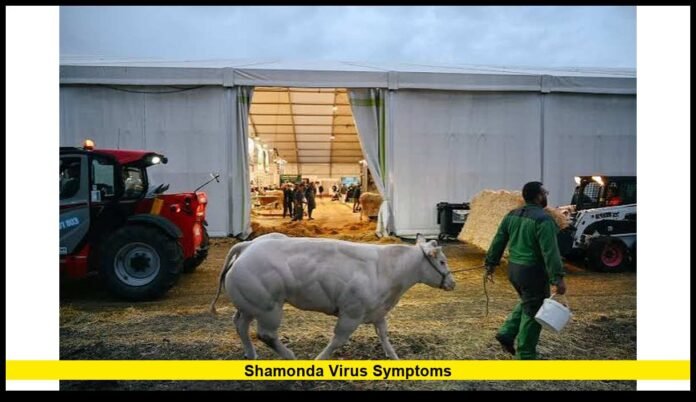

Shamonda virus symptoms have attracted increased attention following the first reported human infection announced in France on October 22, 2026. The virus was previously known primarily for infections in animals, particularly cattle, where reported signs include fever, diarrhea, lethargy, and reduced milk production. The newly reported human case has raised important questions about possible symptoms, transmission, and public health risks. However, researchers have not yet established a reliable pattern of symptoms in humans.
The latest available information requires an important distinction: symptoms documented in infected animals cannot automatically be applied to people. French authorities are investigating the first reported human infection, including how the patient acquired the virus and whether it contributed to the patient’s death. The patient had a serious underlying illness that increased vulnerability to infection and complications.
For readers in the United States, the most important facts are what scientists currently know, which symptoms veterinarians have observed in animals, what remains uncertain about human illness, and when medical attention is appropriate.
What Is the Shamonda Virus?
Shamonda virus, also known as SHAV, is an orthobunyavirus belonging to the Simbu serogroup. Researchers have studied the virus for decades, particularly in connection with infections affecting livestock and other animals.
The virus attracted renewed attention in 2026 after scientists detected a European variant in farm animals. Reports from several European countries described illness in cattle, prompting laboratory investigations to identify the cause.
Unlike a common respiratory virus, Shamonda virus has primarily been investigated as an animal-health concern. Scientists have also studied related viruses in connection with reproductive complications in livestock.
Its emergence in European cattle has increased interest in how the virus circulates, which animals may be susceptible, and whether it can infect other species.
The latest development is the first reported human infection. On October 22, 2026, the European Centre for Disease Prevention and Control (ECDC) announced that French authorities had reported a human case. The patient had been receiving treatment for a serious illness and died in early October.
Investigators are examining the circumstances surrounding the infection. They have not established whether Shamonda virus caused or contributed to the patient’s death.
This distinction is essential when interpreting news about the virus. A confirmed infection does not, by itself, establish that the virus caused every symptom or complication experienced by the patient.
Shamonda Virus Symptoms in Humans: What Is Confirmed?
As of October 22, 2026, there is not enough clinical evidence to establish a definitive list of Shamonda virus symptoms in humans.
The first reported human infection marks a significant development. Before this case, scientific attention had focused on infections in animals. One human case does not provide enough information to determine the full range of possible symptoms, the usual severity of illness, or how frequently infection might lead to complications.
The available public health announcement also does not establish a complete clinical description of the patient’s symptoms. Therefore, it would be inaccurate to claim that specific symptoms such as fever, headache, muscle pain, or respiratory problems are confirmed signs of human Shamonda virus infection.
Researchers must investigate the case and compare any additional confirmed infections before they can describe a human illness pattern with confidence.
For now, the following distinctions are important:
- Confirmed human infection: French authorities have reported the first known human case.
- Human symptoms: A consistent symptom profile has not yet been established.
- Disease severity: The reported patient died, but investigators have not determined whether the virus caused or contributed to the death.
- Transmission to humans: The route of infection remains under investigation.
- Risk to the general public: One reported case is insufficient to determine the overall risk to people.
People should not assume they have Shamonda virus because they experience common symptoms such as fatigue, diarrhea, or fever. These symptoms have many possible causes, and no symptom alone can confirm this infection.
Anyone who develops severe or rapidly worsening symptoms should seek appropriate medical care regardless of the suspected cause.
Shamonda Virus Symptoms in Animals
The clearest information about Shamonda virus symptoms comes from investigations involving livestock. During the 2026 European outbreak, veterinarians identified a recognizable pattern of illness in affected cattle.
Reported symptoms include fever, diarrhea, reduced appetite, lethargy, and a substantial decline in milk production. Some investigations have also documented reproductive complications and disease affecting horses.
These findings are relevant to understanding the virus, but they must remain separate from the still-uncertain clinical picture in humans.
1. Fever
Fever is one of the most frequently reported signs in cattle affected by the European outbreak.
Swiss veterinary authorities reported temperatures exceeding 40°C (104°F) in affected cattle, typically lasting one to two days. A fever of this level in livestock warrants veterinary assessment, particularly when several animals develop similar symptoms.
Although fever is a common sign of many infections, researchers have not established it as a characteristic symptom of human Shamonda virus disease.
2. Diarrhea
Diarrhea has also been reported in cattle infected during the European outbreak.
Affected animals may experience digestive disturbances alongside fever, reduced appetite, and lower milk production. These signs can cause additional stress and affect herd productivity.
Diarrhea alone cannot establish a Shamonda virus diagnosis. Other infectious and noninfectious conditions can produce similar symptoms in livestock.
3. Reduced Appetite
Some affected cattle have shown a loss of appetite. When animals eat less, their overall condition and productivity may decline.
Veterinarians consider appetite changes alongside other clinical findings, including fever, digestive problems, and changes in milk yield. Testing is necessary to distinguish Shamonda virus from other potential causes.
4. Lethargy and Reduced Activity
Lethargy, or an unusual reduction in normal activity, has appeared in reports describing the European cattle outbreak.
Animals may appear less active than usual when they are ill. However, this sign is nonspecific and can occur with many different diseases.
The combination of lethargy, fever, diarrhea, and reduced milk production can help veterinarians identify animals that require further examination.
5. A Sharp Decline in Milk Production
A marked decrease in milk yield has been one of the most prominent signs reported by dairy farmers.
The decline can affect farm operations and provide an early indication that multiple animals may be experiencing the same illness. During the 2026 outbreak, some farms reported widespread illness within their herds.
Changes in milk production are not proof of Shamonda virus infection. Heat stress, nutrition, other infections, and different management factors can also reduce milk yield.
6. Reproductive Complications
Veterinary investigations in Europe have detected Shamonda virus genetic material in aborted bovine fetuses. These findings have raised concerns about infection during pregnancy and possible effects on developing animals.
The relationship between the virus and individual reproductive outcomes remains an area of investigation. Researchers must account for other possible causes before attributing every abortion or developmental abnormality to Shamonda virus.
7. Neurological Signs in Horses
Swiss researchers have reported Shamonda virus genetic material in brain tissue from two horses with severe neurological disease. The reported conditions included encephalomyelitis, which involves inflammation of the brain and spinal cord, and vasculitis, which involves inflammation of blood vessels.
These findings broaden the range of animals being investigated for possible infection. However, evidence from two horses does not establish how frequently the virus causes neurological disease or whether similar effects occur in people.
The key distinction: Fever, diarrhea, reduced appetite, lethargy, and lower milk production are documented signs in cattle. Neurological disease has also been investigated in horses. These observations do not establish an equivalent symptom list for human infections.
How Long Do Shamonda Virus Symptoms Last?
The duration of human Shamonda virus illness is not yet known. The first reported human case does not provide enough evidence to establish an incubation period, a typical illness duration, or a recovery timeline.
Animal investigations offer some information about the course of disease in cattle. Swiss veterinary authorities reported that illness on affected farms commonly lasted approximately 14 to 21 days. However, individual clinical signs, such as fever, could last for a much shorter period.
These figures describe observations in livestock. They should not be used to predict how long a human infection might last.
Researchers need additional clinical information to determine:
- How soon symptoms may develop after a person becomes infected.
- Whether human infection can occur without noticeable symptoms.
- How long an illness may last.
- Which factors increase the likelihood of severe complications.
- Whether infected people can transmit the virus to others.
Until reliable evidence becomes available, there is no established human recovery timeline for Shamonda virus.
How Does Shamonda Virus Spread?
Current evidence indicates that Shamonda virus typically spreads between animals through bites from infected Culicoides biting midges. These small insects can transmit certain viruses while feeding on susceptible animals.
The precise midge species responsible for the 2026 European infections has not been established. Scientists continue to investigate the virus’s circulation and the role of insect vectors.
The first reported human infection makes transmission research especially important. However, authorities have not yet determined how the patient became infected.
It would therefore be premature to claim that the virus spreads between people, through respiratory droplets, through casual contact, or through any particular human exposure route.
The following distinctions help clarify what is known.
| Transmission question | Current understanding |
|---|---|
| How does it typically spread among animals? | Through bites from infected biting midges. |
| Which insect species transmitted the European variant? | The specific species remains unknown. |
| Can humans become infected? | A first human infection has been reported in France. |
| How did the reported patient become infected? | The route is under investigation. |
| Does it spread from person to person? | Human-to-human transmission has not been established. |
This uncertainty does not mean that every possible route is equally likely. It means that investigators need evidence before drawing conclusions about human transmission.
Can Shamonda Virus Cause Severe Illness?
The severity of Shamonda virus infection in humans remains uncertain because the available evidence consists of a single reported human case.
The patient in France had a serious underlying illness that made them more susceptible to infection and complications. The patient died in early October 2026. Investigators are examining whether Shamonda virus caused or contributed to the death.
This case highlights the importance of investigating infections in people with complex medical conditions. However, it does not prove that Shamonda virus generally causes severe disease in humans.
Animal findings provide additional information about the virus’s potential effects across different species. In cattle, the European outbreak has been associated with substantial herd illness, reduced milk production, and reproductive complications. Investigations in horses have also identified viral genetic material in brain tissue from animals with serious neurological disease.
Scientists must establish whether these findings have any direct relevance to human disease. Until more human cases are investigated, neither the likelihood of severe illness nor the risk of fatal complications can be reliably calculated.
People should avoid drawing conclusions about their personal risk from the outcome of a single case.
How Is Shamonda Virus Diagnosed?
Diagnosing Shamonda virus requires laboratory investigation. Symptoms alone cannot reliably distinguish this infection from other diseases.
In the 2026 animal outbreak, researchers used molecular testing and genetic sequencing to identify the virus. These techniques helped investigators distinguish Shamonda virus from other pathogens that can produce similar signs in livestock.
For human infections, medical professionals and public health laboratories would need to evaluate the available evidence and select appropriate diagnostic tests. The first reported case has also prompted European authorities to strengthen testing capacity and investigate whether additional infections may have occurred.
A diagnostic investigation may involve several steps:
- Clinical assessment: Medical professionals evaluate the patient’s symptoms, medical history, and overall condition.
- Exposure investigation: Investigators examine possible contact with animals, biting insects, and other relevant exposures.
- Laboratory testing: Specialists determine which tests are appropriate for detecting the virus or its genetic material.
- Public health investigation: Authorities assess the circumstances of the infection and investigate potential additional cases.
The exact diagnostic approach depends on the clinical situation and the testing methods available. A person should not attempt to diagnose Shamonda virus based on online symptom lists.
If a healthcare professional suspects an unusual infection, the clinician can consult appropriate public health authorities about further evaluation.
Is There a Treatment for Shamonda Virus?
A specific, proven treatment for human Shamonda virus disease has not been established in the available evidence as of October 22, 2026.
Because human infections have not been sufficiently characterized, researchers cannot yet provide a confirmed treatment protocol based on established clinical trials or a well-documented series of patients.
Treatment decisions would depend on the patient’s condition, the symptoms present, and the medical team’s assessment. Supportive medical care may be necessary for people experiencing serious illness, but the appropriate approach must be determined by qualified healthcare professionals.
There is also insufficient evidence to recommend a particular antiviral medication specifically for Shamonda virus.
Antibiotics do not treat viruses, although doctors may prescribe them when a separate bacterial infection requires treatment. Patients should not take prescription medicines or unproven remedies on the assumption that they will prevent or cure Shamonda virus infection.
For animal infections, Swiss veterinary authorities have reported that treatment for affected horses is currently focused on managing symptoms. This veterinary observation should not be interpreted as a proven treatment recommendation for humans.
Researchers will need further clinical evidence to determine whether particular medicines or other interventions can improve outcomes in human cases.
How Can People Reduce Potential Exposure?
The first reported human infection has increased the importance of understanding potential exposure routes. However, investigators have not yet established how the patient acquired Shamonda virus.
Current evidence identifies infected biting midges as a typical transmission route among animals. General measures to reduce insect bites can therefore be sensible where exposure to biting insects is a concern, although their effectiveness against human Shamonda virus infection has not been established.
Practical precautions include:
- Use an appropriate insect repellent according to its label.
- Wear clothing that helps cover exposed skin when biting insects are active.
- Use suitable screens and other measures to limit insects entering indoor spaces.
- Follow local public health guidance if authorities identify a specific exposure risk.
- Avoid handling sick animals or animal tissues without appropriate protective measures and veterinary guidance.
People who work with livestock should report unusual clusters of illness to a veterinarian. This is particularly important when multiple animals develop fever, diarrhea, reduced appetite, or a sudden decline in milk production.
These precautions are general exposure-reduction measures, not evidence that the virus is currently circulating in people in the United States.
There is no established human Shamonda virus prevention schedule or vaccine recommendation in the current evidence reviewed for this article.
What Does the Latest Shamonda Virus Update Mean for the United States?
The first reported human infection occurred in France, following the identification of Shamonda virus in European farm animals during the summer of 2026.
The European Centre for Disease Prevention and Control is investigating the potential public health implications in cooperation with French authorities and European partners. The investigation includes determining how the patient became infected and assessing whether other human infections may have occurred.
As of October 22, 2026, the available announcement does not establish a human outbreak or demonstrate sustained transmission between people.
For readers in the United States, it is important to distinguish international surveillance developments from evidence of domestic transmission. The European case does not, by itself, demonstrate that Shamonda virus is circulating in American communities.
The virus’s established animal transmission pattern also should not be treated as proof of a particular human transmission route.
U.S. readers should rely on confirmed public health information rather than social media posts that present unverified symptom lists or speculate about widespread human infection.
Anyone experiencing a concerning illness should seek medical advice based on their symptoms and circumstances. People who have a relevant animal or insect exposure should share that information with their healthcare professional, particularly if public health authorities issue new guidance.
The investigation may provide additional information about human symptoms, transmission, testing, and clinical outcomes. Until then, the most responsible approach is to recognize the significance of the first case without overstating what it establishes.
Frequently Asked Questions About Shamonda Virus Symptoms
What are the main Shamonda virus symptoms?
In cattle, documented signs include fever, diarrhea, reduced appetite, lethargy, and a substantial decline in milk production. A confirmed pattern of symptoms in humans has not yet been established.
Can humans get Shamonda virus?
Yes. French authorities reported the first known human infection on October 22, 2026. Investigators are examining how the patient acquired the virus and the possible public health implications.
What are the first symptoms of Shamonda virus in humans?
The first human case has not established a reliable pattern of early symptoms. It would be inaccurate to identify fever, headache, fatigue, or other common symptoms as confirmed early signs of human Shamonda virus infection.
Is Shamonda virus fatal?
The first reported human patient died in early October 2026. However, investigators have not determined whether the virus caused or contributed to the death. The fatality risk for human infection remains unknown.
How long does Shamonda virus last?
The duration of human illness is unknown. In cattle, Swiss veterinary authorities reported that illness on affected farms commonly lasted around 14 to 21 days. That observation cannot establish the duration of human disease.
Does Shamonda virus spread from person to person?
Human-to-human transmission has not been established in the available evidence. Investigators are still examining how the first reported patient acquired the infection.
Is there a vaccine for Shamonda virus?
A proven human vaccine recommendation has not been established in the available evidence. Readers should follow updated guidance from appropriate public health authorities.
How is Shamonda virus detected?
Laboratory testing is needed to identify the virus. Animal investigations have used molecular tests and genetic sequencing. The appropriate testing process for a suspected human infection depends on the clinical circumstances and laboratory guidance.
Should people in the United States worry about Shamonda virus?
The first reported human case is an important development, but it does not establish widespread human transmission or a U.S. outbreak. People should follow verified public health updates and seek medical advice for concerning symptoms rather than assuming a common illness is caused by this virus.
Can Shamonda virus cause neurological problems?
Researchers in Switzerland detected viral genetic material in brain tissue from two horses with severe neurological disease. This finding is important for animal health, but it does not establish that Shamonda virus causes neurological illness in humans.
Final Takeaway on Shamonda Virus Symptoms
Shamonda virus research has entered a new phase following the first reported human infection in France. Scientists have documented several symptoms in affected cattle and have investigated serious neurological disease in horses, but the human clinical picture remains uncertain.
The key questions now concern the patient’s route of infection, the possibility of additional cases, the symptoms associated with human infection, and whether the virus contributed to the reported death. These questions require further investigation before researchers can offer reliable conclusions about human health risks.
What do you think about the latest Shamonda virus developments? Share your thoughts in the comments and stay updated as verified information becomes available.