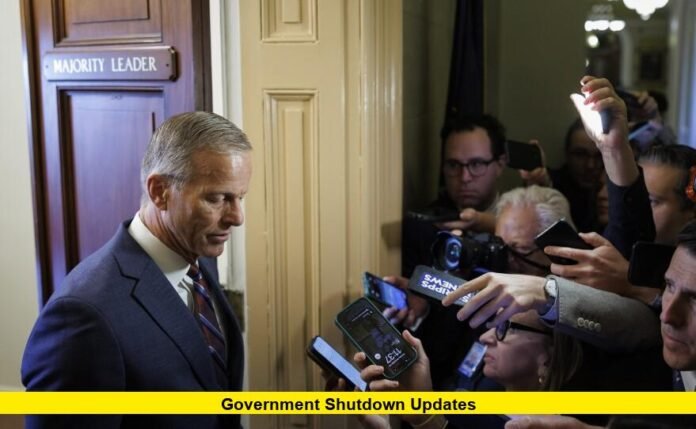

The Senate passes funding bill — a pivotal moment in Washington that could finally bring relief to millions of Americans affected by the 2025 federal government shutdown. On November 10, 2025, the U.S. Senate voted 60–40 to approve a stopgap funding measure, temporarily restoring operations and sending the measure to the House of Representatives for final approval.
A Critical Move to Reopen the Government
After more than 40 days of a historic shutdown, the Senate’s approval of the funding bill marks the most significant progress since the crisis began on October 1. The legislation would fund government operations through January 30, 2026, allowing federal agencies to resume full activity and ensuring back pay for furloughed workers.
The bill represents a carefully negotiated compromise between Senate Democrats and Republicans. It stops the bleeding from the prolonged shutdown but postpones deeper spending and policy disputes until early next year. President Donald Trump is expected to sign the measure once it clears the House, which could vote as soon as midweek.
What the Funding Bill Covers
The temporary funding bill includes several key provisions designed to stabilize essential government functions:
- Full reopening of federal agencies that had been shuttered since the start of the fiscal year.
- Guaranteed back pay for all federal employees who missed paychecks during the shutdown.
- Protection for critical programs, including Social Security, veterans’ benefits, and airport operations.
- Temporary extensions for emergency food assistance and healthcare programs.
However, the bill excludes long-term provisions such as the extension of enhanced Affordable Care Act subsidies. That debate is expected to resume in December, setting the stage for another round of negotiations before the next funding deadline in early 2026.
The Road to Passage
Reaching this Senate vote was anything but simple. For weeks, lawmakers were deadlocked over competing priorities. Democrats pushed for more robust healthcare and education funding, while Republicans demanded limits on discretionary spending and border-related policies.
Late-night talks between Senate Majority Leader Chuck Schumer and Minority Leader Mitch McConnell helped craft a deal that could pass both chambers. In a rare show of bipartisanship, eight Democrats broke ranks to join most Republicans in supporting the bill, ensuring the crucial 60-vote threshold was met.
The final vote tally — 60 in favor, 40 opposed — reflected deep but strategic divisions within both parties. One Republican senator opposed the measure, citing concerns over “unsustainable spending.” Still, the outcome underscored a growing sense of urgency to restore government operations and end the political stalemate.
Impact on Americans
The passage of the Senate funding bill brings immediate, tangible relief to millions of Americans affected by the shutdown:
- Federal workers across the country will return to their jobs and receive delayed paychecks.
- National parks, museums, and agencies such as the IRS and EPA will reopen.
- Transportation services, including air traffic operations, will stabilize, reducing the strain on airports.
- SNAP and veterans’ programs will resume normal disbursements, ensuring families and retirees regain access to critical support.
The shutdown had forced thousands of contract workers and small businesses that rely on federal contracts to the brink. The bill’s approval now offers breathing room — though only temporarily.
Political and Economic Ramifications
While the Senate’s move is being hailed as a breakthrough, it has also exposed growing divisions within the Democratic Party. Progressive lawmakers criticized the bill for “kicking the can down the road,” arguing that it does little to address healthcare funding and rising costs of living.
Moderate Democrats, however, defended their vote, saying it was necessary to get Americans back to work. They emphasized that the short-term funding allows time to craft a more comprehensive budget early next year.
On the economic front, analysts expect the bill to calm volatile markets. The shutdown had already disrupted supply chains, delayed tax refunds, and slowed economic growth. With the funding bill advancing, consumer confidence and business operations are expected to improve.
Next Steps: The House Vote
The funding bill now heads to the House of Representatives, where Speaker Mike Johnson has expressed cautious support. The House is expected to hold a vote within days, possibly by Wednesday. If the measure passes, it will be sent directly to the President for signature, officially ending the shutdown.
Still, several House members from both parties have hinted they may seek amendments before passage. Such changes could risk further delays, though leadership in both chambers has urged swift approval to prevent renewed uncertainty.
A Temporary Fix with Big Questions Ahead
Even as the Senate passes the funding bill, the move is seen as a short-term fix rather than a permanent solution. Key questions remain unresolved:
- Will Congress agree on a long-term budget before January 30, 2026?
- How will lawmakers address the expiring ACA subsidies and healthcare funding?
- Can both parties maintain cooperation, or will divisions deepen ahead of the 2026 midterm elections?
Analysts warn that without a comprehensive budget deal, the government could face another partial shutdown in early 2026. The next round of negotiations is expected to be contentious, focusing on defense spending, tax reforms, and entitlement programs.
Public Reaction
Across the country, reaction to the Senate’s decision has been mixed but largely hopeful. Federal employees and small business owners welcomed the news, viewing it as a sign that Washington is finally moving toward compromise. On social media, hashtags like #SenateVote and #GovernmentFunding trended within hours of the announcement.
However, frustration lingers among voters who view the shutdown as unnecessary political brinkmanship. Many Americans remain skeptical that Congress will avoid another crisis when the temporary funding expires in January.
A Step Toward Stability
The Senate’s approval of the funding bill signals a crucial, if temporary, return to stability. It restores vital services, brings relief to millions, and shows that bipartisan cooperation — though rare — is still possible in today’s sharply divided political landscape.
The real challenge, however, lies ahead: transforming this short-term compromise into a lasting agreement that funds the government responsibly and avoids further turmoil.
As the bill moves to the House for final approval, Americans are watching closely to see whether this moment of unity will last or fade once again into gridlock.
Stay tuned for updates as the House prepares to vote — and share your thoughts below on whether this deal goes far enough to fix Washington’s budget battles.