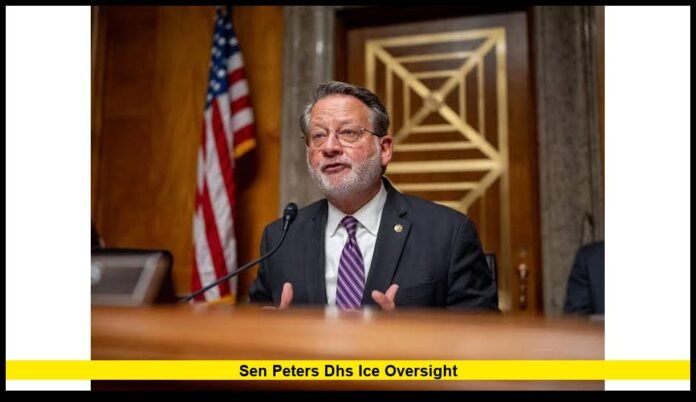

Immigration enforcement remains one of the most closely watched issues in the United States, and congressional oversight has become an increasingly important part of that conversation. Senator Gary Peters has taken a leading role in examining how the Department of Homeland Security (DHS) and U.S. Immigration and Customs Enforcement (ICE) carry out their responsibilities. Through committee hearings, formal inquiries, and public questioning of federal officials, he has sought greater transparency regarding enforcement practices, accountability measures, and internal oversight systems.
The ongoing attention reflects broader concerns about how federal agencies balance public safety, border security, and individual rights while carrying out their missions. Lawmakers continue reviewing whether current policies meet legal standards and whether existing oversight mechanisms are sufficient to maintain public confidence.
Why Congressional Oversight of DHS and ICE Matters
Congress has the constitutional responsibility to oversee executive branch agencies. This oversight helps ensure that federal departments follow the law, manage taxpayer resources responsibly, and remain accountable for their actions.
The Department of Homeland Security is one of the largest agencies in the federal government. It oversees numerous organizations responsible for protecting the country, including ICE, Customs and Border Protection (CBP), the Transportation Security Administration (TSA), the Federal Emergency Management Agency (FEMA), and the U.S. Secret Service.
Because ICE conducts immigration enforcement operations across the country, its policies and procedures frequently receive attention from lawmakers. Congressional oversight is intended to determine whether those operations are conducted fairly, legally, and consistently with department policies.
Senator Gary Peters has repeatedly emphasized that strong oversight is essential for maintaining public trust while allowing federal law enforcement agencies to perform their duties effectively.
Senator Gary Peters’ Role in Homeland Security Oversight
As the Ranking Member of the Senate Homeland Security and Governmental Affairs Committee, Senator Gary Peters plays a significant role in reviewing DHS operations.
The committee regularly examines how federal agencies manage their responsibilities, implement policies, and respond to emerging challenges. Its work includes holding public hearings, requesting official records, questioning senior officials, and reviewing agency performance.
In this position, Peters has focused on ensuring that DHS provides accurate information to Congress regarding immigration enforcement activities, internal investigations, and departmental accountability.
His oversight responsibilities extend beyond immigration enforcement to include federal preparedness, cybersecurity, emergency management, and overall government operations. However, ICE enforcement practices have remained one of the committee’s most visible areas of attention.
Increasing Attention on Immigration Enforcement Practices
Immigration enforcement has become one of the nation’s most debated public policy issues. ICE officers carry out arrests, detention operations, removals, and investigations involving immigration violations.
Supporters argue that the agency plays a vital role in protecting national security and enforcing federal immigration laws. They contend that officers often operate in dangerous environments and require flexibility to respond quickly during enforcement actions.
Others argue that stronger oversight is necessary to ensure constitutional protections, proper use of force, and transparency whenever enforcement actions result in injuries, fatalities, or allegations of misconduct.
These differing viewpoints have contributed to increased congressional scrutiny over recent years.
Committee Hearings Focus on Agency Accountability
Public hearings remain one of Congress’s primary oversight tools.
During multiple committee sessions, senior DHS and ICE officials have appeared before lawmakers to answer questions regarding agency operations, internal procedures, and enforcement decisions.
Topics discussed during these hearings have included:
- Officer training standards
- Enforcement policies
- Internal investigations
- Use-of-force procedures
- Transparency during incidents
- Reporting requirements
- Inspector General oversight
- Compliance with federal law
Committee members from both political parties have used these hearings to examine whether agency leadership is adequately addressing operational concerns while maintaining public confidence.
These discussions often involve detailed questioning about specific policies rather than individual immigration cases.
Questions Surrounding Use-of-Force Policies
One of the most closely examined issues involves how ICE officers use force during enforcement operations.
Whenever a serious incident occurs, lawmakers seek information about the circumstances leading to the encounter, the policies that governed officer actions, and whether existing procedures were followed.
Congressional reviews have focused on several important questions, including:
- What level of force was authorized?
- Were de-escalation techniques attempted?
- Were body cameras operating?
- How quickly was the incident reviewed?
- Who conducted the investigation?
- What accountability measures were implemented?
Senator Peters has repeatedly stated that transparency following significant enforcement incidents is necessary to strengthen public confidence and assist Congress in evaluating agency performance.
Calls for Greater Transparency
Transparency has become one of the central themes throughout congressional oversight efforts.
Members of Congress have requested additional information regarding internal agency reviews, disciplinary procedures, enforcement policies, and investigative findings.
Among the information lawmakers have sought are:
- Incident reports
- Internal review documents
- Policy memoranda
- Officer training materials
- Accountability procedures
- Investigative timelines
Supporters of greater transparency believe timely disclosure allows Congress to evaluate whether agencies are following established policies.
Department officials have responded that certain records cannot immediately be released while investigations remain active or involve protected personnel information. At the same time, DHS has stated that it continues cooperating with congressional oversight requests within applicable legal requirements.
Oversight of the DHS Office of Inspector General
Another major area receiving congressional attention involves the Department of Homeland Security’s Office of Inspector General.
The Inspector General operates independently from agency leadership and investigates allegations involving waste, fraud, abuse, misconduct, and management failures throughout DHS.
Congress relies heavily on Inspector General findings because these investigations are intended to provide objective assessments of agency operations.
Senator Peters has expressed concern regarding allegations involving potential interference with Inspector General activities, including questions about access to records and communications necessary for oversight work.
These matters remain under congressional review, and some inquiries have not yet reached final public conclusions.
Reviewing Officer Training Standards
Training requirements for ICE personnel have also become an important oversight topic.
Lawmakers have questioned agency officials about how officers prepare for increasingly complex enforcement situations involving diverse communities, high-risk operations, and rapidly changing circumstances.
Areas receiving particular attention include:
- Constitutional policing
- De-escalation techniques
- Defensive tactics
- Vehicle stop procedures
- Arrest protocols
- Communication skills
- Ongoing professional education
DHS officials have maintained that ICE personnel receive extensive instruction before conducting enforcement activities. Nevertheless, members of Congress continue evaluating whether additional improvements could further strengthen operational safety and accountability.
Expansion of Body Camera Programs
Body-worn cameras have become an increasingly important accountability tool across federal, state, and local law enforcement agencies.
Within DHS, expanded deployment of body cameras for certain ICE enforcement operations has attracted bipartisan interest.
Supporters argue that body cameras can:
- Create objective records of incidents
- Protect officers against false allegations
- Improve public trust
- Assist investigators
- Enhance officer training
Congressional discussions have focused on how quickly the technology is being implemented, how recordings are stored, and under what circumstances footage may be reviewed.
Although body camera programs continue expanding, lawmakers remain interested in ensuring consistent implementation across enforcement operations.
Technology, Privacy, and Surveillance Concerns
Modern immigration enforcement increasingly relies on advanced technology.
Congress has examined how DHS uses digital tools while balancing investigative needs with individual privacy protections.
Recent discussions have addressed questions involving:
- Electronic surveillance technologies
- Digital investigative tools
- Data collection practices
- Information security
- Privacy safeguards
- Oversight procedures
Senator Peters has requested additional information regarding reports that ICE acquired sophisticated commercial spyware capable of extracting information from electronic devices.
As of today, some questions raised during congressional oversight remain unanswered publicly, and no final findings have been announced regarding every aspect of those inquiries.
Internal Investigations and Accountability
Congressional oversight also examines how DHS investigates allegations involving employee misconduct.
Internal accountability systems play an important role in determining whether officers comply with department policies and federal law.
Lawmakers have asked agency officials about:
- Investigation procedures
- Independence of investigators
- Disciplinary standards
- Case review timelines
- Reporting practices
- Corrective actions
Agency leaders have explained that investigations follow established legal procedures while protecting employee due process rights. Congress continues reviewing whether existing systems provide sufficient transparency and independence.
Balancing Enforcement and Civil Liberties
Immigration enforcement requires agencies to balance multiple responsibilities.
Federal officers must enforce immigration laws while respecting constitutional protections afforded to individuals during enforcement encounters.
Congressional oversight seeks to evaluate whether agencies maintain that balance effectively.
Supporters of strong oversight argue that accountability improves public confidence without preventing officers from performing their duties.
Others caution that excessive restrictions could complicate enforcement operations and reduce operational flexibility.
These differing perspectives remain central to ongoing policy discussions in Washington.
Public Interest Continues to Grow
Immigration remains one of the country’s most closely followed public policy issues.
Changes in enforcement priorities, congressional hearings, and agency policies frequently generate nationwide attention because they affect border security, immigration proceedings, and federal law enforcement.
Public interest has also increased because congressional hearings provide direct opportunities for lawmakers to question agency leaders in open sessions, allowing Americans to observe discussions surrounding federal accountability.
As oversight activities continue, additional hearings may further shape public understanding of DHS operations and immigration enforcement policies.
Recent Developments
Congressional examination of DHS and ICE remains active.
Recent developments include continued questioning of department leadership regarding:
- Enforcement practices
- Transparency during investigations
- Inspector General independence
- Officer accountability
- Training requirements
- Use-of-force reviews
- Privacy protections associated with investigative technology
Some inquiries remain ongoing, and several oversight requests have yet to receive final public responses.
Because these reviews are still active, lawmakers continue evaluating whether legislative or administrative changes may be necessary to strengthen oversight and accountability.
What These Oversight Efforts Could Mean Going Forward
Congressional oversight is an ongoing process rather than a single event. Hearings, investigations, written correspondence, and agency responses often continue for months before lawmakers determine whether additional reforms are warranted.
Future discussions may focus on refining reporting requirements, strengthening internal review procedures, improving officer training, or expanding transparency measures. Whether new legislation ultimately results from these efforts will depend on congressional findings and broader policy debates.
For now, Senator Gary Peters continues using his committee position to examine how DHS and ICE carry out their responsibilities while ensuring that agency leadership remains accountable to Congress.
Oversight does not prevent agencies from performing their missions. Instead, it serves as one of the constitutional mechanisms designed to ensure that federal authority is exercised responsibly, lawfully, and transparently. As immigration enforcement continues to be a major national issue, congressional review of DHS operations is likely to remain an important part of the policy landscape.
What are your thoughts on Congress’s oversight of DHS and ICE? Share your perspective in the comments and stay informed as new developments continue to unfold.